 Tel:
Tel:  Email:
  WhatsApp:
 Description
Key Technical Specifications (For Spare Parts Verification)
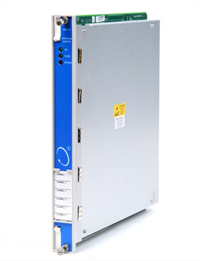
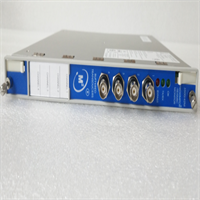
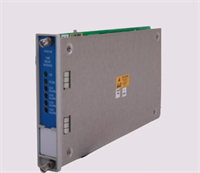
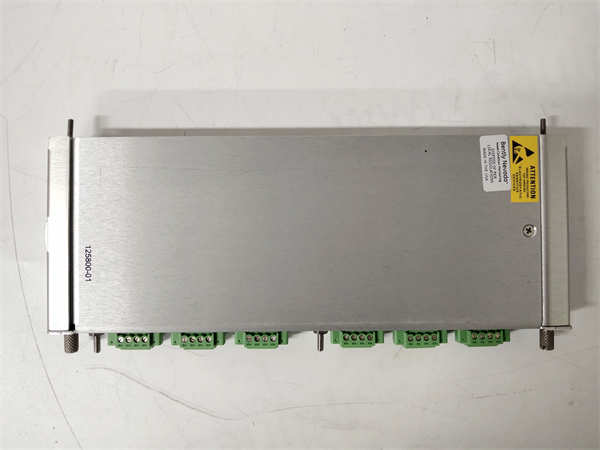
- Product Model: 125800-01
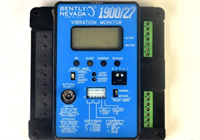
- Manufacturer: Bently Nevada
- System Family: 3300 Monitoring System
- Module Type: 3300/25 Dual Monitor
- Input Channels: 2 independent channels (accepts -24 VDC proximity probe signals)
- Measurement Types: Radial vibration, axial thrust position, differential expansion, or speed (via Keyphasor input on rear connector)
- Alarm Outputs: 2 programmable alarm relays per channel (Alert and Danger)
- Trip Logic: Independent per channel; supports AND/OR logic with external inhibit
- Power Requirement: -24 VDC supplied via 3300 mounting rack backplane
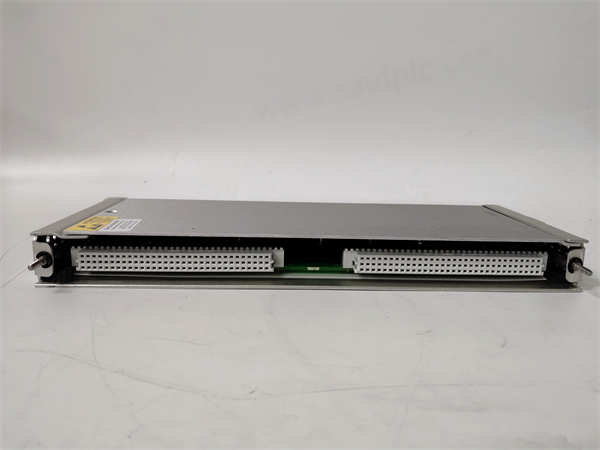
- Mounting: Requires 3300/05 or 3300/50 rack with compatible power supply
- Configuration: Set via front-panel DIP switches and potentiometers (no digital communication)
- Output Relays: Form C (SPDT), rated for 2 A @ 30 VDC
System Positioning and Downtime Impact
The BENTLY 125800-01 is typically deployed in critical rotating equipment such as steam turbines, compressors, or generators within power plants, refineries, and chemical facilities. Installed in a 3300 rack alongside other monitors and a Keyphasor module, it continuously evaluates shaft vibration or position against user-defined thresholds. If either channel exceeds its Danger setpoint, the module activates its internal relay to trigger a machinery trip—often interfaced directly with the turbine emergency shutdown system. A failure of this module could result in loss of protection, potentially allowing catastrophic bearing wear, rotor rub, or overspeed events. In continuous-operation environments, such a failure may necessitate an immediate forced outage, with financial and safety consequences far exceeding the module’s replacement cost.
Reliability Analysis and Common Failure Modes
Many 125800-01 units have operated reliably for 20+ years due to robust analog design and conservative component derating. However, aging introduces predictable failure mechanisms. The most prevalent issue is drift or failure of the front-panel potentiometers used for alarm setpoint adjustment, leading to inaccurate trip levels. Electrolytic capacitors on the internal power regulation circuit also degrade over time, causing intermittent power loss or erratic relay behavior. Additionally, the mechanical relays themselves are subject to contact oxidation or welding after decades of inactivity, potentially failing to open during a real trip event.
Design-wise, the module lacks modern diagnostics or self-test capabilities, making latent faults difficult to detect without manual testing. It is also sensitive to ground loops and EMI due to its analog signal processing architecture. For maintenance teams, recommended preventive actions include: annually verifying alarm setpoints with a calibrated simulator, performing relay contact resistance checks during outages, inspecting PCB for capacitor leakage or trace corrosion, and ensuring clean, stable -24 VDC supply from the rack power source. Keeping a known-good spare powered in a test rack for burn-in prior to installation is strongly advised.
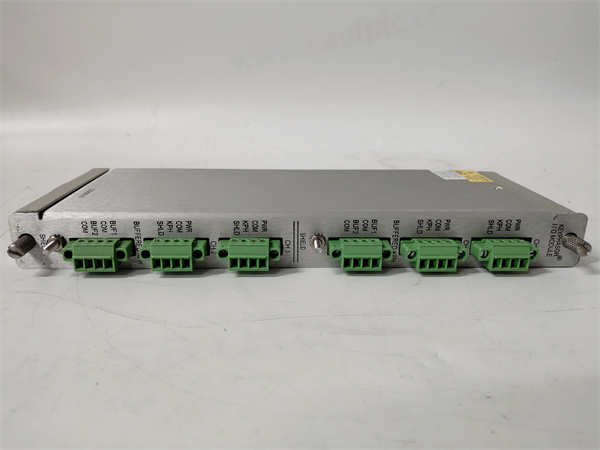
BENTLY 125800-01
Lifecycle Status and Migration Strategy
Bently Nevada discontinued the 3300 product line, including the 125800-01, in favor of the 3500 system and later the System 1 platform. Official support is now limited to documentation; no new units are manufactured. Continued reliance on this module exposes facilities to increasing obsolescence risk—spares are finite, repair success rates decline, and integration with modern control systems becomes impractical.
As an interim measure, facilities may procure tested surplus units or use specialized third-party repair services that replace aging components (e.g., capacitors, relays, pots) to extend service life. However, these are stopgap solutions.
The strategic migration path is a phased upgrade to the Bently Nevada 3500 system or System 1. The 3500/42M or /44 modules offer equivalent dual-channel monitoring with digital configuration, enhanced diagnostics, and PROFINET/Modbus communication. Full migration to System 1 enables cloud-based analytics, OPC UA data publishing, and integration with enterprise asset management (EAM) systems. While migration requires re-engineering I/O wiring, updating logic solvers, and re-commissioning protection functions, it eliminates long-term obsolescence exposure and aligns with digital transformation goals. Planning should account for 6–18 months of engineering effort, depending on system complexity.