 Tel:
Tel:  Email:
  WhatsApp:
 Description
Technical Specifications (For Spare Parts Verification)
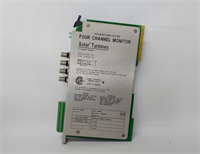
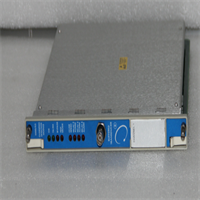
- Product Model: 125760-01
- Manufacturer: Bently Nevada (Emerson Automation Solutions)
- Compatible System: 3500 Monitoring System (typically used with 3500/25 or 3500/45 framework)
- Module Type: Keyphasor Input Module
- Number of Channels: 1 or 2 (verify label; typically single-channel in -01 variant)
- Input Signal Type: TTL, CMOS, or proximity probe (eddy-current) via BNC or terminal block
- Output: Timing reference distributed to other 3500 modules (e.g., vibration, axial position)
- Power: Supplied via 3500 backplane (+24 VDC, ±12 VDC)
- Diagnostic Features: Front-panel LED for signal presence and module OK status
- Mounting: Plug-in module in 3500 chassis with retention screw
- Firmware/Revision: Fixed; must be compatible with 3500 rack interface module (RIM) version
- Certifications: Designed for use in API 670-compliant machinery protection systems
System Role and Downtime Impact
The 125760-01 module processes the Keyphasor signal—a once-per-revolution pulse from a shaft-mounted target—that serves as the fundamental timing reference for all dynamic measurements in a Bently 3500 system. It enables critical functions such as orbit plots, Bode plots, and startup/shutdown trend analysis. More importantly, many protection algorithms (e.g., vibration alarm masking during coast-down) rely on accurate Keyphasor timing. If this module fails, the entire 3500 rack may report “Keyphasor Loss,” disabling advanced diagnostics and potentially causing nuisance trips or, worse, masking real machine faults. In a gas compressor station, this could delay detection of rubs, unbalance, or bearing wear—leading to catastrophic failure.
Reliability Analysis and Common Failure Modes
Despite rugged industrial design, units in service beyond 15–20 years exhibit predictable degradation:
- Input circuit ESD damage: Proximity probe inputs are vulnerable to static discharge during maintenance, damaging front-end amplifiers.
- Backplane connector fatigue: Thermal cycling induces micro-cracks in edge connectors, causing intermittent signal loss.
- Power supply capacitor aging: Onboard electrolytic capacitors lose capacitance, leading to voltage instability during transients.
- LED or indicator failure: While not functionally critical, loss of status indication complicates troubleshooting.
A key vulnerability is the lack of redundant Keyphasor input in many legacy configurations—making this a single point of failure. Additionally, older -01 modules may not support newer diagnostic features in updated RIM or display software, limiting visibility.
Preventive maintenance recommendations include:
- Verifying Keyphasor signal integrity with an oscilloscope during routine machine checks.
- Inspecting BNC or terminal connections for corrosion or looseness.
- Ensuring proper grounding of probe cables to minimize noise.
- Maintaining at least one verified spare tested in a matching 3500 chassis.
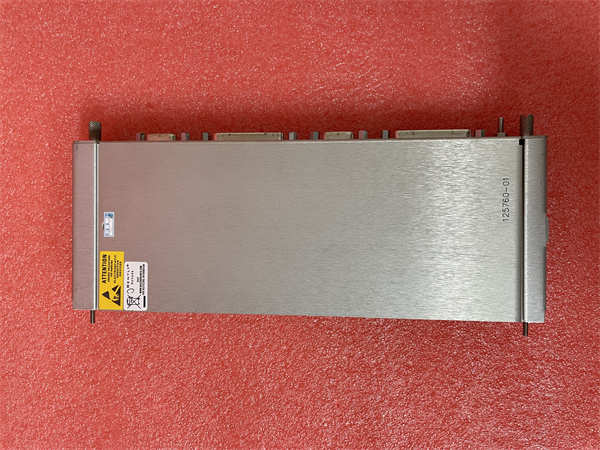
Bently 125760-01
Lifecycle Status and Migration Strategy
Emerson no longer manufactures the 125760-01 and recommends upgrading to the 125760-02 or -03 variants, which offer improved noise immunity, better diagnostics, and compatibility with modern 3500 firmware. However, even these newer modules are part of a platform that is gradually being succeeded by the Bently Nevada System 1 and Asset Intelligence Platform.
As a temporary measure:
- Confirm exact compatibility with the installed 3500 Rack Interface Module (RIM) version before installing a spare.
- Back up current 3500 configuration using System 1™ or DOS-based Rack Configuration Software (if still operational).
- Avoid mixing -01 modules with newer revisions in the same rack unless explicitly permitted by documentation.
For long-term reliability, the strategic path is migration to Bently Nevada System 1 or integration with Emerson’s Plantweb™ ecosystem. This involves:
- Replacing the 3500 rack with a System 1 Data Manager or Smart Wireless Gateway
- Using compatible transmitters (e.g., 3300 XL probes with 9300-series monitors)
- Leveraging cloud-based analytics for predictive maintenance
While full replacement requires capital investment, it eliminates dependency on obsolete hardware, enhances cybersecurity, and aligns machinery protection with digital transformation goals. Facilities with critical rotating assets should evaluate this transition during major overhauls or reliability improvement programs.