 Tel:
Tel:  Email:
  WhatsApp:
 Description
Key Technical Specifications (For Spare Parts Verification)
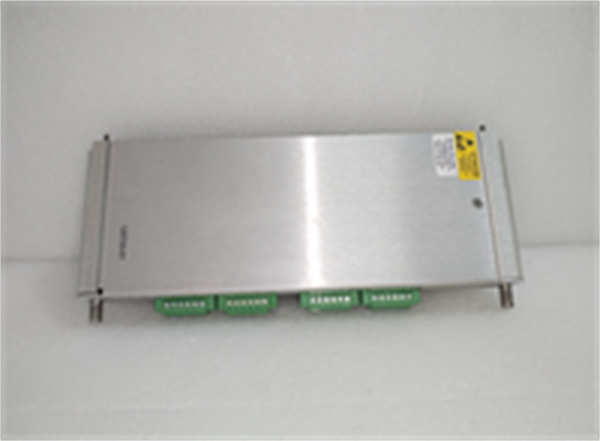
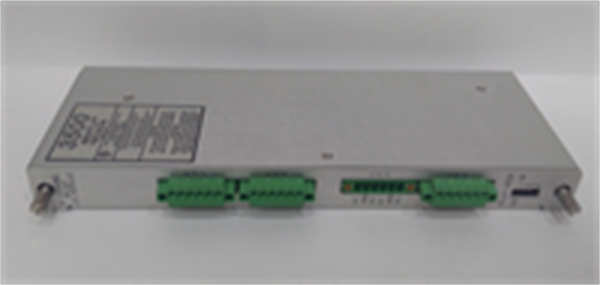
- Product Model: 125720-01
- Manufacturer: Bently Nevada (Emerson)
- System Family: 3500 Machinery Protection System
- Module Type: 3500/25 Dual Tachometer Input Module
- Input Channels: 2 independent channels (A and B)
- Compatible Sensors: Proximity probes (e.g., 3300 XL 8mm) or magnetic pickups
- Input Signal Range: ±10 V peak-to-peak (for proximity probes), or TTL-level pulses
- Speed Measurement Range: 0.1 to 100,000 RPM (configurable via 3500 Rack Configuration Software)
- Output Functions: Provides speed data to other 3500 modules (e.g., 3500/42M, 3500/44) for overspeed trip, runout compensation, and Bode plots
- Backplane Interface: Standard 3500 chassis slot (requires 3500/15 or /20 power supply)
- Diagnostic Features: Per-channel OK LED, configuration mismatch alert, signal loss detection
System Role and Downtime Impact
The Bently Nevada 125720-01 is a foundational component in 3500-based machinery protection systems widely deployed on steam turbines, gas compressors, and centrifugal pumps in power, oil & gas, and chemical plants. Installed in the 3500 rack alongside vibration monitor and relay output modules, it converts raw sensor waveforms into precise speed signals used for two critical purposes: (1) enabling overspeed trip logic in modules like the 3500/53, and (2) providing phase reference for orbit and Bode plot generation during startup/shutdown.
If this module fails, both speed channels are lost. In an overspeed protection context, this may force the system into a “vote-down” configuration (e.g., from 2oo3 to 1oo2), reducing safety integrity—or worse, disabling speed-based trips entirely if redundancy is insufficient. In continuous monitoring, loss of tach signal renders vibration data uninterpretable for diagnostics, hindering predictive maintenance. Because the 3500 system often serves as the last line of defense against catastrophic rotor failure, a non-functional 125720-01 directly increases mechanical risk.
Reliability Analysis and Common Failure Modes
Despite robust industrial design, the 125720-01 is vulnerable to age-related failures due to its analog signal conditioning circuitry and reliance on legacy components. The most common failure mode is degradation of the input amplifier stage, leading to missed pulses or erratic speed readings—especially with low-amplitude proximity probe signals. This is often triggered by:
- Aging of surface-mount electrolytic capacitors on the signal path, causing bandwidth reduction or DC offset drift.
- Corrosion or contamination on the backplane connector pins, resulting in intermittent communication with the 3500 mainframe.
- Damage to input protection diodes from voltage transients on field wiring (e.g., during probe installation or lightning events).
A key design limitation is the absence of internal self-calibration: the module’s accuracy depends entirely on factory-trimmed components. Over time, thermal cycling and electrical stress cause parameter drift that cannot be corrected in the field. Additionally, configuration is stored in volatile memory and requires re-download after replacement—a process that demands access to archived 3500 configuration files.
Preventive maintenance recommendations:
- Regularly verify tach signal waveform integrity at the module input using an oscilloscope.
- Inspect field cable shielding and grounding to minimize noise pickup.
- Maintain backups of the 3500 rack configuration (.rck files) and firmware versions.
- Test spare modules in a validation rack before deployment to confirm speed tracking accuracy across the full RPM range.
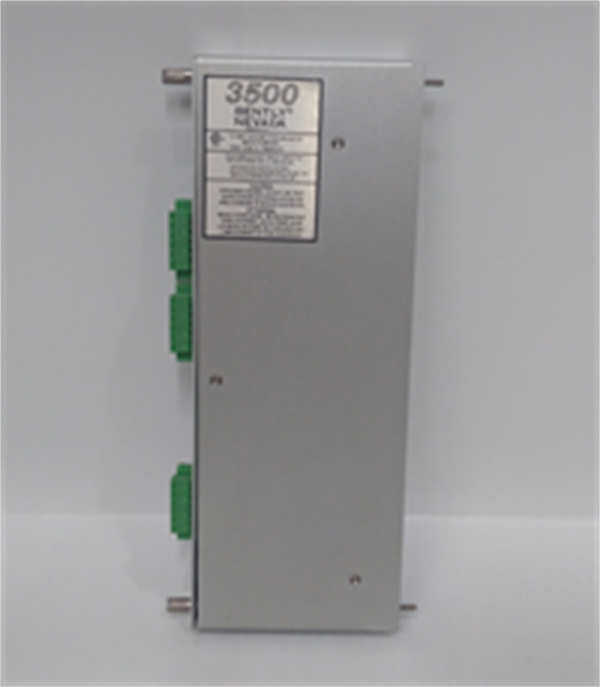
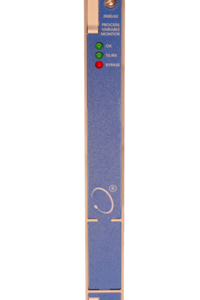
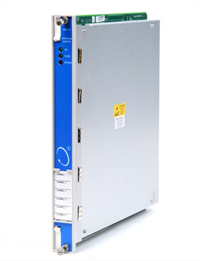
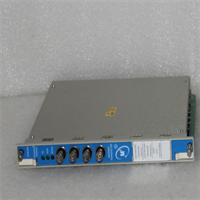
BENTLY 125720-01
Lifecycle Status and Migration Strategy
Emerson has officially obsoleted the 125720-01 and the broader 3500/25 product line. No new units are available, and technical support is restricted to existing documentation. Continuing to operate systems dependent on this module carries escalating risk: genuine spares are dwindling, pricing is unstable, and engineering expertise is fading.
As a temporary measure, facilities may source tested surplus modules from vendors who validate pulse detection accuracy and compatibility with existing 3500 firmware (typically v9.x or earlier).
The strategic migration path is upgrading to the 3500/25 Enhanced (model 146720-01) or, more comprehensively, to the Bently Nevada 3500/85 Dynamic Data Processor platform, which integrates tach processing with advanced analytics. However, the 146720-01 requires:
- A compatible 3500/80 or /81 interface module.
- Updated 3500 Configuration Software (v10+).
- Re-validation of all speed-dependent protection logic.
For greenfield or major retrofit projects, Emerson recommends transitioning to the Bently Nevada Guardian or System 1 platforms, which offer native digital tach processing, cloud connectivity, and compliance with modern cybersecurity standards.
Given the critical safety role of tachometry in machinery protection, any migration plan should prioritize functional equivalence testing and involve a formal safety integrity review—especially in API 670-regulated environments. Until then, maintaining validated spares and rigorous preventive checks remains essential.