 Tel:
Tel:  Email:
  WhatsApp:
 Description
Technical Specifications (For Spare Part Verification)
- Product Model: SP060S-MF2-20-1C1-2S
- Manufacturer: ALPHA
- Motor Type: Permanent magnet synchronous AC servo motor (brushless)
- Frame Size: 60 mm square (NEMA 24 equivalent)
- Rated Power: 200 W
- Rated Voltage: Typically 200–230 V AC (verify nameplate)
- Rated Speed: 3000 rpm (standard for MF2 series)
- Continuous Torque: Approx. 0.64 Nm
- Peak Torque: Approx. 1.9 Nm
- Encoder Type: Incremental optical encoder, 2500 ppr (pulses per revolution), A/B/Z channels
- Feedback Connector: Standard 15-pin high-density D-sub or circular connector (varies by batch)
- Mounting: IEC standard flange (B14) with keyway shaft
- Shaft Diameter: 14 mm (typical for SP060S)
- Protection Class: IP65 (dust and water resistant)
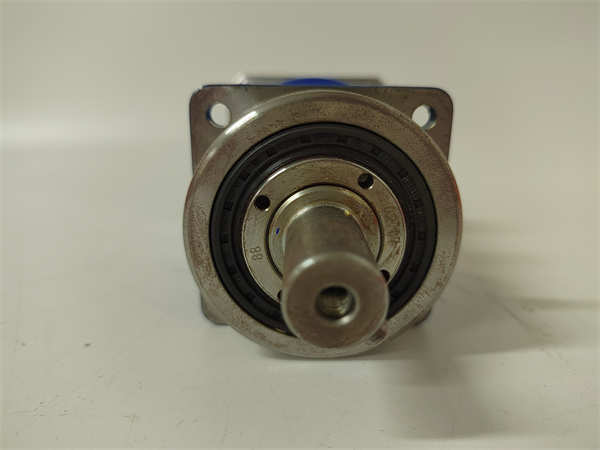
System Role and Downtime Impact
The ALPHA SP060S-MF2-20-1C1-2S is typically deployed as part of a coordinated servo system—paired with a compatible servo amplifier (e.g., from YASKAWA, Mitsubishi, or Delta)—in applications demanding repeatable, high-dynamic motion. It directly drives mechanical components such as cam followers, pick-and-place arms, or indexing tables. If the motor fails due to bearing wear, winding short, or encoder damage, the controlled axis becomes inoperable. In continuous production environments like bottling lines or electronics assembly, this results in immediate line stoppage. Because these motors are often custom-matched to specific drive firmware and tuning parameters, substitution without re-engineering is rarely feasible.
Reliability Analysis and Common Failure Modes
Despite robust construction, units installed over 10–15 years ago exhibit predictable aging issues. Common failure modes include:
- Bearing wear or lubricant depletion, causing increased noise, vibration, and eventual seizure
- Encoder disk contamination or LED degradation, leading to lost counts or erratic position feedback
- Insulation breakdown in stator windings due to thermal cycling or voltage spikes from the drive
- Corrosion on feedback or power connectors, resulting in intermittent communication or torque dropout
Preventive maintenance recommendations include:
- Monitoring motor temperature and vibration trends during operation
- Verifying encoder signal integrity using an oscilloscope during scheduled downtime
- Ensuring proper grounding and shield termination to minimize EMI-induced feedback errors
- Avoiding sustained operation above 80% of rated torque to reduce thermal stress
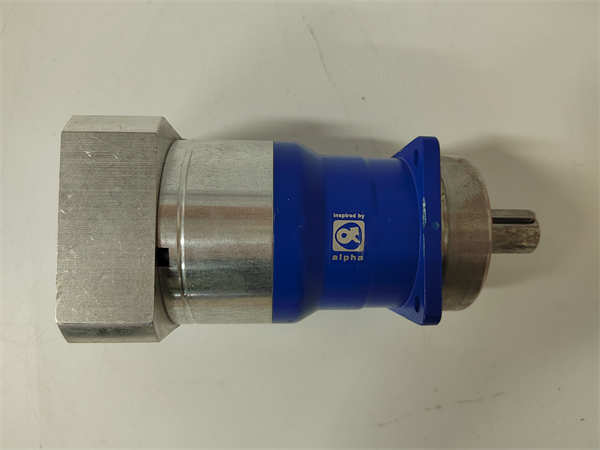
SP060S-MF2-20-1C1-2S ALPHA
Lifecycle Status and Migration Strategy
ALPHA-branded servo motors of this generation are no longer supported by original suppliers, and technical documentation is scarce. The model appears to originate from early-2000s Asian motion control OEMs, many of which have since rebranded or exited the market. No direct “official” replacement path exists, increasing reliance on reverse-engineering for continuity.
Short-term risk mitigation includes:
- Securing tested, matched motor-drive pairs from decommissioned equipment
- Performing rotor balancing and bearing replacement via specialized motor rewind shops
- Archiving original drive tuning parameters (gain, inertia ratio, filter settings) for future replication
For long-term sustainability, migration to a modern servo platform is advised. Suitable alternatives include:
- YASKAWA SGMJV-02A (200 W, 2500 ppr encoder, compatible dynamics)
- Mitsubishi HF-KP23
- Delta ECMA-C20604RS
Migration requires:
- Mechanical verification of flange, shaft, and mounting dimensions
- Electrical compatibility check (encoder type, voltage rating, feedback protocol)
- Re-tuning of servo loops in the drive software
While requiring engineering effort, this transition restores access to warranty support, spare parts, and advanced features like vibration suppression or real-time diagnostics—ensuring continued machine reliability in competitive manufacturing environments.