 Tel:
Tel:  Email:
  WhatsApp:
 Description
Technical Specifications (For Spare Part Verification)
- Product Model: XVC770AE
- Manufacturer: ABB
- System Family: Industrial IT 800xA / AC 800M
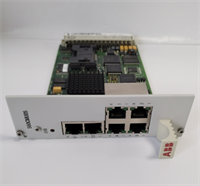
- Module Type: Dual-port redundant Ethernet communication module
- Physical Interface: 2 × 10/100 Mbps RJ-45 ports (for redundant network segments)
- Protocol Support: Native ABB proprietary protocol over TCP/IP for 800xA integration
- Installation Slot: AC 800M CPU baseplate (e.g., PM86x series)
- Power Supply: Powered via AC 800M backplane
- Diagnostic Indicators: LED status for power, link activity, and redundancy state
- Firmware Dependency: Requires specific firmware version in AC 800M CPU for compatibility
- Mechanical Form Factor: Standard AC 800M I/O module size (approx. 160 mm height, 35 mm width)
System Role and Downtime Impact
The XVC770AE serves as the primary communication gateway between the AC 800M controller and the broader 800xA system infrastructure. It handles all data traffic—including process values, alarms, event logs, and control commands—between the controller and operator workstations, engineering stations, and historical servers. In a redundant configuration (two XVC770AE modules), loss of one module triggers failover to the backup, maintaining system operability. However, if both modules fail—or if a single-module system experiences a fault—the controller becomes isolated from the HMI and engineering tools. Operators lose real-time visibility, cannot acknowledge alarms, and cannot perform manual interventions. While the control logic continues to run locally, the plant effectively operates blind, which in regulated or safety-critical environments (e.g., power generation, water treatment) often necessitates a controlled shutdown until communication is restored.
Reliability Analysis and Common Failure Modes
Although originally designed for industrial robustness, the XVC770AE is now susceptible to age-related failures. The most common issue is degradation of the Ethernet PHY (physical layer) ICs due to prolonged thermal cycling, leading to intermittent link drops or complete port failure. Another frequent failure mode involves corruption of the onboard configuration memory, often triggered by voltage sags during power transitions—this renders the module unrecognizable to the CPU. A known design limitation is the lack of galvanic isolation on the Ethernet ports; in plants with poor grounding or high EMI (e.g., near large VFDs), induced surges can damage the RJ-45 interface circuitry over time.
For maintenance teams, proactive inspection is critical. Recommended actions include:
- Monitoring network error counters via 800xA diagnostics for rising CRC or collision rates
- Verifying stable +5V and +3.3V rails on the AC 800M backplane during routine checks
- Ensuring proper shield termination on Ethernet cables to minimize EMI coupling
- Maintaining at least one verified spare module in climate-controlled storage to preserve component integrity
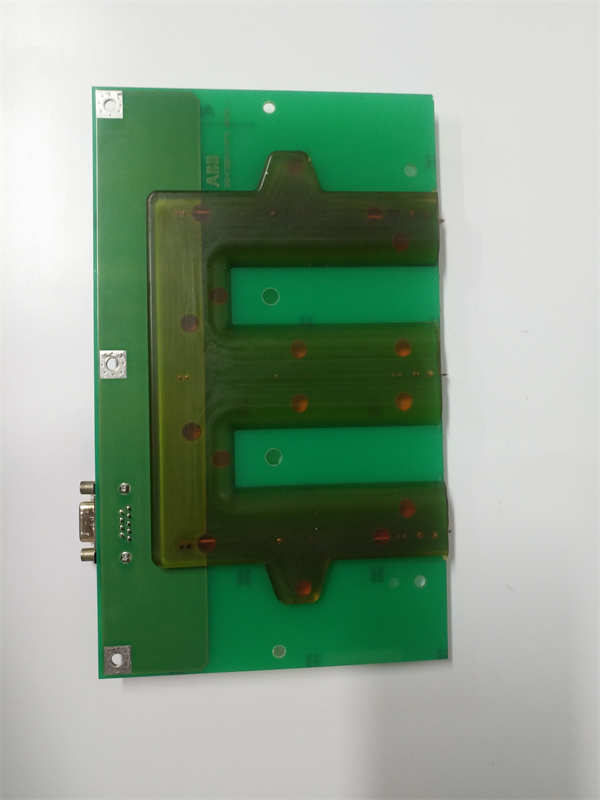
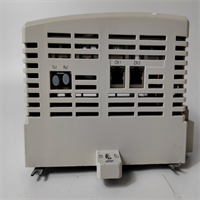
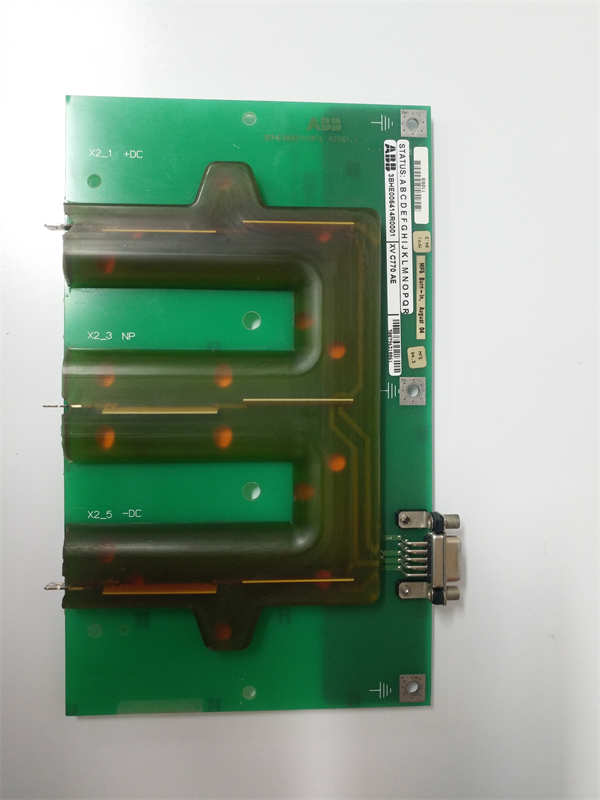
ABB XVC770AE 3BHE006414R0001
Lifecycle Status and Migration Strategy
ABB has formally discontinued the XVC770AE, with no new units available from the factory. Continued reliance on this module introduces significant operational risk: spare parts are increasingly scarce, prices have risen sharply, and third-party “tested” units may lack full functional validation. As a temporary measure, facilities can source vetted surplus stock or engage specialized vendors capable of board-level repair (e.g., replacing failed PHY chips and reprogramming firmware).
The strategic migration path is to replace the XVC770AE with the XVC775AE, ABB’s current-generation communication module. The XVC775AE supports Gigabit Ethernet, enhanced cybersecurity features (e.g., MACsec), and improved diagnostics, while maintaining backward compatibility with existing 800xA systems running compatible software versions (typically 800xA v6.0 or later). Migration requires:
- Upgrading the AC 800M CPU firmware to a supported revision
- Updating the 800xA aspect directory configuration
- Replacing the module in the CPU rack (no hardware changes needed)
For sites not yet ready for partial upgrades, implementing a dual-spare strategy—one hot spare installed in a test rack, one cold spare in storage—and conducting quarterly communication failover drills can mitigate unplanned downtime while planning a phased transition to modern infrastructure.