 Tel:
Tel:  Email:
  WhatsApp:
 Description
Key Technical Specifications (For Spare Part Verification)
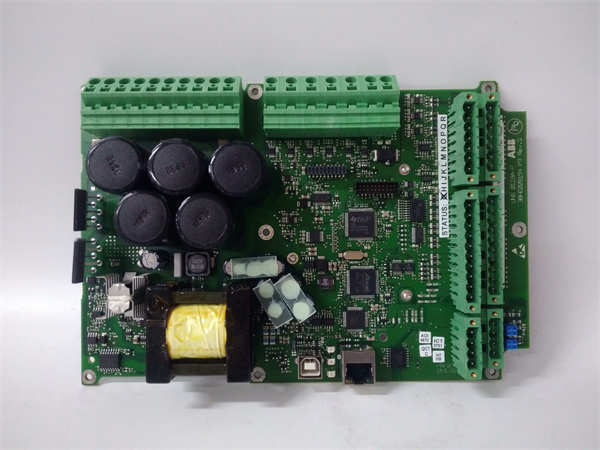
- Product Model: UNS0119A-P,V101
- Manufacturer: ABB
- System Family: AC 800M (part of System 800xA architecture)
- Component Breakdown:
- 3BHE029154P3: PM864 base/backplane interface unit
- 3BHE029153R0101: PM864 main processor board (with onboard flash and RAM)
- Processor Type: 32-bit RISC (PowerPC-based)
- Application Memory: 8 MB (non-volatile flash)
- Execution Speed: ~0.15 µs per Boolean instruction
- Communication Interfaces: Dual redundant Profibus DP (via CI854), serial service port (RS-232)
- Redundancy Support: Hot-standby capable when paired with second PM864 and synchronization link
- Power Consumption: Approx. 15 W (requires stable 24 VDC from S800 rack power supply)
- Physical Installation: DIN-rail mounted in S800 I/O rack; requires secure mechanical latch engagement
-

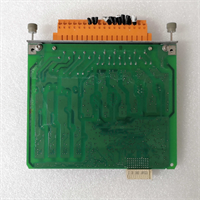
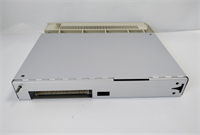
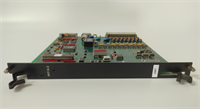
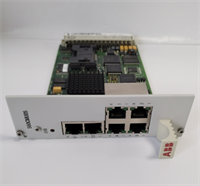
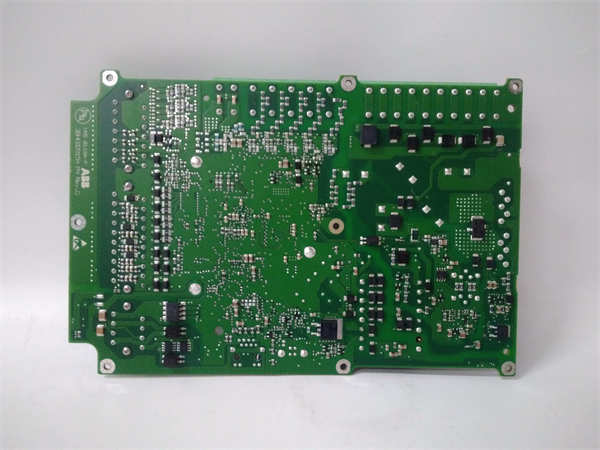
UNS0119A-P,V101 3BHE029154P3 3BHE029153R0101
System Role and Downtime Impact
The UNS0119A-P,V101 represents the complete PM864 CPU assembly that serves as the brain of an ABB AC 800M controller station. It executes all control logic—ranging from basic interlocks to complex regulatory loops—and coordinates data exchange with remote I/O, operator workstations, and engineering tools. In a non-redundant configuration, failure of this module results in immediate and total loss of automated control, forcing the plant into manual mode or full shutdown. Even in redundant setups, a faulty primary unit can cause unnecessary switchover events or, worse, fail to synchronize properly, leading to split-brain scenarios. Given its deployment in critical infrastructure—such as power plants, water treatment facilities, and mining operations—the operational consequence of CPU failure is typically severe, with potential safety, environmental, and financial impacts.
Reliability Analysis and Common Failure Modes
Although the PM864 was engineered for industrial reliability, units now in service are often 10–15 years old, exposing inherent aging vulnerabilities. The most frequent failure point is the onboard flash memory, which can develop bit errors or become write-locked after repeated program downloads, causing boot failures or corrupted applications. Electrolytic capacitors on the 3BHE029153R0101 board degrade over time, leading to voltage ripple on internal power rails and intermittent resets. The DIN 41612 backplane connectors (especially on 3BHE029154P3) are prone to oxidation and mechanical wear, resulting in poor contact resistance and communication dropouts with the I/O bus. Additionally, the module is sensitive to electrostatic discharge during handling—a risk amplified during emergency replacements. Preventive maintenance should include: periodic backup verification of application code, visual inspection for capacitor bulging or PCB discoloration, cleaning of backplane contacts with isopropyl alcohol and lint-free swabs, and monitoring of CPU load and scan cycle consistency via Control Builder M diagnostics.
-
UNS0119A-P,V101 3BHE029154P3 3BHE029153R0101
Lifecycle Status and Migration Strategy
ABB has formally ended production of the PM864 (UNS0119A-P,V101), classifying it as obsolete with no direct hardware replacement. Continued reliance on this platform carries escalating risks: spare units are increasingly scarce, counterfeit or previously failed modules may enter the supply chain, and technical support from ABB is limited to best-effort basis. While short-term mitigation includes maintaining a pool of tested spares and implementing strict ESD handling protocols, these do not address long-term viability. ABB’s official migration path is to upgrade to the PM866A or PM867 controllers, which offer greater memory, faster execution, enhanced cybersecurity features, and extended lifecycle support. This migration requires recompilation of the application in a compatible version of Control Builder M, potential I/O re-mapping due to firmware differences, and validation testing. For asset owners unable to execute a full controller swap immediately, a pragmatic approach is to prioritize high-criticality stations for early migration, isolate legacy PM864 systems from external networks, and establish a formal obsolescence management plan with defined end-of-support dates.