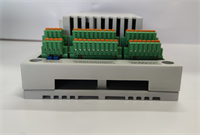
 Tel:
Tel:  Email:
  WhatsApp:
 Description
Key Technical Specifications (For Spare Part Verification)
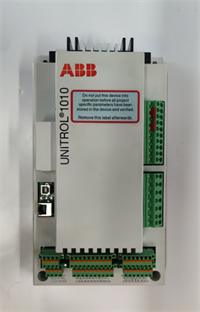
- Product Model: UNITROL 1010
- Manufacturer: ABB
- System Family: UNITROL 1000 series static excitation systems
- Input Voltage Range: Typically 100–250 V AC/DC auxiliary supply
- Output Firing Pulses: For thyristor bridges (3-phase full-wave control)
- Regulation Modes: Automatic (voltage), manual (field current), and reactive power control
- Communication Interface: Analog I/O; limited or no digital communication (pre-dates modern fieldbus standards)
- Mounting Type: Panel-mounted, modular design with plug-in boards
- Environmental Rating: Designed for indoor switchgear rooms (typically IP20)
- Backup Method: Volatile memory with battery-backed parameters (common failure point)
- Compatibility: Used primarily with hydro and industrial steam turbines up to ~50 MVA
System Role and Downtime Impact
The ABB UNITROL 1010 serves as the core automatic voltage regulator in legacy excitation systems for synchronous generators. It directly controls the field current to maintain stable terminal voltage under varying load conditions. In many older power plants and industrial cogeneration facilities, this unit is integral to grid synchronization and voltage stability. Failure of the UNITROL 1010 typically results in immediate loss of voltage regulation, triggering protective relays and causing a forced generator trip. This leads to complete shutdown of the associated generating unit—potentially cascading into plant-wide outages if the unit is critical to site power balance. Given its age and lack of redundancy in original designs, its failure often means unplanned downtime lasting days or weeks, depending on spare availability.
Reliability Analysis and Common Failure Modes
Despite its robust analog design, the UNITROL 1010 suffers from age-related degradation common to electronics manufactured from the 1980s to early 1990s. The most frequent failure modes include electrolytic capacitor drying-out on power and control boards, leading to unstable regulation or complete loss of output. Battery-backed parameter memory is another critical vulnerability—failure of the backup battery often results in configuration loss during power interruptions, requiring time-consuming recalibration. Additionally, the analog opto-isolators and thyristor gate driver circuits are prone to drift or failure due to thermal cycling over decades of operation. The system’s sensitivity to power supply transients—exacerbated by aging input filters—further increases risk in environments with poor power quality.
Preventive maintenance should focus on annual inspection of internal capacitors for bulging or leakage, proactive replacement of backup batteries every 2–3 years, and verification of grounding integrity to mitigate noise-induced malfunctions. Cleaning ventilation paths and checking terminal corrosion on I/O connectors are also essential, as dust accumulation and oxidation can cause intermittent faults that are difficult to diagnose.
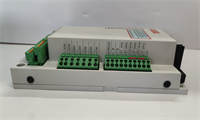
ABB UNITROL 1010
Lifecycle Status and Migration Strategy
ABB officially discontinued the UNITROL 1000 series, including the 1010 model, in the early 2000s, with end-of-support notices issued over a decade ago. Continued operation carries significant risks: no new units are available, technical documentation is scarce, and factory-level support is unavailable. The secondary market offers only used or refurbished units, often at premium prices and with uncertain remaining life.
As an interim measure, facilities may consider board-level repair by specialized third-party service providers or maintaining a “cannibalization bank” of decommissioned units. However, these are stopgap solutions. ABB’s recommended migration path is to upgrade to the UNITROL 6000 or UNITROL 8000 series—modern digital excitation systems with full redundancy, advanced protection functions, and seamless integration with SCADA via Modbus TCP, IEC 61850, or PROFIBUS. Such a retrofit typically requires replacing the entire excitation panel, updating CT/PT wiring, and re-commissioning the generator protection coordination. While capital-intensive, this transition eliminates obsolescence risk, improves grid compliance, and reduces long-term maintenance costs.