 Tel:
Tel:  Email:
  WhatsApp:
 Description
Key Technical Specifications (For Spare Parts Verification)
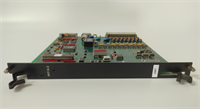
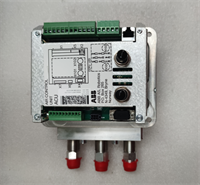
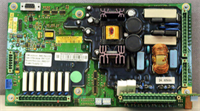
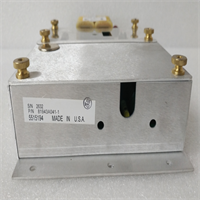
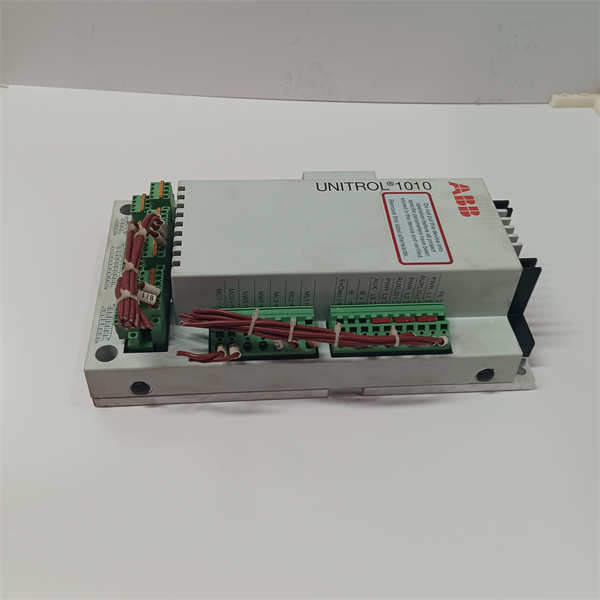
- Product Model: UNIROL1010
- ABB Part Number: 3BHE035301R0001
- Manufacturer: ABB
- System Family: UNIROL Series Digital Excitation Systems
- Module Type: Main AVR Control Unit (typically housed in a 19″ rack-mounted excitation cabinet)
- Processor: Embedded microcontroller (early DSP or RISC architecture)
- Input Signals:
- Generator terminal voltage (PT feedback)
- Field current (shunt or CT)
- Reactive power (kVAR)
- External voltage reference or VAR demand
- Output: Firing angle command to thyristor gate driver (e.g., in power stack)
- Communication Interfaces:
- RS-485 (Modbus RTU or proprietary ABB protocol)
- Optional Profibus DP (depending on configuration)
- Diagnostic Features: Local LCD/LED status display, alarm relays, event logging
- Redundancy: Often deployed in dual-channel (hot standby) configurations
- Operating Environment: Industrial control room (0°C to +50°C, <85% RH non-condensing)
System Role and Downtime Impact
The UNIROL1010 is the core intelligence of ABB’s legacy static excitation system, responsible for real-time regulation of generator rotor field current to maintain stable terminal voltage under varying load and grid conditions. It supports critical functions including:
- Voltage regulation during startup and synchronization
- Reactive power (kVAR) control
- Over-excitation and under-excitation limiting (OEL/UEL)
- Power system stabilizer (PSS) functionality (in advanced variants)
If the UNIROL1010 fails—due to processor lockup, sensor signal loss, or internal fault—it may:
- Cause uncontrolled voltage rise (risking insulation damage)
- Trigger protective trips via backup limiters
- Force manual transfer to backup excitation (if available)
- Result in complete generator shutdown in non-redundant setups
In power plants or industrial cogeneration facilities, such an event leads to immediate loss of generation, potential grid instability, and revenue impact.
Reliability Analysis and Common Failure Modes
Despite robust design, the UNIROL1010—introduced in the late 1990s/early 2000s—is now prone to age-related failures:
- Electrolytic capacitor aging in power supply sections, causing voltage droop or reset loops
- EEPROM/Flash memory corruption, leading to configuration loss or boot failure
- RS-485 transceiver degradation, resulting in communication dropouts with DCS or HMI
- Connector oxidation on I/O terminals or backplane, causing intermittent signal errors
- Thermal stress cracks in solder joints near high-power components
A key limitation is minimal remote diagnostics and lack of cybersecurity features (e.g., no encrypted firmware), increasing vulnerability in modern connected environments.
Recommended preventive maintenance:
- Perform annual calibration checks using simulated PT and field current inputs
- Back up configuration files via serial interface during outages
- Monitor event logs for recurring “sensor fault” or “regulation error” alarms
- Inspect for bulging capacitors, burnt smell, or discoloration on PCB
- Verify redundancy switchover functionality during planned maintenance
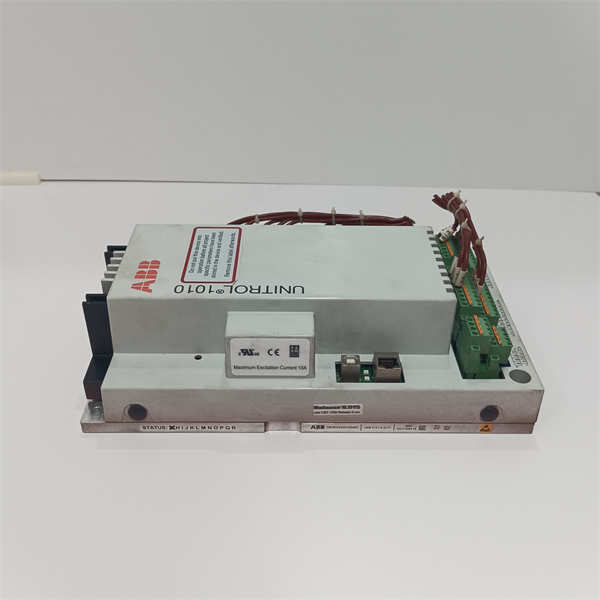
ABB UNIROL1010 3BHE035301R0001
Lifecycle Status and Migration Strategy
ABB has officially discontinued the UNIROL1010, replacing it with the UNIROL 1020 and UNIROL 1030 platforms, which offer enhanced performance, Ethernet connectivity, and compliance with modern grid codes (e.g., IEEE PSS2B). The original 3BHE035301R0001 is no longer stocked or supported for new orders. Remaining spares exist only through third-party vendors at 3–5× original cost, often without functional testing.
Short-term risk mitigation:
- Secure multiple tested, matched spares (including compatible I/O or power modules)
- Engage specialized firms for board-level repair and component rework
- Implement external monitoring (e.g., oscilloscope-based field current waveform analysis)
Long-term strategic path:
Upgrade to ABB UNIROL 1030, which provides:
Upgrade to ABB UNIROL 1030, which provides:
- Modern ARM-based processor with real-time OS
- Dual Ethernet (IEC 61850, Modbus TCP, PROFINET)
- Built-in PSS2A/PSS2B, V/Hz protection, and cyber security (IEC 62443-ready)
- Seamless integration with ABB Ability™ digital platform
Migration requires:
- Replacement of control module and possibly power interface cards
- Rewiring of analog/digital signals (pinout changes likely)
- Recommissioning of protection and regulation functions
- Operator retraining
Given the critical role of excitation systems in grid reliability—and the fragility of remaining UNIROL1010 hardware—proactive migration planning is essential to avoid unplanned, high-consequence outages. Asset owners should initiate feasibility studies immediately if still operating this legacy platform.