
 Tel:
Tel:  Email:
  WhatsApp:
 Description
Key Technical Specifications (For Spare Part Verification)
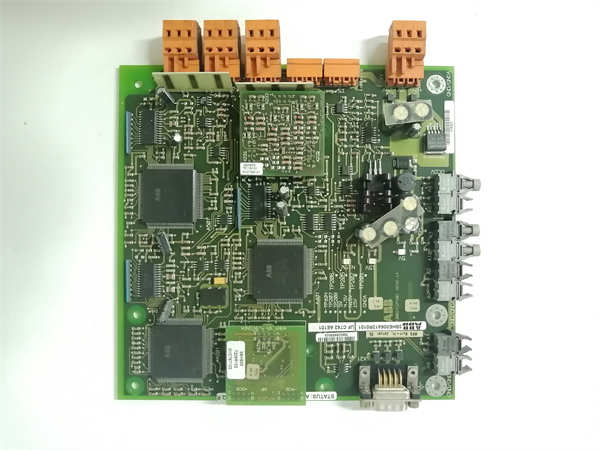
- Product Model: UFC762AE101
- Manufacturer: ABB
- System Family: Freelance AC 800F DCS
- Order Code: 3BHE006412R0101
- Processor Type: Upgraded CPU module with higher program capacity vs. earlier UFC760 variants
- Memory: Expanded internal RAM and flash for larger application programs
- Redundancy Support: Hot-standby redundant configuration with automatic failover
- Fieldbus Interfaces: Dual integrated PROFIBUS DP ports (RS-485)
- Mechanical Form Factor: Standard AC 800F rack module (occupies one slot)
- Status Indicators: RUN, STOP, RED (redundancy active), BUS1/BUS2 communication LEDs
System Role and Downtime Impact
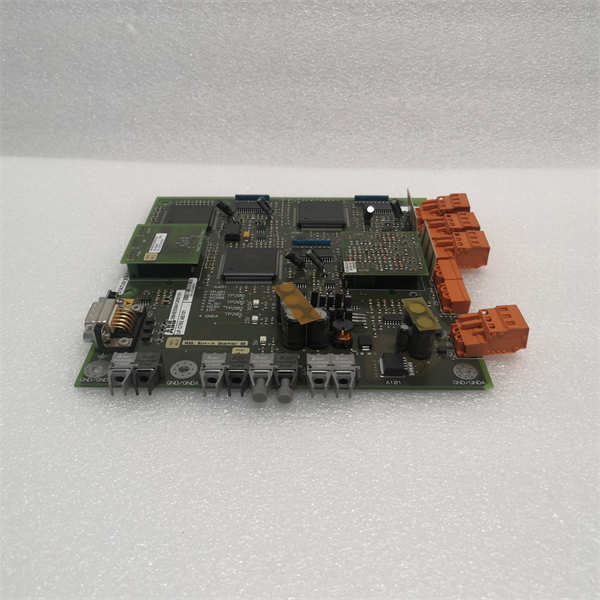
The UFC762AE101 serves as the primary logic solver in ABB’s Freelance AC 800F distributed control system, commonly found in water/wastewater treatment, food & beverage, and small-to-mid-scale chemical plants. It runs all regulatory and sequential control functions, coordinates I/O updates across remote stations via PROFIBUS DP, and synchronizes with engineering and operator stations. In redundant setups—frequently used in critical processes—it operates in a synchronized hot-standby pair to ensure uninterrupted control during hardware faults. Failure of this module in a non-redundant system causes immediate loss of automation, potentially leading to process instability or safety shutdowns. Even in redundant configurations, loss of one unit eliminates fault tolerance, increasing vulnerability to total station failure. Given the platform’s obsolescence, sourcing a verified replacement can take weeks or months, significantly extending unplanned downtime.
Reliability Analysis and Common Failure Modes
Although engineered for industrial environments, the UFC762AE101 exhibits typical aging issues associated with early-2000s embedded controllers. The most common failure points include degradation of electrolytic capacitors in the internal DC-DC converter stages, resulting in voltage droop, spontaneous reboots, or failure to power up. The PROFIBUS transceiver circuits are susceptible to damage from ground potential differences or surge events on field cabling—especially in facilities lacking modern isolation barriers. Some firmware revisions rely on battery-backed SRAM for configuration retention; these batteries are no longer replaceable with original parts, and depletion can lead to program loss after extended outages. Thermal stress from inadequate cabinet cooling also accelerates solder joint fatigue, particularly around high-current connectors. Recommended preventive practices include routine monitoring of diagnostic LEDs, verifying backup configuration files, ensuring clean and stable input power, and maintaining ambient temperatures below 40°C in the control enclosure.
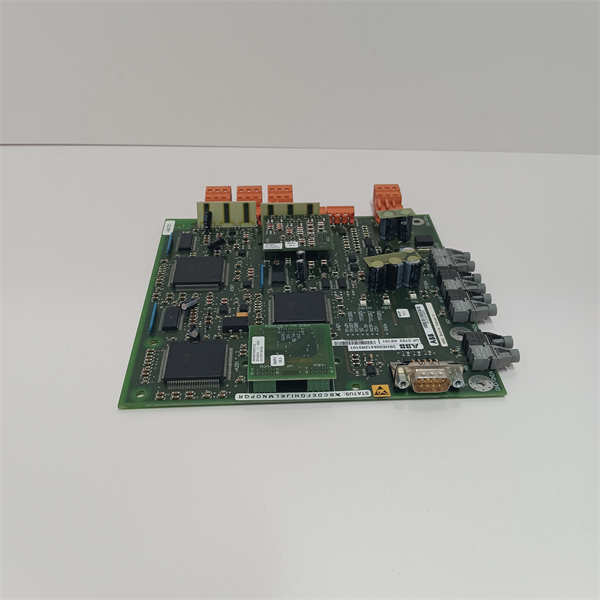
UFC762AE101 3BHE006412R0101 ABB
Lifecycle Status and Migration Strategy
ABB has formally discontinued the entire AC 800F Freelance platform, including the UFC762AE101 (3BHE006412R0101). No direct active replacement exists, and official support is restricted to legacy service agreements with limited scope. Continuing to operate this hardware carries substantial risk: authentic spares are nearly exhausted, and third-party units may have hidden wear or counterfeit components. As an interim measure, users may stock tested-used modules from certified industrial surplus vendors or implement external monitoring to detect early signs of degradation. However, the sustainable solution is migration to a modern control architecture. ABB recommends transitioning to the AC 800M platform (e.g., PM864/PM865 CPUs) or System 800xA for larger sites. This requires re-engineering control logic in Control Builder M, replacing I/O modules, updating HMI graphics, and revalidating safety interlocks. While requiring upfront investment, migration restores access to cybersecurity patches, vendor technical support, and integration with IIoT and cloud-based analytics—ensuring long-term operational continuity beyond the limits of obsolete technology.