 Tel:
Tel:  Email:
  WhatsApp:
 Description
Key Technical Specifications (For Spare Part Verification)
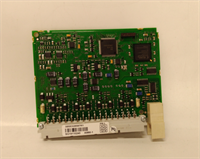
- Product Model: UCD240A101
- Manufacturer: ABB
- System Family: S800 I/O for AC 800M (part of System 800xA architecture)
- ABB Order Code: 3BHE022287R0101
- Output Channels: 4, individually isolated
- Signal Types: 0/4–20 mA (sink/source capable), 0–10 V, ±10 V
- Load Capability: Up to 750 Ω at 20 mA (for current mode); min. 2 kΩ load for voltage mode
- Output Update Rate: ~10 ms per channel (typical)
- Accuracy: ±0.1% of full scale at 25°C
- Isolation: Channel-to-channel and channel-to-backplane isolation rated at 300 VAC RMS
- Diagnostic Features: Open-circuit detection for current outputs; LED status per channel
- Backplane Compatibility: Requires S800 baseplate (e.g., TB840 or TB850) with DIN-rail mounting
-

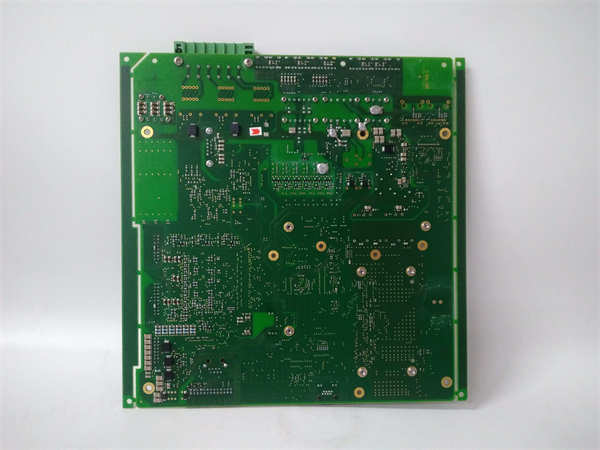
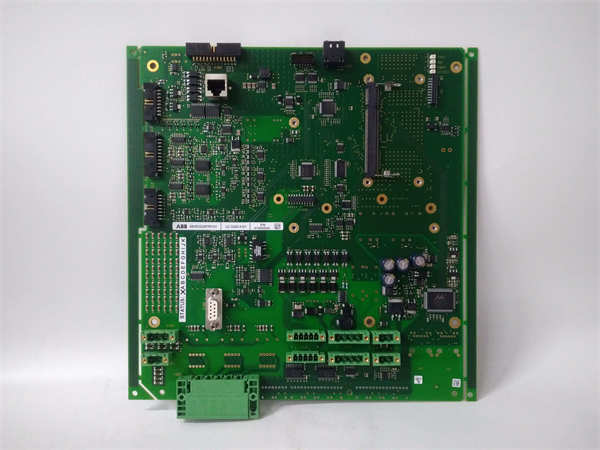
UCD240A101 3BHE022287R0101
System Role and Downtime Impact
The UCD240A101 serves as a critical actuation link in legacy ABB AC 800M process control systems, commonly used in power generation, oil & gas, and chemical plants. It converts digital control commands from the CPU into precise analog signals that drive final control elements—such as pneumatic control valves via I/P positioners, variable frequency drives (VFDs), or remote setpoint inputs on third-party controllers. Each channel operates independently with galvanic isolation, preventing ground loops and ensuring signal integrity in electrically noisy environments. If this module fails—due to output driver degradation, reference voltage drift, or loss of backplane communication—the affected control loops lose their ability to modulate. This can result in valves going to fail-safe positions, motors running at fixed speed, or regulatory loops opening, potentially triggering alarms, quality deviations, or plant trips. In cascade or ratio control schemes, a single faulty output can destabilize multiple interdependent processes.
Reliability Analysis and Common Failure Modes
Despite its industrial-grade design, the UCD240A101 is now well beyond its intended service life, and several aging-related failure mechanisms are prevalent:
- Output driver transistor degradation: Repeated thermal cycling causes semiconductor wear, leading to reduced current drive capability or complete channel dropout.
- Reference voltage drift: The precision voltage reference used for DAC calibration can shift over time, introducing offset or gain errors that compromise control accuracy—often undetected until process deviation occurs.
- Open-circuit detection circuit failure: False diagnostics may mask real faults or generate nuisance alarms, reducing operator trust in the system.
- Backplane contact oxidation: Poor mating with the S800 carrier due to dust or corrosion can cause intermittent power or data loss, manifesting as sporadic output freezes.
Preventive maintenance should include periodic loop calibration checks using a precision calibrator, visual inspection for PCB discoloration or burnt components, verification of terminal torque, and monitoring of diagnostic LEDs during routine rounds. Modules installed in high-temperature cabinets or near large motor starters deserve extra scrutiny due to thermal and EMI stress.
-
UCD240A101 3BHE022287R0101
Lifecycle Status and Migration Strategy
ABB has officially discontinued the UCD240A101, with no new units available through authorized channels. The recommended successors include the UCD240A105 (enhanced diagnostics) or UCD247A (higher channel density), both fully supported in current versions of Control Builder M and System 800xA. However, these are not pin-compatible drop-in replacements and require hardware reconfiguration. Continued reliance on the UCD240A101 carries significant operational risk: spare units are scarce, often untested, and may have hidden calibration errors. Short-term mitigation includes maintaining a calibrated spare under controlled storage, implementing redundant analog outputs for critical loops where feasible, and documenting baseline output behavior to detect early anomalies. For long-term sustainability, a planned migration to current-generation S800 analog output modules is strongly advised. This involves updating the I/O configuration in Control Builder M, re-validating control loop performance, and leveraging modern features such as enhanced diagnostics and asset health monitoring. Facilities unable to fund immediate replacement should establish a formal obsolescence management plan, prioritizing high-impact outputs (e.g., boiler feedwater control, reactor temperature modulation) for early migration.