
 Tel:
Tel:  Email:
  WhatsApp:
 Description
Key Technical Specifications (for Spare Part Verification)
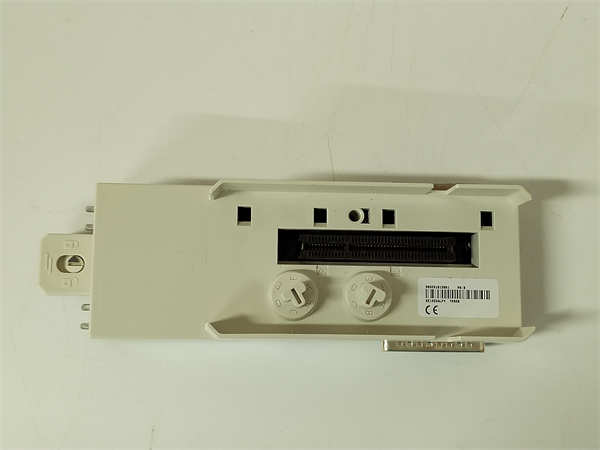
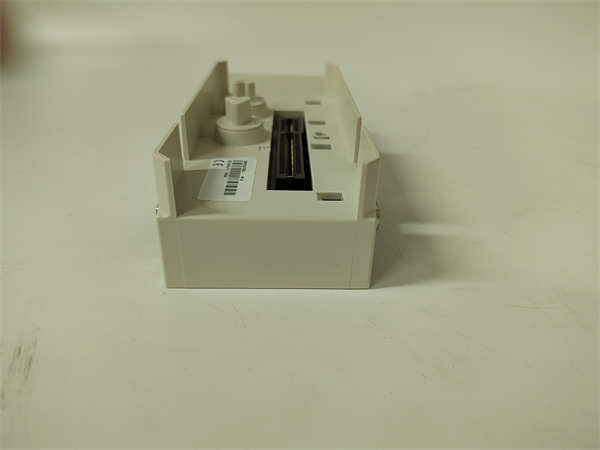
- Product Model: TP858
- ABB Order Number: 3BSE0118138R1 (commonly listed as 3BSE018138R1)
- Manufacturer: ABB Ltd.
- System Family: AC 800M (part of 800xA DCS platform)
- Compatible I/O Modules: AI810 (16-channel isolated analog input), AI815 (16-channel non-isolated), and other legacy analog input cards
- Function:
- Field-side screw terminal block (removable) for 4–20 mA or 0–10 V signals
- Onboard fuses for overcurrent protection (typically 175 mA fast-acting)
- Backplane connector interface to AC 800M baseplate (e.g., TB850, TB851)
- Supports redundant or single-channel wiring configurations
- Mounting: Snap-in to standard AC 800M I/O baseplates
- Electrical Isolation: None (passive unit); isolation provided by the I/O module itself
- Diagnostics: No active electronics—relies on upstream I/O module for fault detection
- Certification: CE, UL, IEC 61131-2 compliant
-

ABB TP858 3BSE018138R1
System Role and Downtime Impact
The TP858 is a mechanical and electrical bridge between field instrumentation (e.g., pressure transmitters, temperature sensors) and the AC 800M analog input modules that digitize and process these signals. While passive, it is essential for physical integration: without a TP858, an AI810 cannot be mounted or connected to field wiring. In large process plants (oil & gas, chemicals, power), hundreds of TP858 units may be deployed. A missing or damaged TP858 halts commissioning, prevents module replacement during outages, or forces temporary bypasses that compromise signal integrity and safety. Unlike active electronics, the TP858 rarely “fails” dynamically—but its obsolescence creates logistical risk: if a unit is lost, damaged, or corroded during maintenance, sourcing a verified replacement can delay restart by days or weeks.
Common operational issues include:
- Blown fuses due to field wiring shorts or transmitter faults (requires fuse replacement or TP858 swap)
- Corroded or loose terminals in humid or corrosive environments, causing intermittent signals
- Cracked housing or broken latch, preventing secure mounting in the baseplate
- Mislabeling or mismatched terminal blocks, leading to wiring errors during troubleshooting
Reliability and Maintenance Considerations
As a passive component, the TP858 has no firmware, power supply, or semiconductors—making it inherently reliable when undamaged. However, its longevity depends on environmental conditions and handling:
- Terminal screws can seize or strip after repeated use
- Fuse holders may lose spring tension over time, increasing contact resistance
- Removable terminal blocks (often Phoenix Contact or Weidmüller type) can be misplaced or substituted with incompatible parts
Best practices:
- Keep spare TP858 units with pre-installed, labeled terminal blocks
- Stock compatible fuses (typically 5×20 mm, 175 mA fast-blow)
- During outages, inspect for cracked housings, burnt marks, or loose connections
- Never force-mount a TP858—if the latch is stiff, check baseplate alignment
Lifecycle Status and Migration Strategy
ABB has discontinued the TP858 (3BSE018138R1) as part of the broader phase-out of legacy AC 800M I/O components. While newer analog input systems (e.g., AI880A with TU880 termination) exist, they are not backward-compatible—requiring new baseplates, wiring adapters, and often field cable re-termination.
Short-term mitigation:
- Inventory all installed TP858 units and maintain ≥2 spares per critical I/O cabinet
- Verify compatibility with your specific AI810/AI815 revision (early vs. late production)
- Avoid mixing TP858 with similar-looking units like TP859 (used for digital I/O)
Long-term strategy:
- Plan gradual migration to AC 800M S800 I/O platform (e.g., AI880 + TU880), which offers better diagnostics, higher density, and support for remote I/O via optical links
- Use wiring transition kits or terminal block adapters to minimize field rewiring during upgrades
- Archive terminal block labeling templates to accelerate spare deployment