 Tel:
Tel:  Email:
  WhatsApp:
 Description
Key Technical Specifications (For Spare Part Verification)
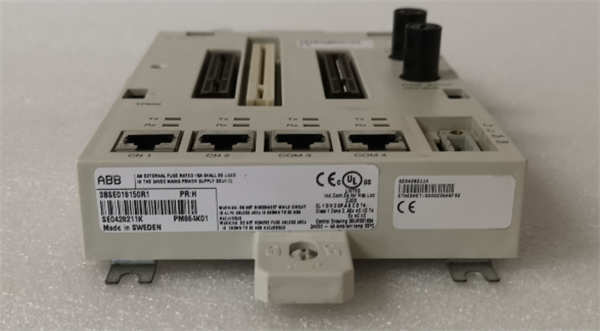
- Product Model: TP830
- ABB Order Code: 3BSE018114R1
- Manufacturer: ABB
- System Family: AC 800M within Extended Automation System 800xA
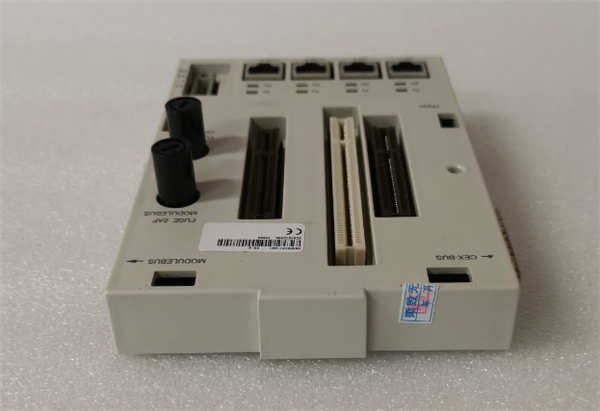
- Module Type: Terminal processing base unit (passive carrier)
- Compatible Terminal Blocks: TU810 (standard), TU814 (with diagnostics)
- Connection to Controller: Interfaces with CI854 or CI864 communication modules via ModuleBus
- Power Supply: Receives power and signals through backplane connector (no external power input)
- Mounting: DIN rail mounted inside I/O cabinet
- Physical Dimensions: Standard ABB I/O module width (approx. 35 mm)
- Operating Temperature: 0°C to +55°C
- Diagnostic Support: Enables LED status pass-through from TU81x terminal blocks
System Role and Downtime Impact
The TP830 is a passive but essential hardware component in legacy ABB AC 800M distributed I/O systems. It provides the physical and electrical platform onto which active terminal blocks (such as TU810) are mounted, enabling field signals—like 4–20 mA inputs or digital outputs—to connect to the controller via the ModuleBus. While it contains no intelligence or firmware, the TP830 is irreplaceable in its installed context: without it, terminal blocks cannot be secured or electrically connected to the I/O station. In operational plants—particularly in power, water, and heavy industry—a missing or damaged TP830 halts I/O expansion or repair. If a failure occurs in a non-redundant I/O rack during operation, replacing a faulty channel becomes impossible without a spare base unit, potentially prolonging downtime or forcing temporary bypasses that compromise safety or control integrity.
Reliability Analysis and Common Failure Modes
As a passive printed circuit board assembly with edge connectors and screw terminals, the TP830 has high inherent reliability. However, after decades of service in industrial environments, several wear mechanisms can compromise functionality. The most common issue is mechanical damage to the ModuleBus edge connector—bent pins or worn gold plating due to repeated insertion/removal or vibration—leading to intermittent communication with the CI854/CI864 module. Corrosion on terminal block mounting clips or PCB traces may also develop in high-humidity or corrosive atmospheres, increasing contact resistance. Less frequently, physical cracking of the plastic housing or PCB can occur due to mishandling or thermal stress.
Because the TP830 lacks active electronics, it does not suffer from capacitor aging or battery failure. Preventive maintenance should emphasize visual inspection of the edge connector for debris or oxidation, checking terminal block retention force, and ensuring proper torque on mounting screws. Storing spares in anti-static, dry conditions is critical to preserving connector integrity.
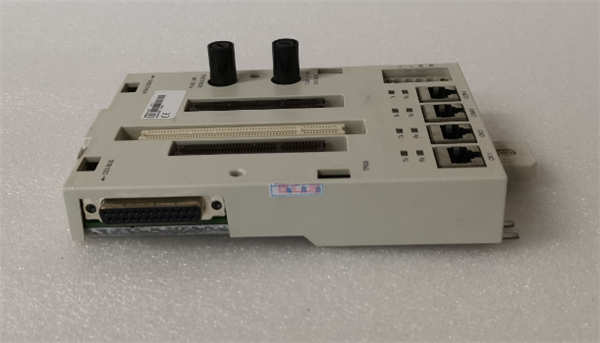
TP830 3BSE018114R1 ABB
Lifecycle Status and Migration Strategy
ABB has officially discontinued the TP830 (3BSE018114R1) as part of the older AC 800M I/O generation. Production ceased years ago, and the part is no longer available through standard channels. Remaining units exist only in surplus inventories or decommissioned systems, often commanding high prices with no warranty or traceability. Continued use introduces significant operational risk, especially for facilities without adequate spare coverage.
Short-term mitigation includes auditing existing stock, avoiding unnecessary module swaps, and implementing strict handling protocols. For sustainable operation, ABB recommends migrating to the newer TP857 or TP859 base units, which support TU854/TU859 terminal blocks and offer enhanced mechanical design and diagnostic capabilities. This upgrade requires re-mounting terminal blocks and updating the hardware configuration in Control Builder M, but it maintains compatibility with the same AC 800M controllers and 800xA engineering environment—avoiding full system redevelopment. Sites planning long-term modernization may consider transitioning to ABB’s latest I/O platforms under the ABB Ability™ portfolio for improved cybersecurity, remote access, and lifecycle support.