 Tel:
Tel:  Email:
  WhatsApp:
 Description
Key Technical Specifications (For Spare Parts Verification)
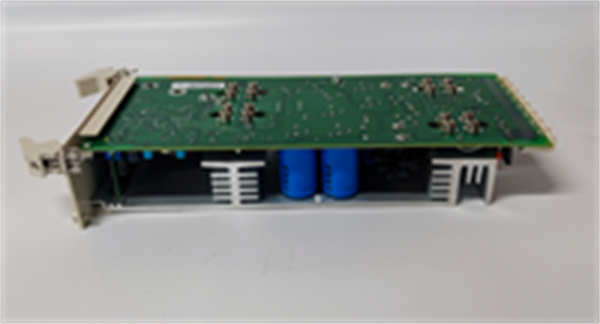
- Product Model: SR511
- Manufacturer: ABB
- Order Code: 3BSE000863R1
- System Platform: MasterPiece 200 / MasterPiece 300 (Advant Controller)
- Module Type: Mixed analog I/O (AI + AO)
- Analog Inputs: 4 channels, 0–20 mA or 0–10 V (configurable via jumpers)
- Analog Outputs: 2 channels, 0–20 mA or 0–10 V (configurable via jumpers)
- Resolution: 12-bit
- Isolation: Input-to-output and channel-to-backplane isolation (basic, per 1980s standards)
- Mounting: Plug-in module for MP200/MP300 I/O chassis
- Configuration: Hardware jumper-based (no software configuration)
- Diagnostic Capability: None – no self-diagnostics or status reporting
System Role and Downtime Impact
The SR511 is typically installed in I/O cabinets of legacy ABB MasterPiece systems, commonly found in power plants, pulp & paper mills, and older chemical facilities. It serves as a hybrid interface—simultaneously reading field transmitter signals (e.g., pressure, level) and driving final control elements (e.g., control valves, VFD setpoints). Because it combines both input and output functions in a single module, its failure affects multiple control loops at once.
In non-redundant MP200/MP300 systems—which is the norm—failure of an SR511 results in loss of both measurement and control for its assigned loops. For example, a failed SR511 handling boiler drum level input and feedwater valve output could cause a cascade trip. Since these systems lack modern diagnostic capabilities, operators often only detect the fault after process deviation occurs. Recovery requires physical module replacement and, critically, reconfiguration of internal jumpers to match the original setup—a step prone to error if documentation is incomplete.
Reliability Analysis and Common Failure Modes
The SR511, designed in the pre-SMT era, uses through-hole components and discrete analog circuitry that are highly susceptible to long-term environmental stress. The most common failure mode is drift or complete loss of analog channels due to aging operational amplifiers and precision resistors. Humidity and temperature cycling accelerate this degradation, especially in unconditioned control rooms.
A critical design limitation is the lack of any diagnostic feedback. Unlike modern I/O modules, the SR511 cannot report open-circuit inputs, shorted outputs, or calibration errors. Failures are often silent until the process behaves abnormally. Additionally, the jumper-based configuration is vulnerable to accidental displacement during maintenance, leading to incorrect signal ranges (e.g., 0–10V interpreted as 4–20mA), which can damage field devices.
Recommended preventive actions include:
- Maintain detailed jumper configuration records for every SR511 in service.
- Perform annual loop calibration checks using a precision calibrator to detect channel drift early.
- Inspect terminal blocks and backplane connectors for corrosion or oxidation, which can introduce noise or signal loss.
- Store spare SR511 modules in climate-controlled, anti-static packaging to preserve component integrity.
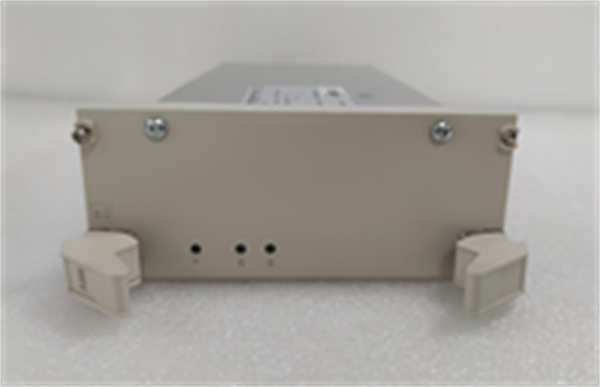
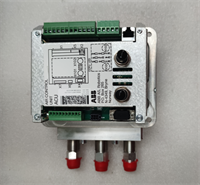
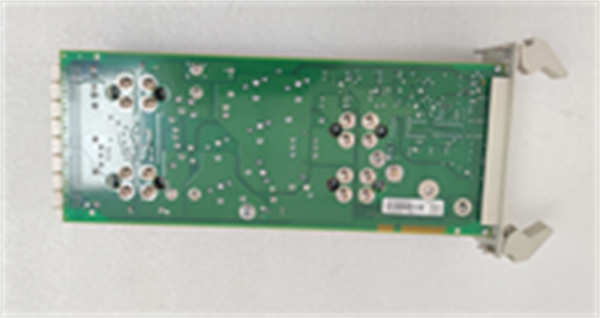
SR511 3BSE000863R1 ABB
Lifecycle Status and Migration Strategy
ABB discontinued the MasterPiece platform decades ago, and the SR511 has been obsolete for over 20 years. Continuing to rely on it poses severe operational risk: spare parts are dwindling, expertise is vanishing, and integration with modern monitoring tools is impossible.
As a temporary measure, facilities may acquire tested units from specialized legacy automation suppliers, but each must be bench-tested across all input/output ranges before deployment. Some organizations attempt board-level repair, though component obsolescence makes this increasingly impractical.
The definitive solution is migration to a modern platform such as ABB’s AC 800M with 800xA, or third-party systems like Siemens PCS 7 or Rockwell PlantPAx. ABB offers formal migration services, including I/O wiring preservation (using terminal conversion kits) and logic translation assistance. While this requires capital investment, it eliminates single-point obsolescence risks, restores diagnostic visibility, and enables cybersecurity compliance. For sites with multiple legacy racks, a staged migration—starting with the highest-risk units—is the most pragmatic path forward.