 Tel:
Tel:  Email:
  WhatsApp:
 Description
Key Technical Specifications (For Spare Parts Verification)
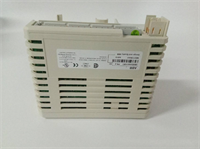
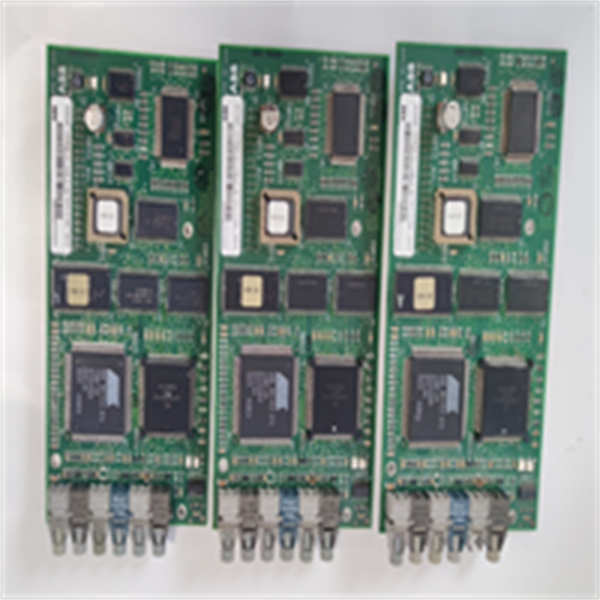
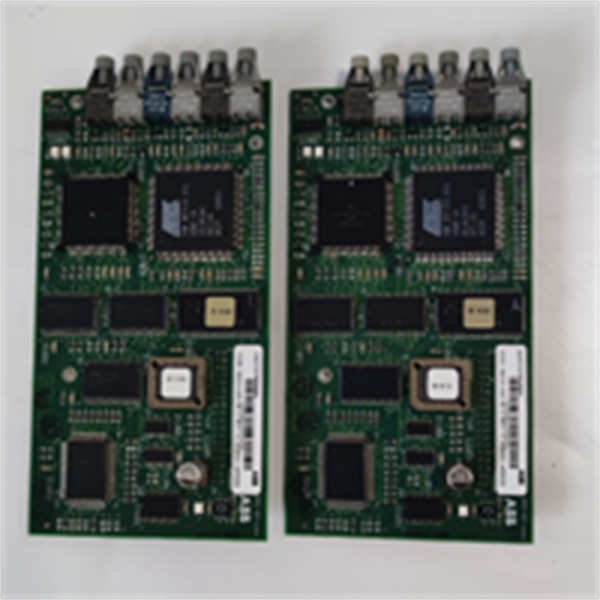
- Product Model: SDCS-AMC-DC2
- Manufacturer: ABB
- System Family: AC 800M Distributed Control System (DCS)
- Module Type: Communication Interface Module (Fieldbus Adapter)
- Supported Protocol: Profibus DP (Master/Slave configurable)
- Communication Speed: Up to 12 Mbps (auto-baud or fixed)
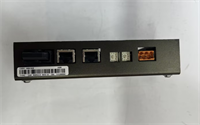
- Physical Interface: 9-pin D-SUB (RS-485), isolated
- Power Supply: +5 VDC and ±12 VDC from AC 800M backplane
- Mounting: Standard slot in AC 800M I/O baseplate (e.g., TB820V2)
- Diagnostic Indicators: LED status for power, module OK, communication activity, and bus fault
- Max. Connected Slaves: Up to 31 Profibus devices per segment
- Required Firmware: Compatible with AC 800M firmware versions up to approximately v5.1 SP2
System Role and Downtime Impact
The SDCS-AMC-DC2 is a critical enabler of distributed I/O architecture in mid-generation ABB AC 800M systems, commonly deployed in power generation, water treatment, and industrial facilities commissioned between the early 2000s and 2010s. It resides in the main controller rack and connects via shielded twisted-pair cable to remote I/O cabinets housing S800 modules. This design reduces field wiring costs but creates a single point of failure: if the AMC-DC2 fails, all I/O on its Profibus segment becomes unreachable.
In practice, this can lead to loss of motor feedback, valve position signals, or temperature readings across an entire process unit. While some systems implement dual AMC modules for redundancy, many cost-optimized installations use a single unit. A failure therefore often forces operators into manual bypass mode or triggers automatic shutdown sequences if safety-critical loops are affected. Recovery requires physical replacement and, in some cases, reinitialization of the Profibus master configuration.
Reliability Analysis and Common Failure Modes
Despite robust initial construction, the SDCS-AMC-DC2 is vulnerable to long-term reliability issues stemming from its reliance on aging semiconductor technology and exposure to electrical transients. The most frequent failure mode is corruption or loss of the internal configuration memory (typically battery-backed SRAM), causing the module to boot into a default or unresponsive state. The onboard coin-cell battery—rated for 7–10 years—often depletes unnoticed, leading to configuration loss during unexpected power cycles.
Additional failure mechanisms include:
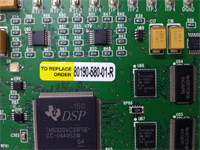
- Degradation of the RS-485 transceiver ICs due to repeated ground loop currents or lightning-induced surges on the fieldbus cable.
- Crystallization of solder joints on high-pin-count connectors from thermal cycling, resulting in intermittent communication.
- Electrolytic capacitor aging on the internal DC/DC converter, causing voltage instability and spontaneous resets.
A key design limitation is the absence of hot-swap capability and limited diagnostic depth: while LEDs indicate basic status, detailed error logging (e.g., CRC errors, slave timeouts) requires access to the Control Builder M engineering station.
Preventive maintenance should include:
- Proactively replacing the internal backup battery every 8 years.
- Verifying Profibus cable shielding continuity and grounding at both ends annually.
- Monitoring bus error counters via Control Builder Diagnostics.
- Maintaining a pre-configured spare module that has been tested on a representative rack.
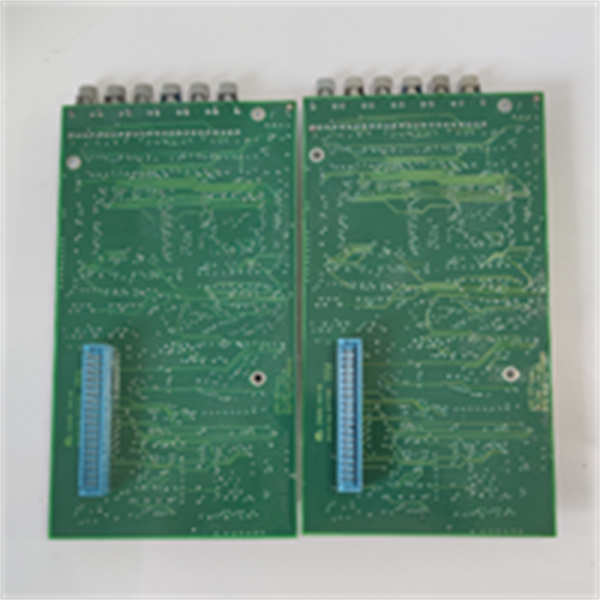
ABB SDCS-AMC-DC2
Lifecycle Status and Migration Strategy
ABB has officially discontinued the SDCS-AMC-DC2 and related AMC series modules. No new units are available, and technical support is restricted to legacy documentation. Continuing to operate systems dependent on this module carries significant risk: authentic spares are scarce, pricing is volatile, and engineering expertise is declining.
As a short-term mitigation, facilities may acquire and rigorously test surplus units from specialized vendors who validate Profibus communication under load and confirm configuration retention after power cycling.
The recommended long-term strategy is migration to modern communication infrastructure. ABB’s current AC 800M platform favors Ethernet-based I/O (e.g., via CI874 or PN/PN couplers using PROFINET). This involves:
- Replacing AMC-DC2 modules with Ethernet communication cards (e.g., CI854A or CI874).
- Upgrading remote I/O to S800 modules with built-in Ethernet interfaces.
- Reconfiguring the control application in Control Builder M to use PROFINET I/O instead of Profibus.
While this requires re-engineering network topology and re-downloading applications, it eliminates dependency on obsolete fieldbus hardware, improves data bandwidth, and aligns the system with current cybersecurity standards. For plants with extended operational lifespans, a phased migration—starting with the most failure-prone segments—is a pragmatic approach to manage risk and capital expenditure.