 Tel:
Tel:  Email:
  WhatsApp:
 Description
Key Technical Specifications (For Spare Parts Verification)
- Product Model: SD821
- Manufacturer: ABB
- System Platform: ABB AC 800M within System 800xA architecture
- Module Type: Digital Output (Relay-based)
- Number of Channels: 16, grouped in 4 banks of 4 (common per bank)
- Contact Rating: 2 A @ 250 VAC resistive, 2 A @ 125 VDC
- Switching Voltage Range: 5–250 VAC / 5–125 VDC
- Electrical Isolation: Reinforced insulation between logic and field sides
- Installation Requirement: Must be mounted on TB840 or TB850 baseplate with CI801/CI840 communication interface
- Diagnostic Capability: Basic channel status via LED; no advanced diagnostics or short-circuit detection
- Physical Form Factor: Standard AC 800M module width (40 mm)
System Role and Operational Impact
The SD821 is a workhorse output module in legacy ABB AC 800M systems, commonly deployed in power plants, water treatment facilities, and industrial process lines. Unlike solid-state outputs, its electromechanical relays can directly switch higher-voltage AC circuits—making it ideal for controlling contactors, dampers, and emergency shutdown valves without intermediate interposing relays. This direct drive capability simplifies wiring but also places the module at the heart of critical control loops.
If an SD821 fails, the consequences can be immediate and severe: a tripped boiler feed pump, an unresponsive fire damper, or a stuck chemical dosing valve. Because it often interfaces with safety-related equipment, its malfunction may trigger plant-wide alarms or force manual intervention. While redundant architectures can mitigate risk, many older installations use single-channel outputs due to cost constraints at the time of build—making this module a single point of failure in numerous applications.
Reliability Analysis and Common Failure Modes
The primary weakness of the SD821 lies in its reliance on mechanical relays, which have finite operational lifespans. Typical failure modes include:
- Contact welding: Caused by frequent switching of inductive loads (e.g., motor coils) without proper snubber circuits, leading to channels stuck “ON.”
- Coil burnout: Resulting from sustained overvoltage or thermal stress in poorly ventilated cabinets.
- Mechanical fatigue: After hundreds of thousands of cycles, relay springs lose tension, causing intermittent contact or complete open-circuit failure.
- Terminal corrosion: In humid or corrosive environments, screw terminals oxidize, increasing resistance and generating heat during operation.
From a maintenance perspective, technicians should monitor for abnormal relay clicking sounds, unexpected device states, or burnt smells near the module. During scheduled outages, perform contact resistance tests using a milliohm meter and inspect for pitting or carbon buildup on relay contacts. Avoid hot-swapping the module—always de-energize field power first, as inrush currents during insertion can damage both the module and connected devices.
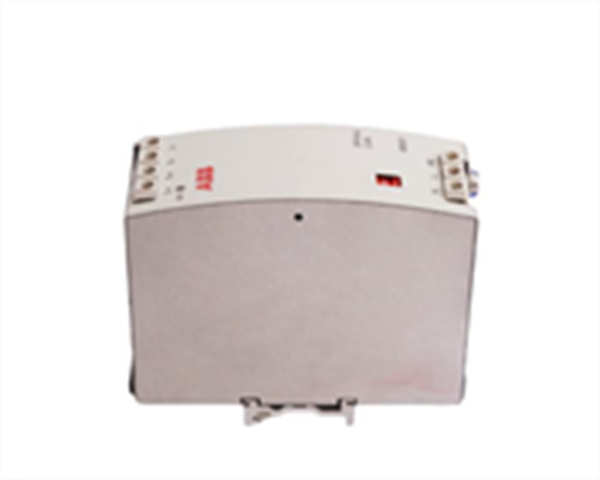
ABB SD821
Lifecycle Status and Migration Strategy
ABB has officially discontinued the SD821, with no direct replacement offered in current AC 800M portfolios. The company’s modern digital output modules (e.g., SD823, SD824) use solid-state switching and require external interposing relays for high-voltage loads—changing the system architecture significantly.
Continued reliance on the SD821 poses growing risks: global inventory is dwindling, used units may have unknown cycle counts, and counterfeit modules lacking proper isolation certification have entered gray markets. For facilities unable to fund full I/O upgrades, a pragmatic interim approach includes:
- Securing 2–3 verified spare modules from reputable suppliers
- Installing external monitoring (e.g., current sensors) to detect welded contacts
- Reducing switching frequency via software debouncing or latching logic
For long-term sustainability, ABB recommends migrating to the SD823 (transistor output) paired with panel-mounted safety relays for high-voltage switching. This solution restores diagnostic visibility (e.g., load current feedback, short-circuit alerts) and aligns with modern functional safety practices. The migration requires re-engineering terminal wiring, updating I/O tags in Control Builder M, and validating all interlock logic—but delivers improved reliability, reduced maintenance, and compatibility with future system expansions.