 Tel:
Tel:  Email:
  WhatsApp:
 Description
Key Technical Specifications (For Spare Part Verification)
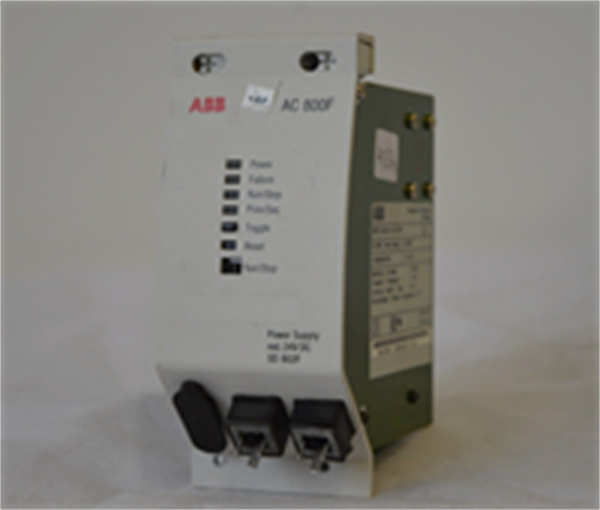
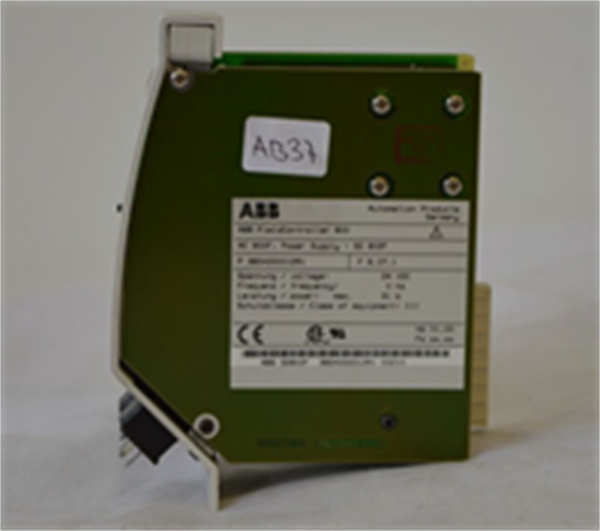
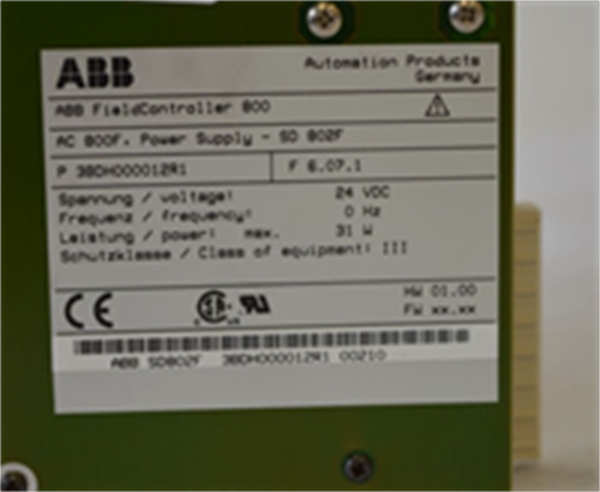
- Product Model: SD802F
- Manufacturer: ABB
- System Platform: ABB S800 I/O family (used with AC 800M controllers in 800xA systems)
- Output Type: Electromechanical relay (normally open, NO)
- Number of Channels: 16
- Contact Rating: 250 VAC / 24 VDC, 2 A per channel (resistive load)
- Electrical Isolation: Reinforced insulation between field and backplane (≥2.5 kV)
- Diagnostic Capability: Per-channel LED status indication; no built-in electronic diagnostics
- Mounting: Snap-on to S800 base unit (e.g., TB806D or TB826D)
- Power Supply: Powered via S800 backplane (no external supply needed)
- Operating Temperature: 0°C to +60°C
- Approvals: CE, UL, CSA, ATEX (for hazardous area variants)
System Role and Impact of Failure
The ABB SD802F is a key output interface in process and factory automation systems built on the AC 800M platform with S800 I/O. It directly drives high-voltage or high-current field devices such as solenoid valves, pilot lights, small contactors, and alarm horns—components that cannot be controlled by standard transistor outputs. Because it uses electromechanical relays, it provides full galvanic isolation and can switch both AC and DC loads, making it indispensable in mixed-voltage environments. In safety-critical applications (e.g., emergency shutdown systems), this module may be part of a certified fail-safe chain. If the SD802F fails—due to welded contacts, coil burnout, or internal trace damage—all 16 connected devices become unresponsive. This can halt batch processes, disable safety interlocks, or prevent equipment startup, leading to unplanned downtime. Unlike intelligent modules, the SD802F offers no remote diagnostics, so faults are often only discovered during operational testing.
Reliability Analysis and Common Failure Modes
The primary weakness of the SD802F lies in its reliance on mechanical relays, which have a finite operational life. Typical failure modes include contact welding (especially when switching inductive loads without proper suppression), coil degradation from sustained overvoltage, and contact oxidation due to low-load “fritting.” Frequent cycling accelerates wear, and arcing during switching generates heat that can degrade nearby components over time. The module also lacks current monitoring or arc detection, so a single failed channel may go unnoticed until a process event occurs. Environmental factors such as high ambient temperature, humidity, or corrosive atmospheres further reduce relay lifespan. As part of preventive maintenance, technicians should periodically perform functional tests on each output channel under load, inspect for discoloration or burnt smell near terminals, and verify that connected devices include flyback diodes or snubbers for inductive loads. Given its passive design, the SD802F cannot be repaired in the field—replacement is the only option, underscoring the need for verified spares.
ABB SD802F
Lifecycle Status and Migration Strategy
ABB has officially discontinued the SD802F as part of the broader phase-out of early S800 I/O modules. While some distributors may still hold new-old-stock, production ceased years ago, and no direct drop-in replacement exists in current ABB portfolios. Continued use carries significant operational risk: lead times for genuine units can exceed six months, and counterfeit or previously used modules may lack performance guarantees. In the short term, facilities can mitigate risk by implementing output redundancy (where feasible), conducting more frequent functional checks, and securing tested spares from trusted suppliers. For long-term sustainability, ABB recommends migrating to the S800 I/O successor series, such as the SD822F (solid-state relay output) or SD823F (electromechanical relay with enhanced diagnostics), both of which offer improved reliability and partial backward compatibility via updated base units. However, migration requires re-engineering terminal wiring, updating controller firmware, and potentially revising safety validation documentation. Alternatively, some users transition entire I/O subsystems to ABB AC500 or AC800M with newer I/O families that support PROFINET and advanced diagnostics. A structured obsolescence management plan—including inventory audit, risk scoring, and phased replacement—is essential to avoid disruptive failures in aging automation infrastructure.