 Tel:
Tel:  Email:
  WhatsApp:
 Description
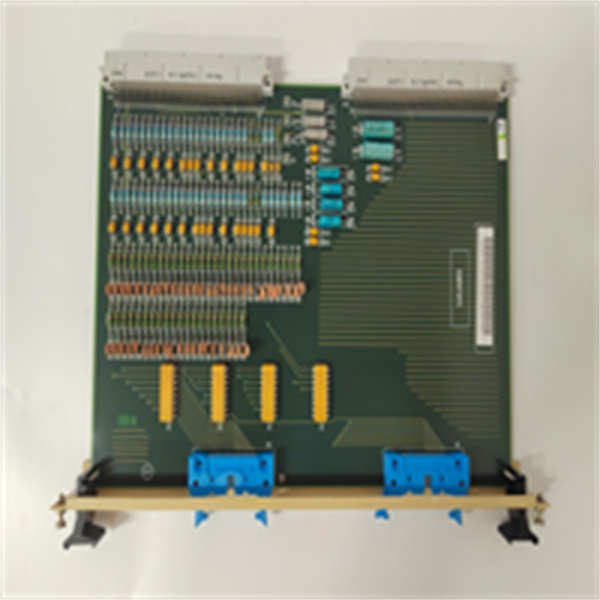
Key Technical Specifications (For Spare Parts Verification)
- Product Model: SCYC51040
- Manufacturer: ABB
- Order Code: 58052680E
- System Platform: ABB System 800xA / AC 800M
- Communication Protocol: Profibus DP (Master), compliant with IEC 61158
- Baud Rate: Configurable up to 12 Mbps
- Max Slave Devices: 126 per segment (standard Profibus limit)
- Electrical Interface: 9-pin D-SUB (RS-485), isolated
- Power Supply: +5 VDC from AC 800M backplane
- Installation Slot: Dedicated communication slot in PM86x/PPC9xx controller racks
- Firmware Dependency: Requires compatible AC 800M firmware version (typically v2.x–v3.x)
System Role and Impact of Failure
The SCYC51040 serves as the primary Profibus DP master interface in legacy ABB AC 800M control systems. It is typically installed in the main controller rack and connects to remote I/O clusters or intelligent field devices (e.g., drives, valve terminals). If this module fails or loses communication, all data from its assigned Profibus segment becomes unavailable. In a process plant—such as a refinery or chemical facility—this can lead to loss of critical analog and digital signals, triggering safety interlocks, forcing manual operation, or causing a complete unit shutdown. Given its central role in data acquisition, it is classified as a high-criticality component in aging System 800xA installations.
Reliability Analysis and Common Failure Modes
Despite its robust industrial design, the SCYC51040 is susceptible to age-related degradation due to its long deployment cycles (many units have been in service for 15+ years). The most common failure modes include: failure of on-board electrolytic capacitors leading to unstable power regulation; corrosion or mechanical wear on the D-SUB connector pins due to repeated handling or environmental humidity; and firmware corruption during unexpected power cycles, especially if the host controller lacks clean shutdown procedures.
A key design vulnerability is its reliance on stable +5V backplane power—any ripple or voltage sag from aging power supplies can cause intermittent communication faults that are difficult to diagnose. Additionally, the module contains no user-serviceable components; once internal circuitry degrades, recovery is not possible without replacement.
For maintenance teams, proactive measures are essential: inspect the D-SUB connector for bent pins or oxidation; verify Profibus termination resistors at both ends of the segment; monitor communication error counters via Control Builder M; and maintain spare modules in climate-controlled storage to prevent capacitor aging. Regular backup of GSD files and network configuration is also critical to accelerate recovery.
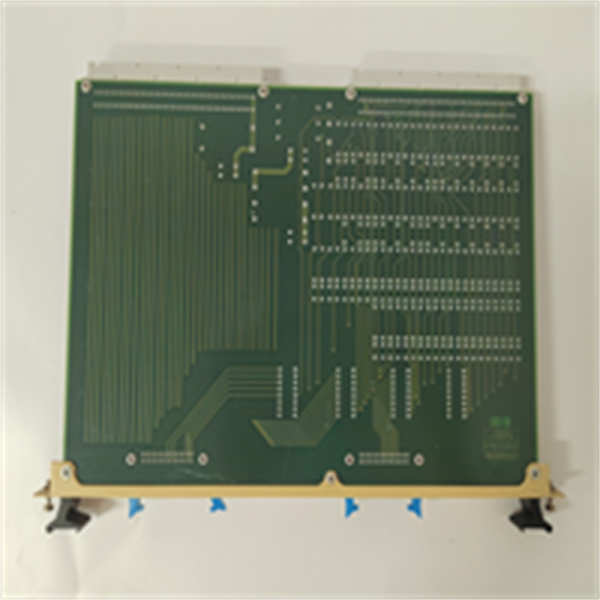
ABB SCYC51090 58053899E
Lifecycle Status and Migration Strategy
ABB has officially discontinued the SCYC51040 (58052680E), classifying it as obsolete with no direct “drop-in” successor. Continued use carries significant operational risk: genuine new-old-stock (NOS) units are extremely scarce, and prices on the secondary market have risen sharply. More critically, ABB no longer provides firmware updates or diagnostic support for this module.
As an interim measure, facilities may source tested, refurbished units from certified suppliers with full functional validation. Some sites implement redundant Profibus networks using dual SCYC51040 modules (where hardware permits) to mitigate single-point failure risk.
For a sustainable path forward, ABB’s recommended migration is to transition to the AC 800M CI854A or CI871 modules, which support modern protocols like PROFINET or Ethernet/IP. However, this requires: replacing all remote I/O stations with compatible units (e.g., TB850 + I/O modules with PROFINET interface), updating controller firmware, and re-engineering the communication architecture in Control Builder M. While capital-intensive, this upgrade eliminates dependency on obsolete fieldbus technology and aligns the system with current cybersecurity and interoperability standards. A phased migration—starting with non-critical loops—is often the most pragmatic approach for asset-intensive industries.