 Tel:
Tel:  Email:
  WhatsApp:
 Description
Key Technical Specifications (For Spare Parts Verification)
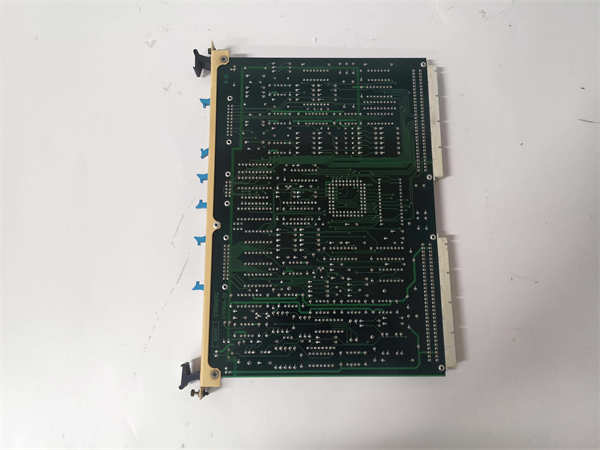
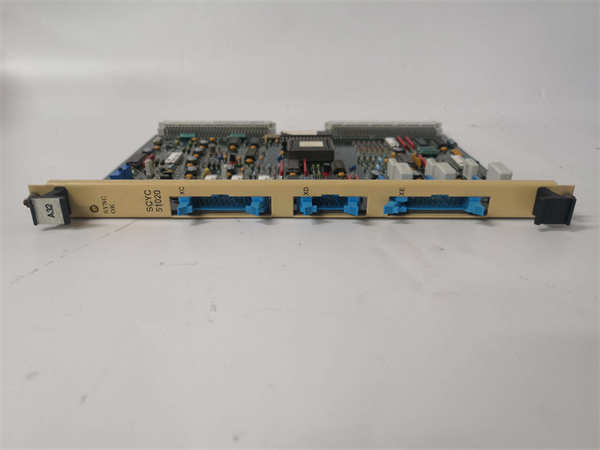
- Product Model: SCYC51020
- Manufacturer: ABB
- System Platform: AC 800M Controller (used in Symphony Plus, Melody, and custom DCS/PLC systems)
- Order Code: 58052582H
- Communication Protocol: PROFIBUS DP (Class 1 and Class 2)
- Redundancy: Supports redundant bus configuration with automatic switchover
- Data Rate: Configurable from 9.6 kbps to 12 Mbps per channel
- Interfaces: Two isolated RS-485 ports via 9-pin D-sub connectors
- Isolation Voltage: 500 VAC between logic and field sides
- Diagnostic Features: LED indicators for power, run, fault, and bus activity per channel; detailed diagnostics via Control Builder M
- Mounting: DIN rail with standard AC 800M backplane
- Operating Temperature: 0°C to +60°C
System Role and Downtime Impact
The SCYC51020 is deployed in high-availability ABB AC 800M systems where continuous I/O communication is essential—common in power plants, oil & gas facilities, and water treatment plants. It provides two independent PROFIBUS DP channels that can be configured for redundancy, ensuring that a single cable break or device fault does not disrupt control of downstream I/O racks (e.g., S800 modules). In non-redundant use, it simply offers two separate fieldbus segments. If the module fails entirely, all connected PROFIBUS devices become unreachable, potentially disabling feedwater controls, burner management, motor starters, or safety interlocks. In redundant topologies, a single-channel failure may go unnoticed until the second channel fails—making proactive monitoring essential.
Reliability Analysis and Common Failure Modes
Despite industrial-grade construction, aging units are prone to several failure mechanisms:
- RS-485 transceiver degradation: Repeated exposure to ground loops, surges, or improper termination causes cumulative damage to the isolated driver ICs, leading to intermittent bus errors or complete port failure.
- Isolation barrier breakdown: The digital isolators separating field and logic sides can fail due to voltage transients, either shorting (risking backplane damage) or opening (blocking communication).
- Firmware corruption: Rare but possible after prolonged operation without power cycling; may cause the module to hang during initialization.
- Connector and PCB fatigue: Vibration or thermal cycling can loosen D-sub pins or crack solder joints, especially if cable strain relief is inadequate.
Recommended maintenance practices include:
- Verifying proper PROFIBUS termination (120 Ω at segment ends) and single-point shield grounding.
- Monitoring bus error counters and diagnostic logs in Control Builder M during routine checks.
- Inspecting D-sub connectors for corrosion, bent pins, or loose shells.
- Keeping spare modules powered periodically to maintain firmware integrity and component health.
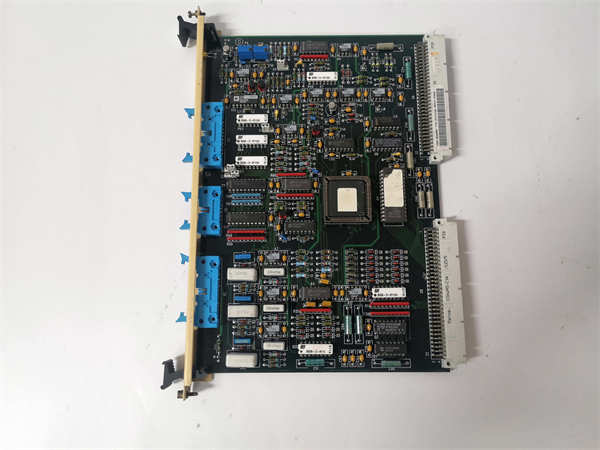
ABB SCYC51020 58052582H
Lifecycle Status and Migration Strategy
ABB (Hitachi Energy) has formally discontinued the SCYC51020. No new production exists, and official repair or replacement services are no longer offered. Continued use carries significant risk due to dwindling spare availability and the prevalence of untested units in the gray market.
Interim mitigation strategies:
- Source only from suppliers who perform full functional testing on live PROFIBUS test benches, including redundancy switchover and error handling.
- Maintain at least one validated spare per critical controller.
- Install external PROFIBUS repeaters with galvanic isolation to reduce electrical stress on the module ports.
Long-term migration path:
Hitachi Energy recommends transitioning to Ethernet-based communication using the CI874 (3BSE048728R1) PROFINET module. This supports modern S800 I/O over PROFINET and offers higher bandwidth, better diagnostics, and cybersecurity features. The migration requires:
Hitachi Energy recommends transitioning to Ethernet-based communication using the CI874 (3BSE048728R1) PROFINET module. This supports modern S800 I/O over PROFINET and offers higher bandwidth, better diagnostics, and cybersecurity features. The migration requires:
- Replacing the SCYC51020 with CI874 in the AC 800M rack.
- Rewiring or replacing field devices with PROFINET-capable equivalents.
- Updating network configuration in Control Builder M.
For sites retaining PROFIBUS devices, a PROFIBUS-to-PROFINET gateway (e.g., Anybus X-gateway) can bridge legacy I/O to a CI874 backbone—though this adds latency and complexity. Until full migration, a rigorously tested spare pool remains the most practical approach to ensure operational continuity.