 Tel:
Tel:  Email:
  WhatsApp:
 Description
Key Technical Specifications (For Spare Parts Verification)
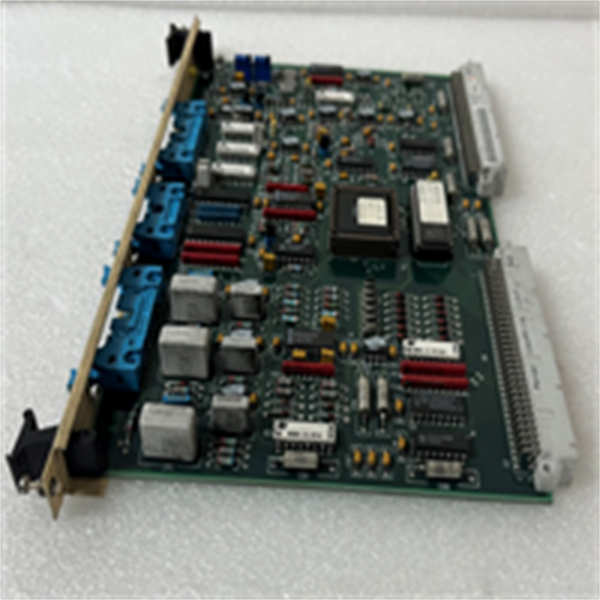
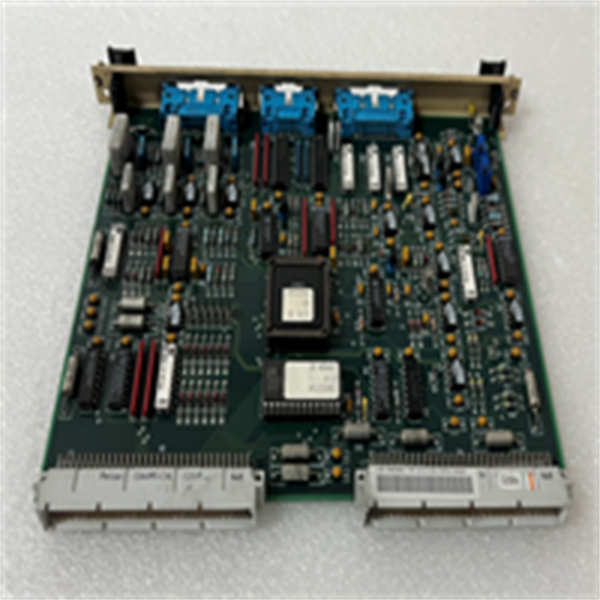
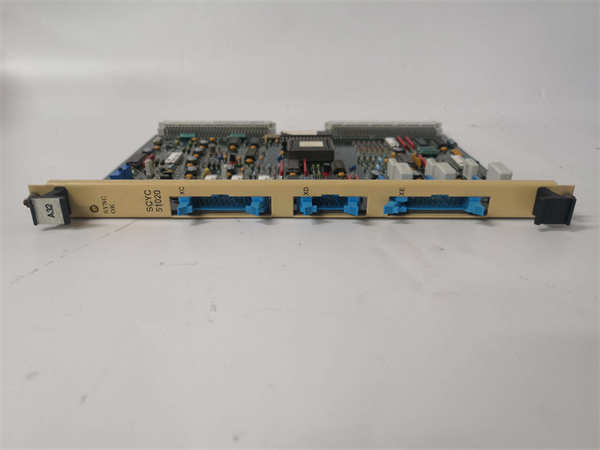
- Product Model: SCYC51020
- Manufacturer: ABB
- Order Code: 58052582H
- System Platform: ABB System 800xA / AC 800M
- Communication Interfaces: 2 independent serial ports (configurable as RS-232 or RS-485)
- Supported Protocols: Modbus RTU (Master and Slave), DF1, ACSII, user-defined protocols via Control Builder M
- Baud Rate: Up to 115.2 kbps per channel
- Electrical Isolation: Galvanic isolation on RS-485 lines (≥ 500 VAC)
- Power Supply: +5 VDC from AC 800M backplane
- Installation Slot: Dedicated communication slot in PM86x/PPC9xx controller racks
- Firmware Requirement: Compatible with AC 800M firmware versions v2.x through v4.x
System Role and Impact of Failure
The SCYC51020 acts as a vital bridge between the AC 800M control system and a wide array of serial-based field devices that lack modern Ethernet connectivity. In power plants, it often connects to turbine governors or emission analyzers; in water treatment facilities, to ultrasonic flow meters or pH controllers. Because these devices frequently provide regulatory or safety-critical data, loss of communication through the SCYC51020 can result in incomplete process visibility, manual override requirements, or—depending on system design—automatic trip sequences. While not always causing a full plant shutdown, its failure typically degrades operational integrity and may violate compliance reporting requirements.
Reliability Analysis and Common Failure Modes
Although designed for industrial environments, the SCYC51020 is vulnerable to long-term reliability issues due to its age and component technology. The most prevalent failure mechanisms include: degradation of optocouplers in the RS-485 isolation circuit, leading to intermittent communication or complete port failure; corrosion on terminal blocks or DB9 connectors in humid or corrosive atmospheres; and damage from electrical transients if surge protection is inadequate on field wiring.
A notable design limitation is the shared backplane power rail—any instability in the +5V supply (e.g., from aging power modules like 216DB61) can cause the SCYC51020 to reset or hang without clear fault indication. Additionally, configuration errors (e.g., mismatched parity or stop bits) are often misdiagnosed as hardware faults, delaying recovery.
Maintenance best practices include: regularly inspecting terminal connections for tightness and oxidation; verifying grounding and shielding of serial cables; using external transient suppressors on RS-485 lines; and maintaining up-to-date copies of protocol configuration files (.prj/.xml) in version-controlled archives. Testing spare units on a bench rig before installation is strongly advised to avoid “dead-on-arrival” surprises during emergencies.
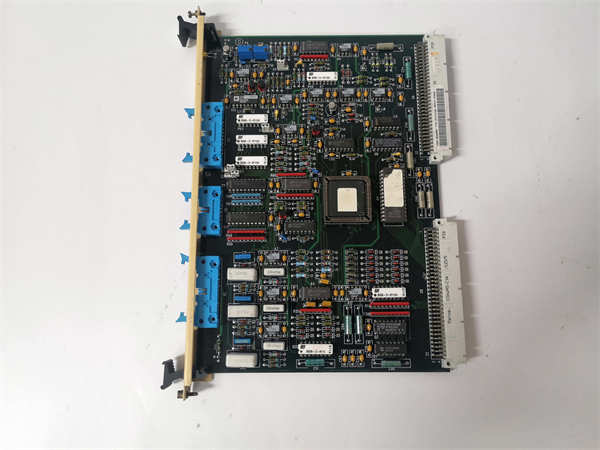
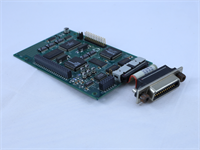
ABB SCYC51020 58052582H
Lifecycle Status and Migration Strategy
ABB has formally discontinued the SCYC51020 (58052582H), with no direct replacement in the current product portfolio. Continued reliance on this module introduces growing operational risk: genuine new-old-stock is virtually unavailable, and the secondary market is prone to counterfeit or untested units. Furthermore, ABB no longer provides engineering support for troubleshooting protocol-specific issues on this hardware.
Short-term mitigation includes securing tested, refurbished spares with full functional validation and implementing protocol redundancy where possible (e.g., dual SCYC51020 modules polling the same device). Some sites deploy external protocol gateways (e.g., ProSoft or HMS Anybus) to offload serial traffic, though this adds complexity.
For long-term sustainability, ABB recommends migrating to modern communication architectures using Ethernet-enabled I/O or edge gateways. Specifically, replacing serial devices with PROFINET or Modbus TCP equivalents—and using native AC 800M Ethernet interfaces (e.g., PM865 built-in port or CI871)—eliminates dependency on obsolete serial hardware. This transition requires re-engineering device integration in Control Builder M and potentially replacing legacy field instruments, but it delivers improved diagnostics, cybersecurity (via VLANs/firewalls), and alignment with IIoT readiness. A staged approach—prioritizing high-risk or high-maintenance serial links—is typically the most cost-effective path for brownfield sites.