 Tel:
Tel:  Email:
  WhatsApp:
 Description
Key Technical Specifications (For Spare Parts Verification)
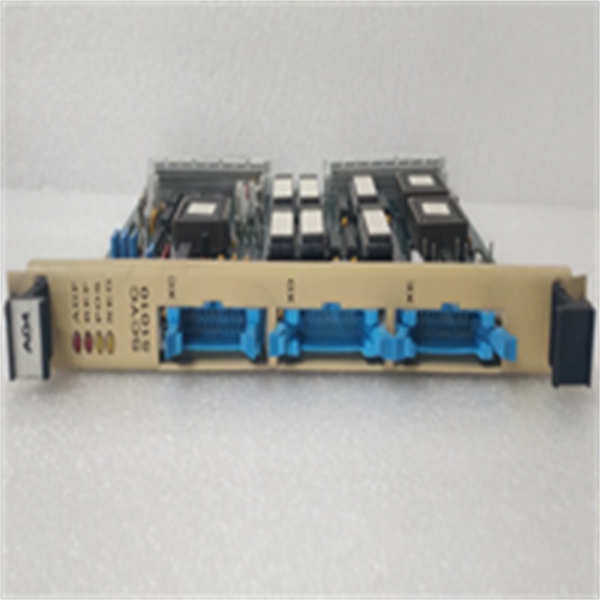
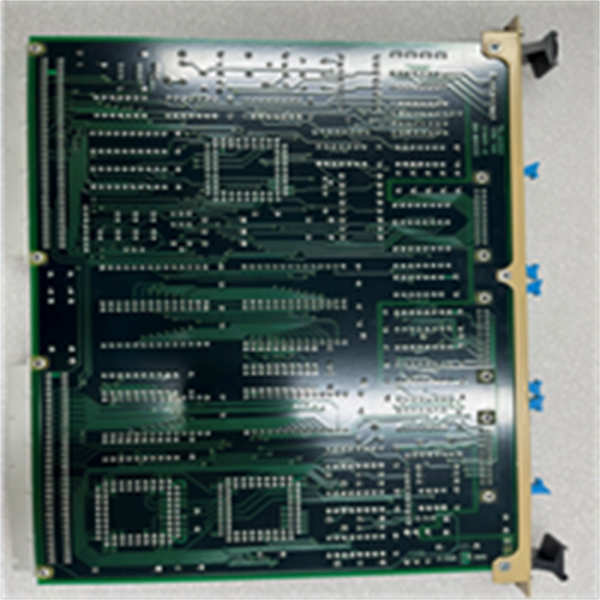
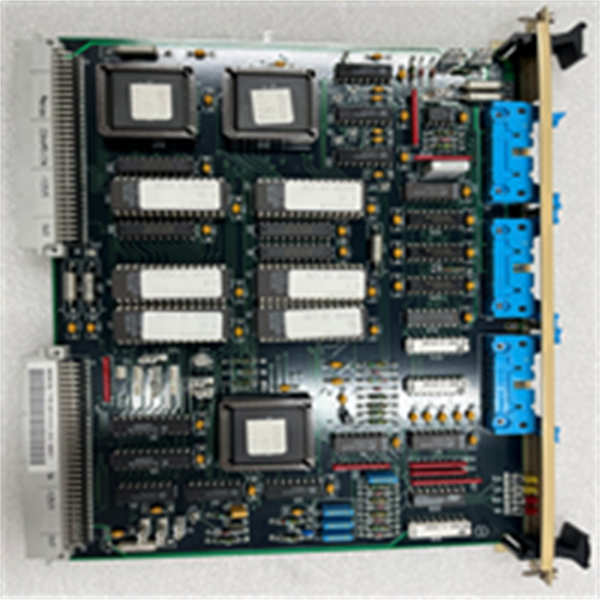
- Product Model: SCYC51010
- Manufacturer: ABB
- Order Code: 58052515G
- System Platform: ABB System 800xA / AC 800M
- Communication Protocol: Foundation Fieldbus H1 (IEC 61158 Type 1), Link Active Scheduler (LAS) capable
- Communication Speed: 31.25 kbps
- Max Devices per Segment: Up to 32 field devices (including terminators and power conditioners)
- Physical Interface: IEC 61158-compliant twisted pair, intrinsically safe (IS) capable with proper barrier
- Power Delivery: Supports Fieldbus Power Supply (FPS) integration; provides signal coupling and isolation
- Installation Slot: Dedicated communication slot in PM86x/PPC9xx controller racks
- Firmware Dependency: Requires AC 800M firmware v2.x–v4.x and compatible Control Builder M version
System Role and Impact of Failure
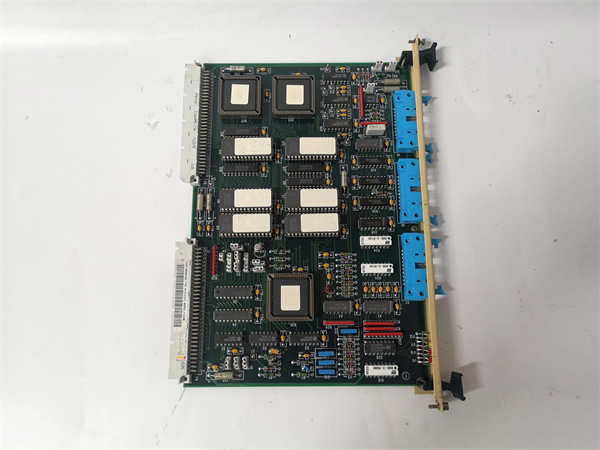
The SCYC51010 functions as the central communication gateway between the AC 800M controller and Foundation Fieldbus H1 instrument networks—commonly deployed in oil & gas, chemical, and pharmaceutical plants where smart device diagnostics and digital control are critical. It manages the LAS token, schedules cyclic data exchange, and handles acyclic configuration traffic. If this module fails or becomes unresponsive, the entire FF segment goes offline, resulting in loss of process variables (e.g., pressure, temperature, flow) and final element status (e.g., control valve position). In safety-critical applications, this can trigger alarms, force manual mode, or initiate emergency shutdown sequences. Due to the high density of instrumentation on a single FF segment, the operational impact is often severe and widespread.
Reliability Analysis and Common Failure Modes
Despite its robust industrial design, the SCYC51010 is increasingly prone to age-related failures after 10–20 years of continuous service. The most common failure modes include: degradation of internal DC/DC converters that power the H1 interface circuitry, leading to unstable communication or complete port dropout; damage from electrical overstress due to inadequate grounding or lightning-induced surges on fieldbus trunk cables; and firmware lockups caused by corrupted device description (DD) files or unexpected network topology changes.
A key vulnerability lies in its dependency on stable fieldbus power and proper segment termination. Missing or degraded terminators, poor shield grounding, or marginal FPS output can cause intermittent communication that mimics hardware failure. Additionally, the module contains no user-replaceable components—once internal electronics fail, recovery requires full replacement.
Recommended preventive maintenance includes: verifying trunk cable insulation resistance (>1 MΩ); inspecting fieldbus power conditioners and terminators annually; monitoring LAS status and communication error counters in Asset Optimization or FieldCare tools; and maintaining up-to-date system backups including device catalog and segment topology. Spares should be stored in ESD-safe, dry environments and periodically powered on to prevent capacitor aging.
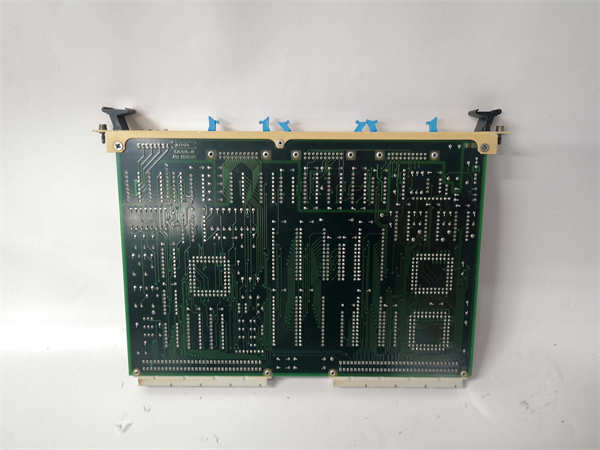
ABB SCYC51010 58052515G
Lifecycle Status and Migration Strategy
ABB has officially discontinued the SCYC51010 (58052515G), with no direct successor in its current automation portfolio. Continued use carries escalating risk: genuine units are scarce, counterfeit or untested modules circulate in secondary markets, and ABB no longer provides firmware updates or technical support for this hardware.
As an interim measure, facilities should secure fully tested, refurbished spares with documented functional validation. Some sites implement segment redundancy using dual SCYC51010 modules (where rack and software licensing permit), though this is rare due to cost and complexity.
For long-term sustainability, ABB’s strategic direction favors migration to Ethernet-based architectures. While there is no native “drop-in” replacement, viable paths include:
- Replacing FF-H1 devices with PROFINET or HART-over-Ethernet instruments and using the AC 800M’s built-in Ethernet or CI871 modules for connectivity.
- Deploying external FF-to-Ethernet gateways (e.g., from Softing or Pepperl+Fuchs) to preserve existing field devices while modernizing the control-layer interface.
This transition requires re-engineering I/O strategies in Control Builder M, updating asset management practices, and potentially replacing field instrumentation—but it delivers improved cybersecurity, faster diagnostics, and alignment with ABB’s Ability™ platform. A phased migration, starting with non-critical or high-maintenance FF segments, is typically the most pragmatic approach for asset-intensive industries facing obsolescence risk.