 Tel:
Tel:  Email:
  WhatsApp:
 Description
Technical Specifications (For Spare Part Verification)
- Model: S-123H 3BHB030479R0512
- Manufacturer: ABB
- Platform: AC 800F Distributed Control System (DCS)
- Module Type: Hybrid digital I/O (8 inputs + 8 outputs)
- Input Type: 24 VDC, sink/source configurable
- Output Type: 24 VDC, transistor, short-circuit protected
- Isolation: Channel-to-bus isolation (500 Vrms)
- Communication Interface: PROFIBUS DP (as slave), integrated via S-100 backplane
- LED Indicators: Per-channel status (I/O active, fault)
- Power Supply: Via S-100 module carrier (24 VDC from system power rail)
- Mounting: Snap-in to S-100 I/O base unit (e.g., S-101, S-102)
- Operating Temperature: 0°C to +60°C
System Role and Downtime Impact
The S-123H 3BHB030479R0512 is a field-mounted I/O module within legacy ABB AC 800F systems, commonly deployed in power generation, water treatment, and industrial utilities. It resides in remote I/O cabinets near motors, valves, or sensors, converting field-level digital signals (e.g., motor run feedback, limit switch status) into PROFIBUS data packets sent to the central AC 800F controller. If this module fails—due to power surge, component aging, or communication loss—the associated control loop loses visibility or actuation capability. In safety-related applications (e.g., pump interlocks), this can trigger a partial or full process shutdown. Because AC 800F is a decommissioned platform, replacing the module often requires sourcing untested used units, risking extended downtime during troubleshooting.
Reliability Analysis and Common Failure Modes
Despite its industrial-grade design, the S-123H is vulnerable to long-term operational stress, especially in harsh environments. Typical failure patterns include:
- Input optocoupler degradation: Over years of exposure to electrical noise or voltage spikes, the input isolation components can drift or fail open, causing false “off” readings from field devices.
- Output transistor burnout: Repeated short circuits on field wiring (e.g., solenoid coil failures) can damage the output stage, leading to stuck-off or intermittent actuator control.
- PROFIBUS communication dropout: Aging bus driver ICs or poor grounding can cause sporadic DP slave disconnections, triggering controller-side alarms like “Module Not Responding.”
- Connector corrosion: Moisture ingress in outdoor cabinets leads to oxidation on the S-100 base contacts, increasing resistance and causing intermittent signal loss.
Preventive maintenance guidance:
- Inspect field wiring for insulation damage and ensure proper surge suppression on inductive loads.
- Clean S-100 base connectors annually with contact cleaner to prevent high-resistance connections.
- Monitor PROFIBUS diagnostic logs in the AC 800F engineering station for early signs of cyclic redundancy check (CRC) errors.
- Maintain spare modules in climate-controlled storage to slow component aging.
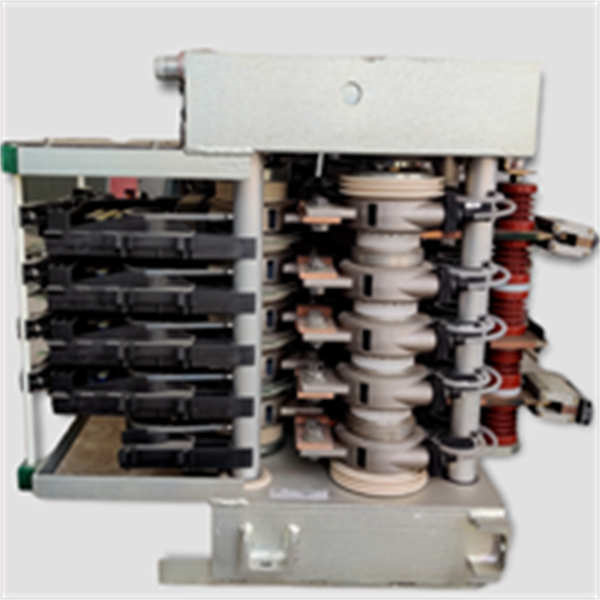
ABB S-123H 3BHB030479R0512
Lifecycle Status and Migration Strategy
ABB officially discontinued the AC 800F platform, including all S-100 series I/O modules like the S-123H, with end-of-life announced over a decade ago. The 3BHB030479R0512 revision is no longer supported by ABB, and factory repair services are unavailable. Continued use carries significant risk: scarcity of authentic spares, lack of firmware updates, and incompatibility with modern cybersecurity standards.
Interim Mitigation Options:
- Secure multiple tested spares now from reputable surplus suppliers with functional verification reports.
- Implement local redundancy where critical—e.g., duplicate key signals on separate modules.
- Use external relay isolation to protect outputs from field-side faults.
Recommended Migration Path:
ABB’s strategic successor to AC 800F is the AC 800M platform. The functional equivalent for digital I/O would be a combination of DI810 (16-channel digital input) and DO810 (16-channel digital output) modules installed in a local I/O station connected via IMRIO02 remote communication module. This migration requires:
ABB’s strategic successor to AC 800F is the AC 800M platform. The functional equivalent for digital I/O would be a combination of DI810 (16-channel digital input) and DO810 (16-channel digital output) modules installed in a local I/O station connected via IMRIO02 remote communication module. This migration requires:
- Replacing the entire I/O cabinet infrastructure (backplane, power, modules).
- Rewiring field devices to new terminal blocks.
- Recommissioning control logic in Control Builder M (replacing former Composer engineering tool).
While full migration is capital-intensive, it restores access to current support, security patches, and spare parts availability. For facilities with extensive AC 800F deployments, a phased approach—starting with highest-risk or highest-availability-critical units—is advisable to manage cost and operational disruption.