 Tel:
Tel:  Email:
  WhatsApp:
 Description
Key Technical Specifications (For Spare Part Verification)
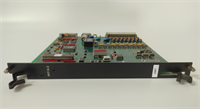
- Model: S-076N
- Order Code: 3BHB009884R0021
- Manufacturer: ABB
- Platform: ABB AC 800M / System 800xA
- Processor Type: Embedded real-time processor (based on PowerPC architecture)
- Memory: Integrated application memory (non-volatile flash); typical capacity ~4 MB (sufficient for medium-scale applications)
- Communication Interfaces: Dual redundant Ethernet ports (for Control Network and OPC communication), RS-232 service port
- Redundancy Support: Supports 1:1 hot-standby redundancy when paired with a second S-076N in a redundant rack configuration
- Backplane Compatibility: Fits standard AC 800M I/O racks (e.g., with TB8xx baseplates)
- Firmware Dependency: Requires specific AC 800M firmware versions (typically v4.x to early v5.x); not compatible with latest Control Builder M features
- Power Consumption: Approx. 8–10 W under load
System Role and Downtime Impact
The S-076N is the central brain of an AC 800M control station, commonly deployed in power generation, water treatment, and industrial process facilities. It runs all user-defined control logic (written in IEC 61131-3 languages), coordinates data flow between analog/digital I/O modules, and communicates with System 800xA servers for visualization and historian logging. In a redundant setup, it synchronizes state with its backup unit to enable seamless failover.
If this module fails in a non-redundant system, the entire control station ceases to function—resulting in immediate loss of automatic control, potential safety interlock bypass, and forced manual operation or full plant shutdown. Even in redundant configurations, repeated failures can exhaust spare inventory and expose the system to common-cause faults (e.g., power anomalies affecting both units). Given its role as the sole execution engine, the S-076N represents a single point of failure whose reliability directly dictates plant availability.
Reliability Analysis and Common Failure Modes
Although designed for industrial environments, the S-076N exhibits several age-related failure patterns:
- Flash memory wear-out: After 10+ years of operation, the internal flash storage used for program retention can develop bad blocks, leading to boot failures or corrupted application downloads.
- Ethernet PHY degradation: The physical layer chips on the dual Ethernet ports are susceptible to electrostatic discharge or ground loop damage, causing intermittent network drops or complete communication loss.
- Power supply stress: Internal DC/DC converters degrade over time, especially in high-temperature cabinets, resulting in voltage droop that triggers unexpected reboots or watchdog resets.
A notable design limitation is the lack of onboard battery-backed RAM—the entire application must be reloaded from flash on every power cycle, increasing startup time and dependency on flash integrity.
Recommended preventive maintenance includes:
- Performing annual “cold start” tests to verify successful boot and program reload
- Monitoring CPU load and scan time trends via Control Builder M for signs of instability
- Ensuring cabinet temperature remains below 50°C to prolong component life
- Maintaining at least one verified spare with matching firmware version
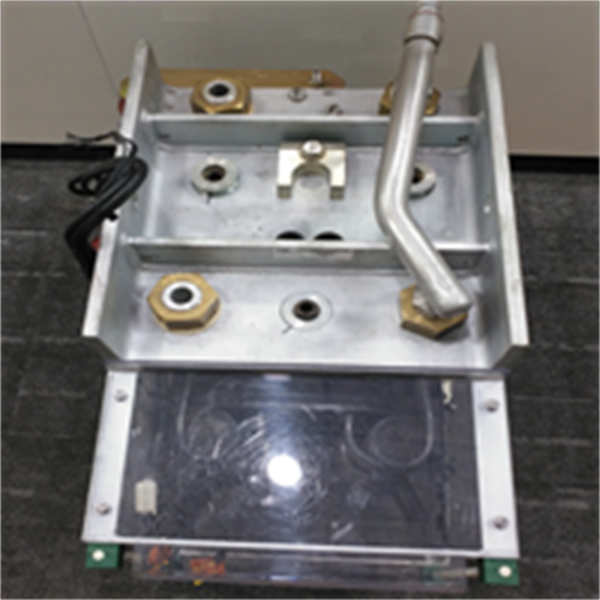
ABB S-076N 3BHB009884R0021
Lifecycle Status and Migration Strategy
ABB has discontinued the S-076N (3BHB009884R0021), replacing it with the PM864A (3BSE038640R1) and later PM865A CPUs. These newer models offer higher performance, larger memory, enhanced cybersecurity features, and compatibility with modern System 800xA releases. The S-076N is no longer covered under standard ABB support contracts, and firmware updates ceased years ago.
Continuing to operate systems with this CPU carries significant risks:
- No official repair or return-to-factory services
- Incompatibility with Windows 10/11 engineering stations running recent Control Builder M versions
- Vulnerability to obsolescence in network protocols (e.g., lack of TLS 1.2 support)
Short-term mitigation strategies include:
- Securing 1–2 tested spares with documented firmware versions
- Implementing strict change control to avoid accidental firmware mismatches
- Isolating engineering workstations on legacy OS platforms
For long-term sustainability, migration to PM864A is the recommended path. This requires:
- Replacing the S-076N with a PM864A in the same rack (mechanically and electrically compatible)
- Upgrading the AC 800M firmware to v5.1 SP2 or later
- Re-compiling and re-downloading the application in a compatible Control Builder M version
- Validating all I/O mappings and communication tags post-upgrade
While the hardware swap is straightforward, comprehensive functional testing—including simulation of critical interlocks—is essential to ensure operational continuity. Given the central role of this CPU, proactive replacement before end-of-support is strongly advised.