 Tel:
Tel:  Email:
  WhatsApp:
 Description
Technical Specifications (For Spare Parts Verification)
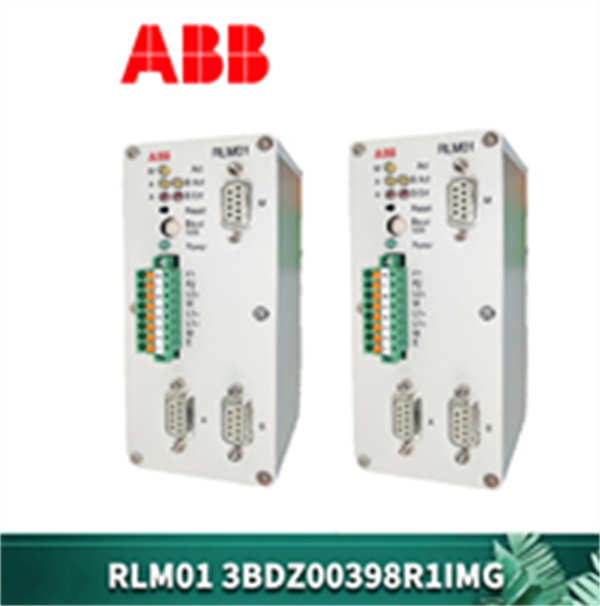
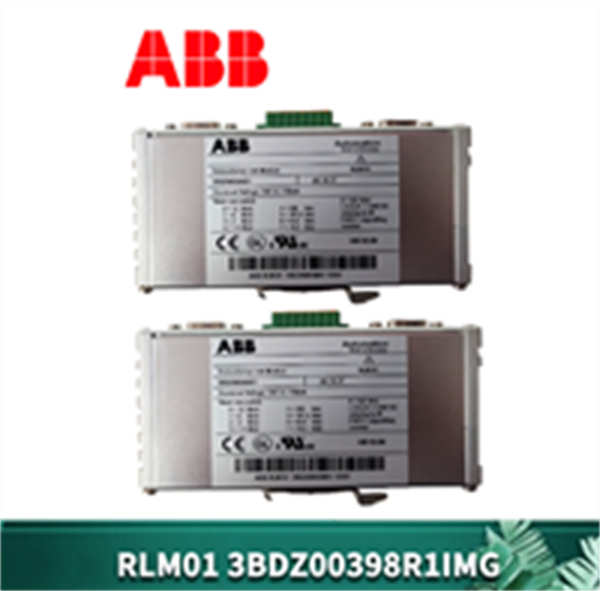
- Product Model: RLM01
- Manufacturer: ABB
- System Family: MasterPiece 200/300 and early AC 800M (PM86x-based)
- Output Type: Electromechanical relays (normally open)
- Number of Channels: 8
- Contact Rating: 250 V AC / 2 A resistive per channel
- Isolation: Galvanic isolation between logic and field sides
- Backplane Compatibility: Requires specific I/O base (e.g., TB840A or equivalent)
- LED Indicators: One per channel (ON/OFF status)
- Mounting: DIN rail via compatible I/O carrier
- Power Consumption: ~2.5 W (from system backplane)
System Role and Downtime Impact
The ABB RLM01 serves as a key digital output interface in legacy ABB process automation systems, commonly found in power plants, pulp & paper mills, and older chemical facilities. It translates controller logic signals into physical relay closures that directly drive contactors, solenoid valves, alarm horns, or motor starters. Because it uses electromechanical relays—not solid-state switches—it is often deployed where high inrush currents or AC load switching are required. If the RLM01 fails, any field device connected to its outputs will become unresponsive. In safety-critical applications (e.g., emergency shutdown valves or cooling pump control), this can trigger a partial or full plant trip, leading to unplanned downtime that may last days if no spare is available.
Reliability Analysis and Common Failure Modes
Despite its robust design, the RLM01 is susceptible to age-related degradation due to its reliance on mechanical components. The most common failure mode is relay contact welding or sticking, caused by repeated switching of inductive loads (e.g., motor coils) without adequate snubber circuits. Over time, arc erosion increases contact resistance, leading to overheating and eventual open-circuit failure. Another frequent issue is coil burnout in the relay driver circuitry, often triggered by voltage spikes from poor grounding or nearby lightning events. The module itself contains no battery, but it depends on stable +24 V DC from the I/O backplane—any sustained overvoltage can damage the onboard transistor array that drives the relay coils.
From a maintenance standpoint, technicians should prioritize visual and thermal inspection during routine rounds. Look for discoloration on the PCB near relay bases, which indicates overheating. Use a thermal camera to spot abnormally hot channels under load. Additionally, verify that connected loads do not exceed 2 A per channel; derating is recommended for inductive loads. Cleaning dust from the module vents (if present) and ensuring tight terminal connections on the base unit can significantly extend service life.
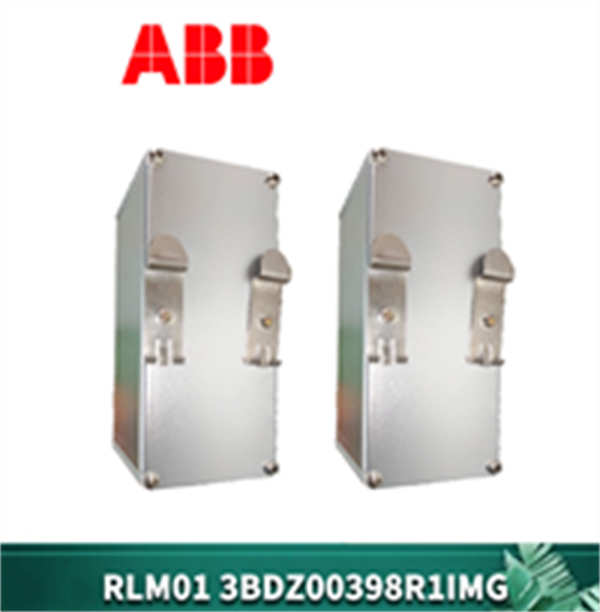
ABB RLM01
Lifecycle Status and Migration Strategy
ABB officially discontinued the RLM01 as part of the broader phase-out of the MasterPiece platform and early AC 800M I/O families. No new units are manufactured, and ABB no longer provides repair services or firmware support. Continued use carries substantial risk: spare parts are scarce, pricing is volatile, and counterfeit units have appeared in the gray market. For sites still operating this hardware, the primary short-term strategy is to secure tested, functional spares from trusted surplus suppliers and implement strict inventory controls.
For long-term sustainability, ABB recommends migrating to the AC 800M with modern I/O modules such as the DI810 (for solid-state digital outputs) or DO810 (relay-type, though also being phased out), or better yet, the TU85x/TB85x series with DO820 relay modules, which offer higher channel density and diagnostic capabilities. This migration typically requires:
- Replacing the entire I/O chassis and backplane,
- Rewiring field connections to new terminal blocks,
- Updating control logic in the engineering station (using Control Builder M), and
- Recalibrating interlocks and sequences.
While capital-intensive, such an upgrade eliminates single-point obsolescence risks and enables integration with modern asset management and cybersecurity frameworks. Until then, proactive sparing and condition monitoring of existing RLM01 modules remain essential to avoid disruptive failures.