 Tel:
Tel:  Email:
  WhatsApp:
 Description
Key Technical Specifications (For Spare Parts Verification)
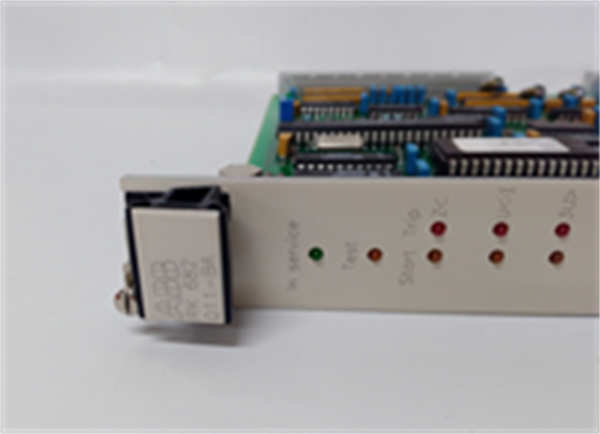
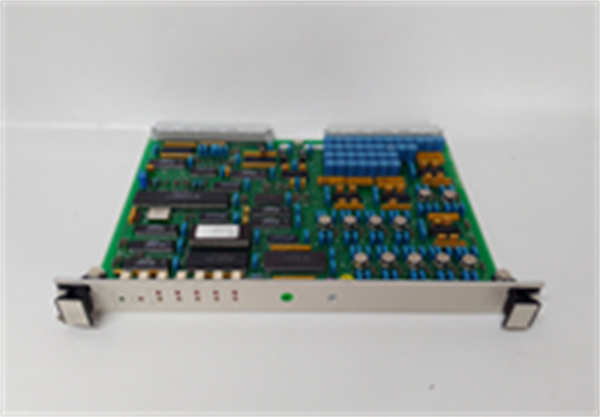
- Product Model: RK682011-BA
- Manufacturer: ABB
- Associated Trip Unit: PR122/P (for SACE Emax E1–E3 frame breakers)
- Function: Plug-in setting module (non-volatile memory card) that stores protection parameters (LI = Long-Time + Instantaneous only)
- Memory Type: EEPROM-based, retains settings without battery
- Compatibility: Only works with PR122/P trip units; not interchangeable with PR121, PR123, or Emax 2 units
- Protection Functions Supported:
- Long-Time (L): Adjustable pickup and delay
- Instantaneous (I): Fixed or adjustable high-set current
- No short-time (S) or ground-fault (G) functions (LI variant)
- Physical Interface: Proprietary edge connector; inserts into front of PR122/P unit
- Standards Compliance: IEC 60947-2, UL 489 (as part of complete breaker assembly)
- Operating Environment: Designed for indoor LV switchgear, 0°C to +50°C
System Role and Downtime Impact
The RK682011-BA is installed in main-tie-main (MTM) or feeder switchgear panels in industrial plants, data centers, hospitals, and commercial buildings that use ABB SACE Emax breakers from the 1990s to mid-2000s. It serves as the “personality module” for the PR122/P trip unit, allowing maintenance teams to quickly restore protection settings after a trip unit replacement or to standardize settings across multiple breakers using pre-configured modules.
If this module fails or becomes corrupted, the associated circuit breaker may default to factory settings (often overly sensitive) or disable protection entirely—depending on the trip unit firmware. This can result in either repeated nuisance trips disrupting power continuity or, more dangerously, a failure to clear downstream faults, risking equipment damage, arc flash events, or fire. In critical power systems without redundant feeders, such a failure could lead to a partial or total facility blackout until a verified replacement module is installed and tested.
Reliability Analysis and Common Failure Modes
Although solid-state with no moving parts, the RK682011-BA is vulnerable to environmental and handling stresses over decades of service.
Common failure modes include:
- EEPROM data corruption due to electrostatic discharge (ESD) during insertion/removal, especially in dry environments or without proper grounding.
- Connector pin oxidation or bending, leading to poor contact with the PR122/P unit and intermittent setting loss.
- Physical damage from improper handling—cracked housing or broken latches are common in field-used units.
- Firmware incompatibility when used with updated PR122/P hardware revisions, causing the trip unit to reject the module.
Design limitations include lack of write-protection features and no onboard diagnostics—failure is often silent until a fault occurs or settings are found missing during routine checks.
Preventive maintenance recommendations:
- Store spare modules in anti-static packaging with desiccant.
- Always power down the trip unit before inserting or removing the module.
- Periodically verify protection settings against the module’s expected configuration using the PR122/P display or test kit.
- Keep a master backup of all critical module configurations (if a compatible reader or software is available).
- Inspect connector pins for cleanliness and alignment before installation.
RK682011-BA ABB
Lifecycle Status and Migration Strategy
ABB has officially discontinued the RK682011-BA as part of the broader phase-out of the original SACE Emax line. Technical support, new modules, and repair services are no longer available. Continued reliance on this component introduces material risk: untested surplus modules may contain corrupted data, and failure during a fault event could have severe safety consequences.
Interim mitigation strategies include:
- Creating and securely storing duplicates of all active modules using legacy ABB programming tools (e.g., PR120 software with interface cable)—if still accessible.
- Procuring and functionally testing spare modules from certified surplus vendors, followed by verification in a test breaker.
- Implementing strict handling procedures to minimize ESD and mechanical damage during maintenance.
For permanent resolution, migration to the Emax 2 platform is the recommended path. The Emax 2 uses integrated digital trip units (e.g., PR123/P or PR124/P) with built-in communication (Modbus, Profibus), advanced protection (including zone selective interlocking), and configuration via front display or software—eliminating the need for removable setting modules. However, replacement requires:
- Swapping the entire circuit breaker (frame and interrupting assembly), not just the trip unit.
- Updating switchgear busbar connections and mechanical interlocks.
- Re-engineering protection coordination studies.
- Retraining maintenance staff on new diagnostics and configuration methods.
While capital-intensive, this upgrade enhances safety, enables remote monitoring, and aligns the facility with current IEC standards. For budget-constrained sites, a hybrid approach—stockpiling verified spares while planning phased Emax 2 retrofits during scheduled outages—offers a pragmatic balance between risk and cost.