 Tel:
Tel:  Email:
  WhatsApp:
 Description
Key Technical Specifications (For Spare Part Verification)
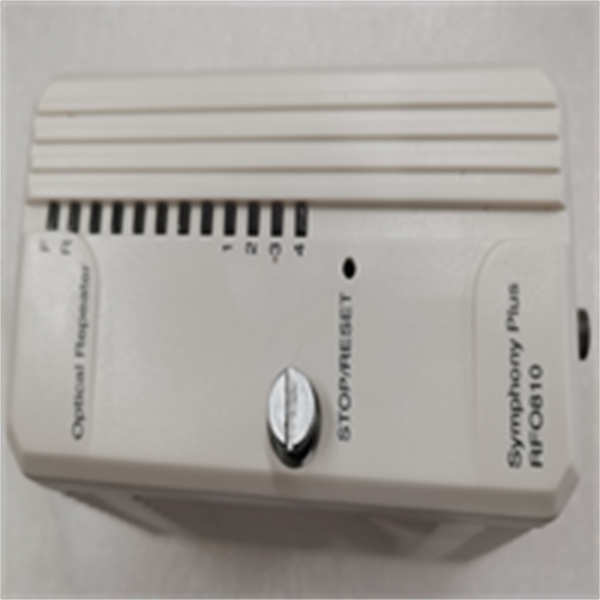
- Product Model: RFO810
- Manufacturer: ABB
- Compatible Host Relays: REF615, REM615 (firmware-dependent; typically V1.4x or later)
- Communication Interface: Two ST-type multimode fiber ports (1300 nm wavelength)
- Protocol Support: IEC 61850 Edition 2, GOOSE only (no MMS or SV)
- Data Rate: 100 Mbps full duplex
- Redundancy: Supports PRP or HSR when used with compatible switch architecture (optional)
- Power Supply: Powered via backplane from host relay (no external supply needed)
- Operating Temperature: -25°C to +70°C
- Mounting: Plugs directly into the rear expansion slot of REF615/REM615
- Diagnostic Indicators: LED status for link activity, fault, and power
- Standards Compliance: IEC 61850-3, IEEE C37.90, IEC 60255-26
System Role and Downtime Impact
The RFO810 is installed in utility and industrial substations where ABB REF615/REM615 relays are used for feeder, motor, or transformer protection. It provides the physical layer for time-critical IEC 61850 GOOSE messages—such as direct transfer trip, breaker failure initiation, or arc flash detection—over fiber optic cables. Unlike copper-based Ethernet, fiber offers electrical isolation and immunity to EMI, making it essential in high-voltage environments. If the RFO810 fails, GOOSE communication is lost, degrading the protection scheme from high-speed (<10 ms) peer-to-peer logic to slower backup methods (e.g., hardwired contacts or SCADA polling). In a busbar fault scenario, this delay could escalate damage, increase outage duration, and violate grid code requirements for fault clearance time.
Reliability Analysis and Common Failure Modes
Despite its solid-state design, the RFO810 exhibits predictable aging issues:
- Fiber transceiver degradation: The internal SFP-like optics can lose output power over time due to laser diode aging, especially in high-temperature relay cabinets, leading to intermittent link drops.
- Backplane connector fatigue: Repeated thermal cycling causes micro-cracks in solder joints between the module and relay motherboard, resulting in communication glitches or complete dropout.
- Firmware incompatibility: Older RFO810 units may not support newer IEC 61850 data object structures, causing configuration mismatches after relay firmware updates.
- Contamination of ST connectors: Dust or oil on fiber end-faces (common in industrial sites) increases insertion loss, pushing marginal links into failure.
A key limitation is the lack of built-in optical power monitoring—there is no way to measure TX/RX levels without external test equipment. Preventive maintenance should include annual inspection of fiber connectors (cleaning with approved kits), verification of GOOSE message timestamps during functional tests, and monitoring of “GOOSE retransmit” counters in the relay logs. Any spare RFO810 must undergo full optical loopback testing before deployment.
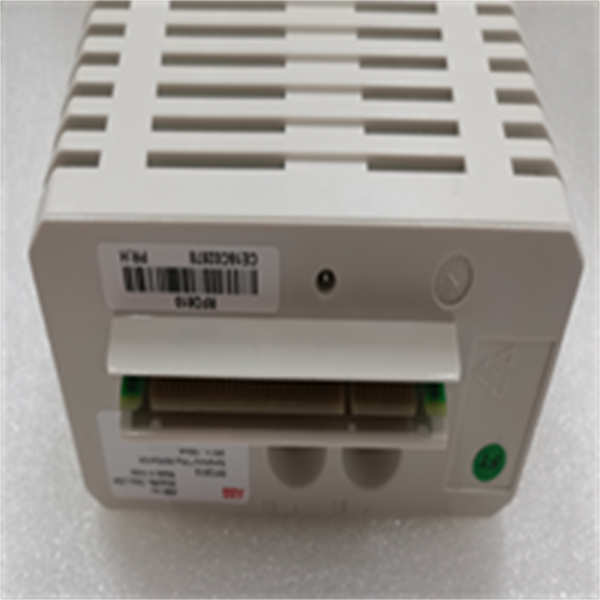
ABB RFO810
Lifecycle Status and Migration Strategy
ABB has discontinued the RFO810 as newer Relion relays (e.g., REF615 V2, REL650) integrate dual SFP fiber ports directly onto the mainboard, eliminating the need for an add-on module. No factory repairs, recalibration, or compatibility validation are available for the RFO810. Continued use exposes operators to unverifiable spare quality and growing cybersecurity gaps (older firmware lacks secure authentication).
As a short-term measure, maintain tested spares and implement strict fiber handling procedures. For long-term reliability, ABB recommends upgrading to relays with native fiber interfaces. This migration requires:
- Replacing the entire relay (not just the module),
- Updating IEC 61850 SCL configurations to match new IED capabilities,
- Revalidating all GOOSE-based protection schemes.
Alternatively, some utilities deploy managed media converters to bridge legacy copper Ethernet relays to fiber networks—but this adds latency and single points of failure, making it unsuitable for critical tripping applications. Engineering review and coordination with the transmission operator are essential before implementing any workaround.