 Tel:
Tel:  Email:
  WhatsApp:
 Description
Key Technical Specifications (For Spare Parts Verification)
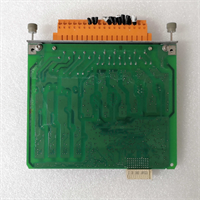
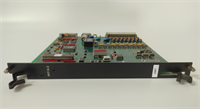
- Product Model: RF615 base unit + RC610 I/O module
- Manufacturer: ABB
- Product Family: SIPROTEC 4 (7UT6, 7SJ6, 7SD6 series ecosystem)
- Protection Functions (RF615):
- 3-phase overcurrent (definite/inverse time)
- Earth fault (directional or non-directional)
- Circuit breaker failure (CBF) backup
- Thermal overload (optional)
- I/O Capacity (with RC610):
- Binary inputs: up to 18 (depending on configuration)
- Binary outputs (relays): up to 10
- Communication Interfaces: RS485 (IEC 60870-5-103), optional Profibus DP or Modbus RTU via add-on modules
- Power Supply: 24–250 VDC or 110/230 VAC (field-configurable)
- Standards Compliance: IEC 60255, IEC 61000-4 (EMC), IEEE C37.90
- Mounting: 19″ rack or panel mount (7U height typical)
- Diagnostic Features: LED indicators, local LCD display (on RF615), event logging (limited memory)
System Role and Downtime Impact
The ABB RF615 with RC610 module is commonly deployed in distribution substations, mining power centers, and large industrial facilities built between the late 1990s and early 2010s. It protects outgoing MV feeders (typically 6–36 kV) by detecting phase and ground faults and issuing trip commands to associated circuit breakers. The RC610 expansion enables integration with auxiliary systems—such as breaker position indication, lockout relays, or SCADA status points—making it integral to both protection and control logic.
If the RF615 fails or the RC610 module becomes unresponsive, the protected feeder loses its primary overcurrent and earth fault detection. In worst-case scenarios, this creates a “blind zone” where downstream faults are only cleared by upstream backup devices—leading to wider outages, equipment damage due to prolonged fault current, or safety hazards for personnel. Even partial failures (e.g., loss of one binary input) can disable interlocking logic, preventing safe switching operations or triggering false alarms that degrade operator trust in the system.
Reliability Analysis and Common Failure Modes
Despite robust design, decades of service in electrically harsh substation environments have exposed predictable aging mechanisms.
Common failure modes include:
- Electrolytic capacitor degradation on internal power supply boards, causing voltage ripple, spontaneous reboots, or complete power loss.
- Relay contact welding or sticking in the output stages (especially on older RC610 units), leading to failure to operate or unintended tripping.
- Corrosion on backplane connectors between RF615 and RC610 due to humidity ingress, resulting in intermittent I/O dropout or module recognition errors.
- EEPROM wear-out in the configuration memory, causing settings to reset to defaults after power cycles.
- RS485 transceiver failure, disrupting communication with SCADA or front-end processors—often misdiagnosed as a network issue.
Design weaknesses include limited event storage (typically <100 records), no built-in self-test for output relays, and reliance on obsolete surface-mount components that are no longer available for board-level repair.
Preventive maintenance recommendations:
- Perform annual secondary injection testing to verify pickup/delay accuracy and output operation.
- Inspect and clean mating connectors between RF615 and RC610 during routine outages.
- Monitor DC supply ripple at the relay terminals—excessive noise accelerates capacitor aging.
- Back up configuration files using legacy DIGSI 4 software while interfaces are still functional.
- Verify breaker trip circuit continuity through the relay’s output contacts during PM.
ABB RF615 RC610
Lifecycle Status and Migration Strategy
ABB has formally ended support for the SIPROTEC 4 platform, including the RF615 and RC610. No new units are manufactured, firmware updates are frozen, and factory repair services have been discontinued. Continued use carries high risk: undetected latent failures could compromise protection integrity, and replacement during an emergency may take weeks due to scarce inventory.
Interim mitigation strategies include:
- Securing and functionally testing spare RF615/RC610 assemblies from decommissioned sites.
- Implementing redundant protection schemes (e.g., adding a modern overcurrent relay in parallel) for critical feeders.
- Using third-party test sets to validate performance annually, compensating for lack of OEM diagnostics.
For long-term reliability, migration to the SIPROTEC 5 platform (e.g., 7SJ80 or 7SD80 series) is strongly advised. These relays offer:
- Native IEC 61850 GOOSE and MMS for seamless substation automation
- Enhanced cybersecurity (IEC 62351)
- Larger event logs, waveform capture, and self-monitoring
- Integrated Ethernet and web-based configuration
However, migration requires:
- Replacement of the entire relay assembly (not just plug-in modules)
- Rewiring of CTs, VTs, and I/O circuits to match new terminal layout
- Re-engineering of protection settings and coordination studies
- Integration into a modern engineering workflow (using DIGSI 5 or PCM600)
Planning this upgrade during a scheduled substation refurbishment minimizes operational impact and future-proofs the protection system against evolving grid reliability and cybersecurity requirements.