 Tel:
Tel:  Email:
  WhatsApp:
 Description
Technical Specifications (For Spare Parts Verification)
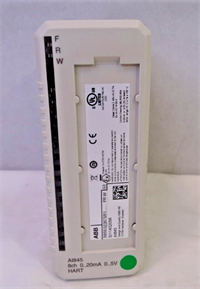
- Product Model: RF522 / 3BSE000743R1
- Manufacturer: ABB
- System Family: ABB MasterView / AC 800F DCS (Distributed Control System)
- Communication Protocol: Profibus DP (Slave mode)
- Data Rate: Up to 12 Mbps (configurable via GSD file)
- Physical Interface: 9-pin D-SUB (RS-485), isolated
- Station Address: Set via rotary switches (0–126)
- Power Supply: +5 V DC from backplane (via carrier module, e.g., TB510/TB520)
- LED Indicators: PWR, RUN, BF (Bus Fault), and module status
- Mounting: Requires ABB I/O base unit (e.g., TB511 or TB521) on DIN rail
- Certification: CE, cULus, ATEX (for specific variants)
System Role and Downtime Impact
The ABB RF522 serves as a critical fieldbus interface in legacy AC 800F-based process control systems, commonly deployed in power generation, oil & gas, and heavy industry. It acts as a Profibus DP slave that connects local I/O modules (digital/analog) to the central AC 800F controller over a single twisted-pair cable. This architecture reduces wiring complexity but creates a single point of failure: if the RF522 fails or loses communication, all I/O channels on its station become unavailable. In boiler control, compressor sequencing, or safety interlock systems, this can trigger alarms, force manual mode, or—worst case—cause a controlled or uncontrolled plant shutdown. Recovery time depends entirely on spare availability, making this module a high-priority item for obsolescence risk management.
Reliability Analysis and Common Failure Modes
The RF522 is generally robust but vulnerable to electrical stress due to its direct connection to industrial field networks. The most frequent failure is Profibus transceiver damage, often caused by ground loops, lightning-induced surges, or incorrect cable termination (missing 220 Ω bias resistors). Over time, the isolation barrier between field and logic sides can degrade, leading to intermittent communication or complete bus-off states. Another common issue is firmware corruption during power cycling under unstable voltage conditions—though the module lacks a battery, its configuration is stored in non-volatile memory that can be corrupted by fast power transients.
From a maintenance perspective, technicians should regularly inspect the Profibus connector for corrosion or loose pins and verify cable shielding integrity. Use an oscilloscope or Profibus tester to check signal waveform symmetry and noise levels at the module port. Ensure proper grounding of the cable shield at one end only to avoid ground loops. Additionally, keep a backup of the GSD file and station configuration, as re-commissioning requires exact parameter matching. Cleaning dust from the module and ensuring adequate airflow in the cabinet also help prevent thermal stress on the RS-485 driver ICs.
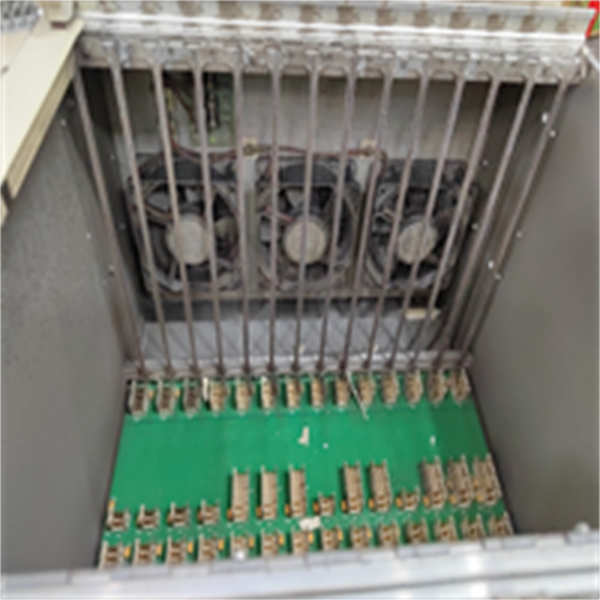
RF522 3BSE000743R1 ABB
Lifecycle Status and Migration Strategy
ABB has formally discontinued the RF522 as part of the end-of-life plan for the AC 800F platform. No new units are manufactured, and official repair services are no longer offered. Continuing to operate systems with this module exposes facilities to increasing risk: spares are dwindling, prices have risen significantly, and technical support from ABB is limited to documentation only.
For short-term continuity, operators should:
- Secure multiple tested spares from reputable surplus vendors,
- Implement surge protection on all Profibus trunk lines,
- Document station addresses and GSD parameters for rapid replacement.
For long-term sustainability, ABB’s recommended migration path is to transition to the AC 800M platform with CI854A or CI871 Profibus communication modules, which offer enhanced diagnostics, higher speed, and integration with modern engineering tools like Control Builder M. This upgrade typically involves:
- Replacing the AC 800F CPU with an AC 800M PM86x controller,
- Swapping I/O carriers and communication modules,
- Rewiring or adapting field connections,
- Re-importing and validating control logic.
While requiring investment, this migration eliminates dependency on obsolete hardware, improves cybersecurity posture, and enables future connectivity to IIoT and cloud analytics platforms. Until then, proactive sparing and network hardening remain essential to maintain operational reliability.