
 Tel:
Tel:  Email:
  WhatsApp:
 Description
Key Technical Specifications (For Spare Part Verification)
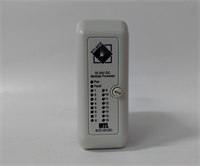
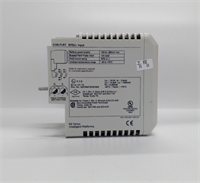
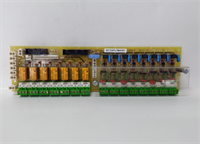
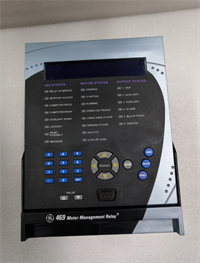
- Product Model: 239-RTD-AN
- Manufacturer: GE Energy (legacy product line)
- System Family: Mark VI / Mark VIe turbine control system (predecessor to current OpFlex platforms)
- Input Channels: 8 × 2-wire or 3-wire RTD inputs (typically Pt100 or Pt1000)
- RTD Type Support: Configurable via software (Pt100 standard)
- Measurement Range: Typically -200°C to +600°C (depending on RTD type)
- Accuracy: ±0.5°C typical (system-dependent)
- Isolation: Channel-to-backplane isolation (basic, not reinforced)
- Communication: Interfaces via VME backplane to Mark VI controller
- Power: Supplied by Mark VI I/O rack (+5 V, ±12 V rails)
- Diagnostics: Basic LED indicators; fault reporting via ToolboxST software

System Role and Downtime Impact
The 239-RTD-AN is a key analog input module in GE Mark VI-based turbine control systems, commonly used in power generation and industrial cogeneration plants. It digitizes temperature signals from critical machine points—such as turbine exhaust, bearing housings, generator windings, and lube oil coolers—and feeds this data to the control logic for protective trips, load control, and performance optimization. Loss of accurate temperature data can lead to undetected overheating, resulting in mechanical damage (e.g., bearing wipe, blade creep), forced outages, or safety incidents. In non-redundant I/O configurations—which are common due to cost constraints—a single failed 239-RTD-AN module can compromise multiple protection functions simultaneously, potentially triggering a full turbine trip or, worse, allowing unsafe operation.
Reliability Analysis and Common Failure Modes
Despite robust initial design, aging 239-RTD-AN modules exhibit predictable failure trends. The most common issues include drift in RTD excitation current sources due to aging precision resistors or op-amps, leading to inaccurate temperature readings; open-circuit failures in input protection circuits after repeated surge events; and intermittent connectivity from VME edge connector wear or solder joint fatigue caused by thermal cycling. A notable vulnerability is sensitivity to ground loops and electromagnetic interference (EMI) in electrically noisy turbine environments, especially if shield grounding practices degrade over time. Additionally, firmware or calibration data stored in non-volatile memory may become corrupted after decades of operation, particularly during power anomalies.
Preventive maintenance should include periodic loop calibration using precision RTD simulators, inspection of terminal blocks and shield terminations, and verification of diagnostic flags in ToolboxST. Technicians must confirm that spare modules match the exact hardware revision and firmware compatibility level. Maintaining at least one verified spare—preferably with documented calibration—is strongly advised.
Lifecycle Status and Migration Strategy
GE has officially discontinued the 239-RTD-AN as part of the broader phase-out of the Mark VI platform. Baker Hughes, which now supports legacy GE turbine controls, offers no new production, factory repair, or long-term support for this module. Continued reliance introduces significant risk: spares are scarce, technical documentation is archived, and modern engineering teams may lack familiarity with VME-based I/O architecture.
Short-term mitigation includes sourcing tested-used units from specialized surplus vendors or engaging third-party repair services capable of component-level refurbishment. However, these are temporary fixes. The strategic path is migration to the Mark VIe platform, where RTD inputs are handled by VSVO (Vibrating Sensor and Voltage Output) or RCON (Remote I/O) modules with enhanced diagnostics, cybersecurity features, and native integration with OpFlex and Predix ecosystems. Migration typically occurs during major turbine upgrades or control system modernization projects and involves re-engineering field wiring, updating control logic, and re-commissioning protection settings. Given the criticality of temperature monitoring, planning for replacement should be prioritized in asset lifecycle roadmaps.