 Tel:
Tel:  Email:
  WhatsApp:
 Description
Key Technical Specifications (For Spare Part Verification)
- Product Model: REG216
- Manufacturer: ABB
- System Family: SPA/Relion Legacy Protection Relays
- Primary Application: Protection of synchronous generators (typically <50 MVA)
- Input Channels: 3-phase voltage, 3-phase current (via external CTs/VTs)
- Protection Functions:
- 27/59: Under/Over Voltage
- 81O/U: Over/Under Frequency
- 32R: Reverse Power
- 40: Loss of Excitation (Impedance-based)
- 50/51: Phase Overcurrent (optional)
- Output Contacts: Multiple programmable output relays (typically 4–6 CO contacts)
- Communication: None (local HMI only; no serial or Ethernet interface)
- Power Supply: 24–250 V DC or 110/230 V AC (field-configurable via internal jumpers)
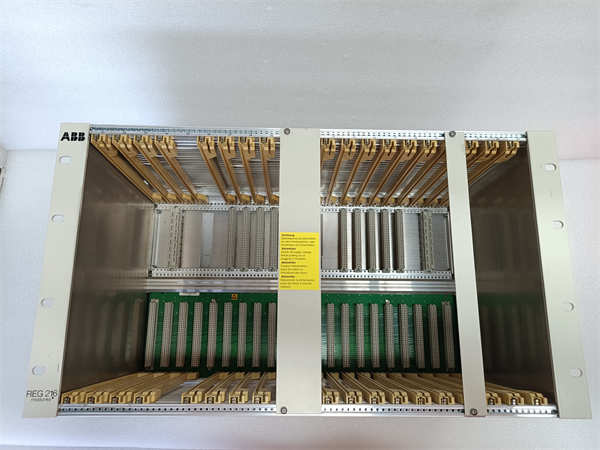
- Mounting: 19″ rack or panel mount (standard 6U height)
- Configuration: DIP switches and potentiometers on front panel; no software tool required
System Role and Downtime Impact
The REG216 typically serves as the primary or backup protection relay for small hydro turbines, diesel gensets, or cogeneration units in remote or industrial microgrids. It operates autonomously—without dependency on external SCADA—and directly trips the generator circuit breaker upon detecting abnormal conditions such as load rejection (causing overvoltage/frequency) or prime mover failure (leading to motoring or loss of excitation).
Because it lacks digital communication, its health can only be assessed through manual testing or observation of front-panel LEDs and flags. If the relay fails silently (e.g., due to degraded analog components), the generator may operate unprotected, risking:
- Rotor overheating from loss of excitation
- Mechanical stress from sustained overfrequency
- Backfeeding into a de-energized grid during islanding
In isolated power systems, a failed REG216 often forces immediate generator shutdown until a verified spare is installed and tested. In regions with limited grid redundancy, this can result in complete site blackout, affecting mining operations, water pumping, or community power supply.
Reliability Analysis and Common Failure Modes
Despite its rugged electromechanical-inspired design, the REG216 is vulnerable to component aging due to its reliance on discrete analog electronics and mechanical potentiometers.
Common failure modes include:
- Electrolytic capacitor degradation: Power supply and filter capacitors dry out over time, causing unstable internal voltages and erratic tripping.
- Potentiometer drift: Setpoint adjustments (e.g., for frequency thresholds) shift due to oxidation or mechanical wear, leading to incorrect protection boundaries.
- Relay contact welding: High inrush currents during breaker trips can weld output contacts shut, preventing future operation.
- PCB trace corrosion: Humidity ingress in tropical or coastal environments corrodes thin signal traces, especially around analog comparator circuits.
A key design weakness is the absence of self-diagnostics—there is no way to verify internal logic health without full functional testing using a relay test set. Additionally, the lack of event recording means post-fault analysis relies solely on operator logs.
Preventive maintenance recommendations:
- Perform annual secondary injection tests using a three-phase relay test set to validate all protection functions.
- Inspect and clean potentiometer shafts; re-calibrate settings against original commissioning records.
- Replace internal electrolytic capacitors proactively every 10–12 years as part of a life-extension program.
- Verify output relay coil resistance and contact continuity during outages.
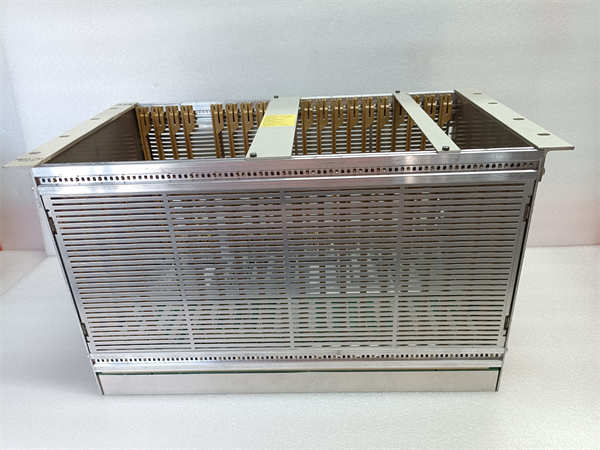
ABB REG216
Lifecycle Status and Migration Strategy
ABB has formally ended support for the REG216. The official migration path is to the REG670, a 61850-compliant numerical relay offering advanced features such as fault recording, adaptive protection, and remote configuration. However, this upgrade is not trivial:
- It requires new current/voltage wiring (due to different terminal layout)
- Protection logic must be re-engineered (REG216 uses fixed algorithms; REG670 uses configurable logic blocks)
- Integration into modern substation automation systems (SAS) demands engineering effort
For sites unable to fund full replacement, interim risk mitigation includes:
- Securing two fully tested spares with recent calibration certificates
- Partnering with specialized service providers for capacitor reforming and board-level refurbishment
- Installing external monitoring (e.g., power quality meters) to detect conditions that should trigger the REG216, providing early warning of potential failure
Organizations should conduct a protection system audit to identify all REG216 installations, assess their criticality, and develop a phased retirement plan aligned with plant modernization budgets. Continuing to rely on this obsolete relay increases exposure to both equipment damage and regulatory non-compliance with modern grid code requirements.