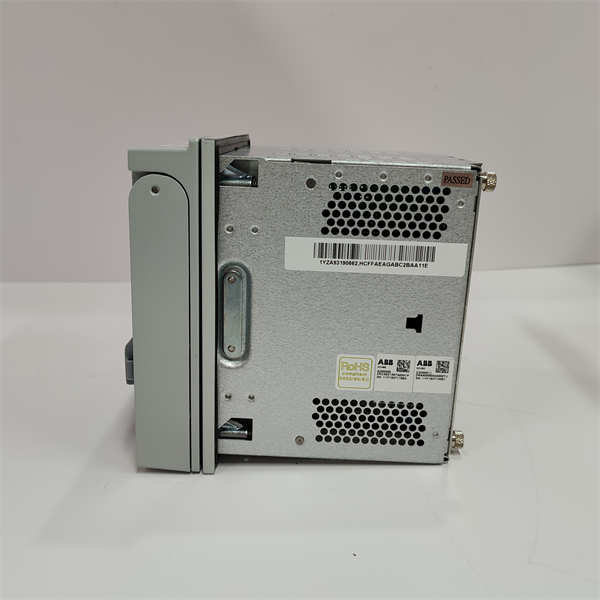
 Tel:
Tel:  Email:
  WhatsApp:
 Description
Key Technical Specifications (For Spare Verification)
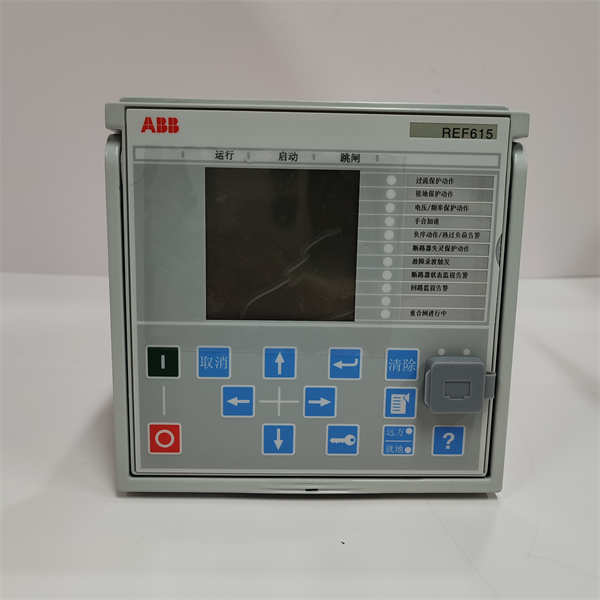
- Product Model: REF615C_E
- Manufacturer: ABB (Hitachi Energy)
- System Family: Relion® REF615 (Edition 1)
- Current Inputs: 4I (3-phase + neutral), 1 A nominal
- Voltage Inputs: 3-phase line-to-neutral (e.g., 110/√3 V or 230/√3 V)
- Auxiliary Supply: 24–250 V DC/AC
- Binary I/O: 10 digital inputs, 6 output relays
- Communication Interfaces: IEC 61850 Ed. 1 (GOOSE limited), Modbus RTU, SPA bus, IRIG-B time sync
- HMI: Local LCD with keypad
- Firmware Identifier: Embedded in order code suffix (C2 = standard protection suite including 50/51, 50N/51N, 49, 27/59, 50BF)
- Certification Basis: IEC 60255, IEC 61850 Ed. 1, IEEE C37.90
System Role and Downtime Impact
The REF615C_E unit is typically installed in medium-voltage motor control centers, distribution feeders, or transformer incomers as the primary protection and control device. It executes time-critical functions such as phase overcurrent tripping, earth-fault detection, and thermal overload modeling. In many legacy substations, it also serves as the sole source of real-time data for SCADA via Modbus or IEC 61850. If this relay fails—particularly due to internal power supply or communication faults—the local protection may remain functional, but remote visibility and automated coordination are lost. In worst-case scenarios, a complete logic crash disables all trip outputs, leaving downstream assets unprotected during faults. Replacement requires an exact match in hardware revision, firmware version, and configuration parameters; even minor mismatches can invalidate protection curves or cause interoperability issues with existing engineering tools like PCM600.
Reliability Analysis and Common Failure Modes
Despite robust industrial design, units deployed since the late 2000s are now exhibiting age-related vulnerabilities. The most frequent failure modes include:
- Internal lithium battery depletion leading to loss of event logs, clock reset, and potential configuration corruption after power cycles.
- Degradation of RS-485 or Ethernet transceivers, causing intermittent or total loss of SCADA communication while local LEDs indicate normal operation—a dangerous “silent failure.”
- Electrolytic capacitor aging in the auxiliary power supply section, resulting in instability during voltage sags and unexpected resets under load.
- LCD display fading or keypad membrane wear, hindering local diagnostics during outages.
- Firmware lockups during configuration uploads or under high GOOSE traffic, requiring hard power cycling.
A key design limitation is the absence of secure boot or encrypted communication, making the relay vulnerable to unauthorized access in modern OT environments. Preventive maintenance should focus on annual verification of battery voltage, cleaning of terminal blocks, validation of communication integrity via loopback tests, and archiving of full configuration backups in both .cap and .xml formats.
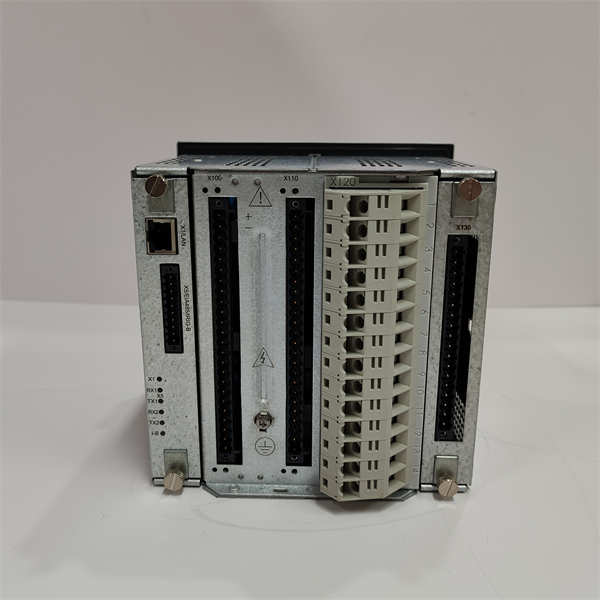
ABB REF615C_E HCFFAEAGABC2BAA11E
Lifecycle Status and Migration Strategy
This specific configuration (HCFFAEAGABC2BAA11E) belongs to the first edition of the REF615 platform and has been officially discontinued by Hitachi Energy. It is no longer covered under standard support agreements, and new units are unavailable through authorized channels. Continued operation carries significant technical and regulatory risk, especially in grids subject to cybersecurity mandates such as NERC CIP or EU NIS2, which require authentication and audit capabilities absent in this model.
As a temporary measure, organizations may source tested surplus units—but only from vendors providing full functional validation reports, original configuration files, and traceable firmware versions. On-site spares should be stored in climate-controlled conditions with periodic power-up cycles to preserve capacitor health.
The recommended long-term path is migration to the REF615 V3 or V4 platform (e.g., order code HCEF…). These successors maintain panel compatibility while offering IEC 61850 Edition 2, IEC 62351-compliant security, web-based diagnostics, and native OPC UA support. Migration involves re-engineering settings in the Relion Engineering Tool, updating SCL files, and re-validating all protection functions—but restores compliance, ensures ongoing vendor support, and aligns the asset with modern substation automation standards.