
 Tel:
Tel:  Email:
  WhatsApp:
 Description
Key Technical Specifications (For Spare Part Verification)
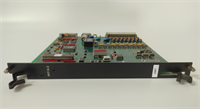
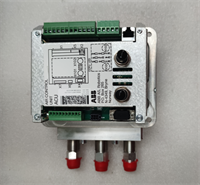
- Product Model: PP865A
- Manufacturer: ABB
- System Family: AC 800M (part of ABB’s 800xA distributed control system)
- Output Voltage: +24 V DC
- Output Current: 5 A continuous (per module)
- Input Voltage: 85–264 V AC, 50/60 Hz (universal input)
- Redundancy Support: Yes – supports parallel operation with another PP865A for N+1 redundancy
- Mounting: DIN rail or integrated into AC 800M I/O rack
- Diagnostic Features: LED indicators for power OK, fuse status, and redundancy active
- Dimensions: Standard AC 800M module width (approx. 40 mm)
- Operating Temperature: 0°C to +60°C
System Role and Downtime Impact
The PP865A is a foundational component in ABB AC 800M-based control systems, commonly deployed in power generation, oil & gas, mining, and water infrastructure. It supplies regulated 24 V DC power to the controller CPU, I/O modules, and communication interfaces within the rack. In non-redundant installations—still common in smaller or older sites—a single PP865A failure results in immediate loss of control logic execution, leading to process shutdown or safety system intervention. Even in redundant setups, loss of one unit increases stress on the remaining supply and eliminates fault tolerance. Given that AC 800M systems often manage critical processes, unplanned power-related outages can trigger cascading operational, safety, and financial consequences.
Reliability Analysis and Common Failure Modes
While the PP865A was designed for industrial reliability, aging units exhibit predictable degradation patterns. The most frequent failures stem from electrolytic capacitor drying-out in the DC output stage, causing voltage ripple, output droop, or complete shutdown under load. Secondary issues include blown internal fuses due to inrush current surges, thermal fatigue in solder joints from repeated heating cycles, and relay contact wear in the redundancy switching circuitry. A key vulnerability is sensitivity to poor-quality AC input (e.g., sustained overvoltage or harmonic distortion), which accelerates component stress. Unlike modern power supplies, the PP865A lacks digital health monitoring, so incipient failures often go undetected until functional testing or actual fault occurs.
Preventive maintenance should include periodic infrared thermography to detect abnormal heating, visual inspection for bulging capacitors or discoloration, and load testing under simulated conditions. Technicians must verify redundancy functionality by simulating a module failure during scheduled outages. Maintaining at least one tested spare—preferably stored in temperature-controlled conditions—is essential.
Lifecycle Status and Migration Strategy
ABB has officially discontinued the PP865A and classified it as obsolete, with no factory repairs or warranty support. Replacement units are only available through third-party resellers, often at significantly inflated costs and uncertain provenance. Continued reliance on this module introduces unacceptable risk for mission-critical operations.
As an interim measure, facilities can implement external redundant power architectures using compatible industrial 24 V DC supplies (e.g., from Mean Well or Phoenix Contact) with diode-or’ing, though this requires custom integration and bypasses native AC 800M diagnostics. The strategic solution is migration to ABB’s current-generation power supplies such as the PP865B (if still supported) or, more sustainably, upgrading the entire controller to the AC 800M PM864/PM865 CPU platform with modern PS865 power supplies, which offer enhanced efficiency, remote diagnostics, and longer lifecycle commitment. While full migration demands engineering effort, it future-proofs the system against further obsolescence and aligns with cybersecurity and operational technology (OT) modernization goals. Planning should be initiated immediately, especially for sites without redundancy.