 Tel:
Tel:  Email:
  WhatsApp:
 Description
Key Technical Specifications (For Spare Parts Verification)
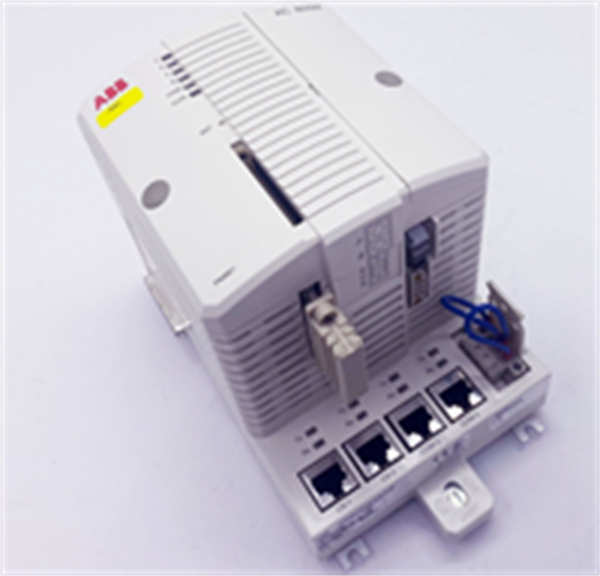
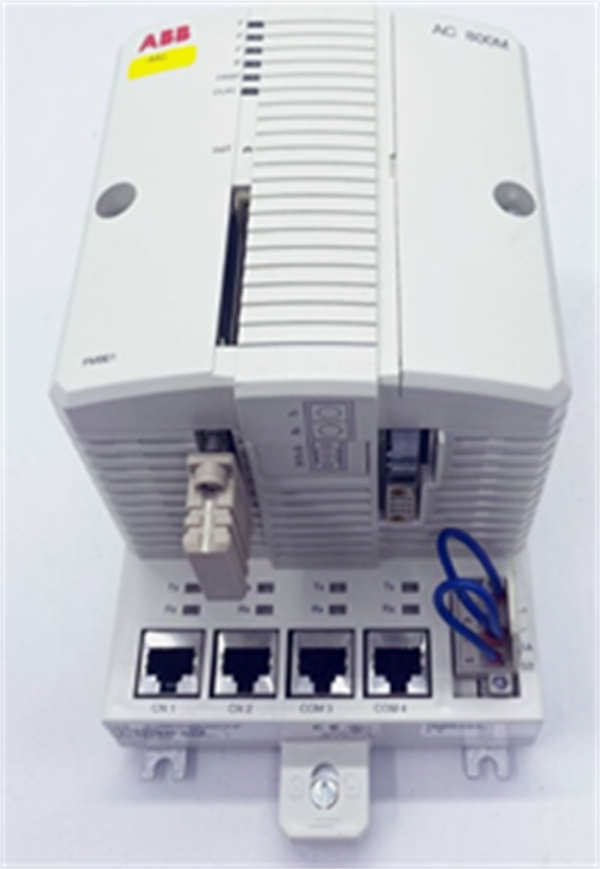
- Product Model: PM861K01
- Manufacturer: ABB
- Order Code: 3BSE018105R1
- System Platform: AC 800M (integrated in 800xA Process Automation System)
- CPU Architecture: 32-bit PowerPC
- Program Memory: 4 MB
- Data Memory: 4 MB
- Execution Speed: ~0.15 µs per Boolean instruction
- Communication Interfaces: Dual RS-485 (for redundant Profibus DP), Ethernet (for 800xA connectivity)
- Redundancy Support: Yes – requires paired PM861K01 in same rack with synchronization link
- Backplane Compatibility: AC 800M CI854A or CI854B baseplate only
- Firmware Dependency: Requires specific Control Builder M project version (typically CBM 2.x or earlier)
System Role and Downtime Impact
The PM861K01 serves as the central processing unit in an AC 800M controller station within an ABB 800xA system. It executes all control logic (IEC 61131-3), scans local and remote I/O, manages communication with operator stations, and coordinates with other controllers via fieldbus or Ethernet. In redundant configurations—common in critical processes like power generation or chemical plants—two PM861K01 modules operate in hot standby, with automatic failover if the primary fails.
However, if the active CPU fails and redundancy is either absent or also compromised, the entire control station ceases to function. All associated I/O modules become unresponsive, control loops freeze at last output values, and safety interlocks may not trigger correctly. In continuous industrial operations, this typically results in an immediate process shutdown or forced manual intervention. Recovery requires not only hardware replacement but also re-downloading the application program—a process that can take several hours if backup procedures are not rigorously maintained.
Reliability Analysis and Common Failure Modes
The PM861K01, while robust in its time, exhibits predictable age-related failure patterns. The most frequent issue is failure of the internal lithium battery or supercapacitor used to retain program memory during power loss. After 10–15 years of service, these components degrade, leading to complete loss of configuration upon unexpected power interruption—a catastrophic event if backups are outdated.
Another common failure point is the synchronization link connector in redundant pairs. Repeated thermal cycling causes micro-cracks in solder joints around the high-speed sync port, resulting in intermittent redundancy faults or complete desynchronization. Additionally, the module’s RS-485 transceivers are vulnerable to ground potential differences and electrical surges on Profibus networks, especially in older installations lacking proper isolation.
Recommended preventive actions include:
- Verify and refresh application backups quarterly using Control Builder M.
- Inspect the front-panel LEDs for “BAT” (battery fault) or “SYNC ERR” indications during routine rounds.
- Ensure stable, clean 24VDC power with minimal ripple—use industrial-grade power supplies with surge protection.
- Avoid unnecessary hot-swap cycles, as the mechanical connectors wear over time and increase contact resistance.
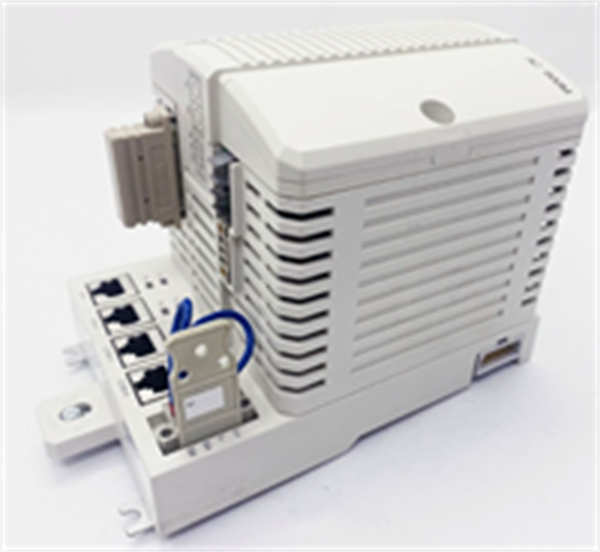
PM861K01 3BSE018105R1 ABB
Lifecycle Status and Migration Strategy
ABB formally discontinued the PM861K01 in 2018, ending both manufacturing and technical support. Continued operation exposes facilities to significant risk: spare parts are scarce, counterfeit units have entered the gray market, and cybersecurity vulnerabilities in legacy firmware cannot be patched.
As a short-term mitigation, organizations may source tested surplus units from certified industrial automation resellers, but each must undergo full functional validation—including redundancy switchover and I/O scan tests—before installation. Battery/supercap replacement by qualified technicians can extend service life, but does not address underlying obsolescence.
ABB’s official migration path is to upgrade to the PM864 or PM866 CPU (order codes 3BSE030880R1 / 3BSE030881R1), which offer higher performance, larger memory, enhanced security, and ongoing support. This migration requires:
- Upgrading the I/O baseplates to CI854A/B (if not already present)
- Converting the Control Builder M project to a compatible version (CBM 4.x or later)
- Revalidating all control logic and communication mappings
While this entails engineering effort, it restores access to vendor support, improves system resilience, and aligns with modern operational technology (OT) security standards. For large sites, a phased migration—starting with non-critical units—is a practical risk-reduction strategy.