 Tel:
Tel:  Email:
  WhatsApp:
 Description
Key Technical Specifications (For Spare Parts Verification)
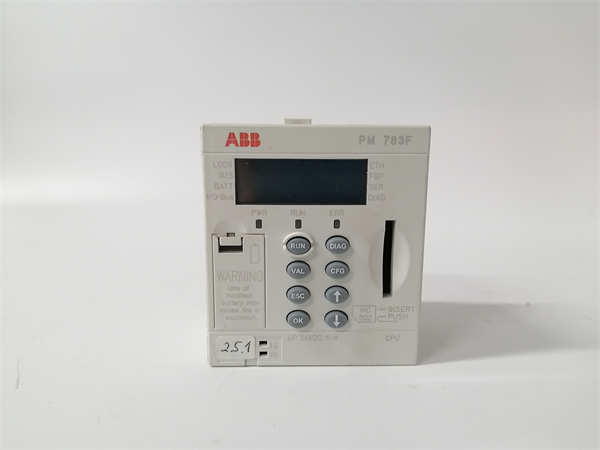
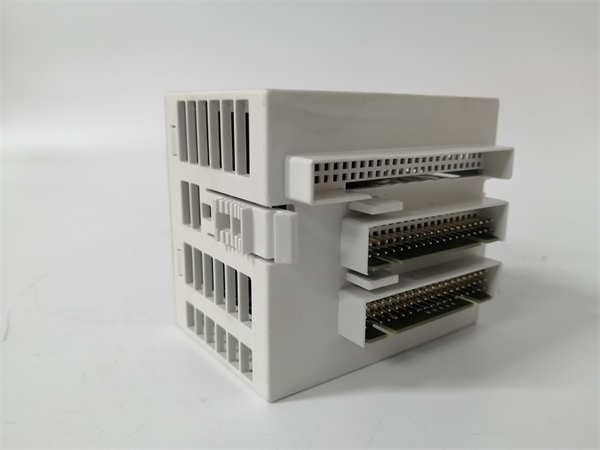
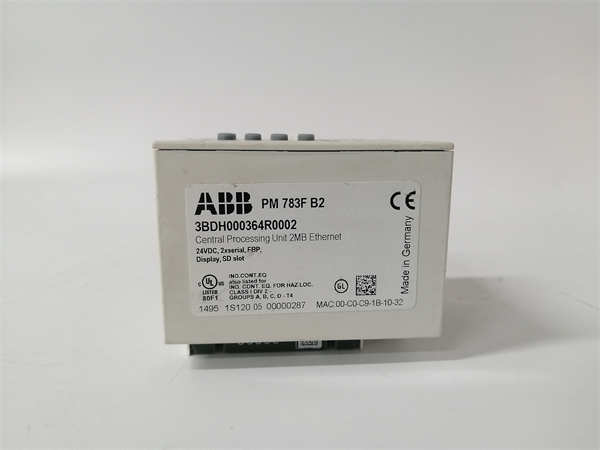
- Product Model: PM783F 3BDH000364R0002
- Manufacturer: ABB
- System Family: AC 800F (part of ABB’s System 800xA automation platform)
- Safety Certification: IEC 61508 SIL 3, EN 62061 SIL 3, EN ISO 13849-1 PL e
- Processor Type: Dual-channel fault-tolerant architecture with self-diagnostics
- Memory: Integrated program and data memory (non-expandable)
- Communication Interfaces: Profibus DP-V1, redundant optical fiber link (for synchronization), serial service port
- Power Supply Requirement: 24 V DC (±10%), typically powered via backplane
- Mounting: DIN rail, compatible with AC 800F chassis (e.g., CI854A-based racks)
- Firmware Dependency: Requires specific AC 800F firmware version; not field-upgradable without engineering tool support

System Role and Downtime Impact
The PM783F serves as the central safety controller in ABB’s AC 800F-based safety systems, commonly deployed in high-risk industrial environments such as oil & gas, chemical plants, and power generation. It executes certified safety logic that monitors emergency shutdown conditions, burner management, or turbine protection. A failure of this module—whether due to hardware fault, memory corruption, or communication loss—triggers a safe state, typically resulting in a full process shutdown. In continuous-operation facilities, such an event can lead to production losses exceeding hundreds of thousands of dollars per hour, along with potential regulatory reporting obligations.
Reliability Analysis and Common Failure Modes
Despite its robust design, the PM783F exhibits age-related vulnerabilities common to early-2000s industrial electronics. The most frequent failure modes include degradation of onboard electrolytic capacitors (leading to power instability), battery-backed RAM corruption (if backup batteries are not replaced every 2–3 years), and optical communication port failures due to dust accumulation or fiber connector wear. A known design weakness is its reliance on non-replaceable internal coin-cell batteries for memory retention during power interruptions; once depleted, safety programs may be lost irreversibly. Additionally, the module is sensitive to electrical transients on the 24 V DC rail, especially in older installations lacking modern surge suppression.
Preventive maintenance should prioritize: annual inspection and replacement of backup batteries, cleaning of optical transceivers and ventilation slots, verification of grounding integrity, and periodic diagnostics via Control Builder F to check for internal error logs or memory checksum anomalies.
ABB PM783F 3BDH000364R0002
Lifecycle Status and Migration Strategy
ABB has officially discontinued the PM783F and the broader AC 800F product line, classifying it as obsolete with no direct repair or factory support available. Continued operation carries significant risk: spare units are scarce, often sourced from decommissioned sites, and may lack traceability or functional verification. Prices on the gray market have risen sharply, and counterfeit or misrepresented units are increasingly common.
As a temporary measure, facilities may consider securing tested spares through certified surplus vendors or engaging third-party repair services capable of board-level component replacement (e.g., capacitor rework). However, the sustainable path is migration. ABB recommends transitioning to the newer AC 800M High Integrity platform (e.g., PM864 or PM866 with safety-enabling firmware and HI modules), which supports IEC 61511-compliant applications and integrates natively with System 800xA. This migration requires re-engineering of safety logic in Control Builder M, I/O re-mapping, and potentially cabinet modifications—but delivers long-term support, enhanced cybersecurity, and alignment with current safety standards.