 Tel:
Tel:  Email:
  WhatsApp:
 Description
Key Technical Specifications
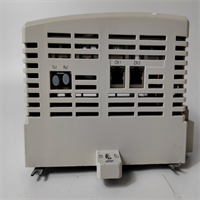
- Product Model: PM665
- Manufacturer: ABB
- Order Code: 3BDS005799R1
- System Family: AC 800M (part of ABB’s 800xA industrial automation platform)
- Processor Type: PowerPC-based embedded CPU
- Memory: 16 MB application memory (non-volatile)
- Communication Interfaces: Dual redundant Profibus DP, serial service port (RS-232), and backplane connection to CI854/CI864 communication modules
- Redundancy Support: Yes – supports synchronized hot-standby with another PM665
- Mounting: DIN rail in AC 800M rail chassis (e.g., TK801A)
- Power Consumption: Approx. 8 W
- Operating Temperature: 0 to +55°C
- Diagnostic LEDs: RUN, STOP, I/O COMM, REDUNDANCY STATUS
System Role and Downtime Impact
The PM665 serves as the central brain of the AC 800M controller, executing all control logic, managing I/O updates, and coordinating with engineering stations and operator interfaces via the 800xA system. It is commonly deployed in continuous process industries—such as power generation, water treatment, and chemical plants—where extended uptime is critical. In redundant configurations, a single PM665 failure triggers automatic switchover to the standby unit, minimizing disruption. However, in non-redundant systems (still common in smaller installations), PM665 failure results in immediate and total loss of automated control, forcing manual operation or complete shutdown. Given its integration depth with safety interlocks and regulatory compliance systems, such an event may also trigger environmental or safety reporting obligations.
Reliability Analysis and Common Failure Modes
Although designed for industrial robustness, the PM665 is susceptible to age-related degradation after 10–15 years of service. The most prevalent failure mode involves corruption of the internal flash memory due to repeated write cycles during firmware updates or power interruptions without proper shutdown procedures. This often manifests as boot loops or “application lost” errors.
Another critical weakness lies in the electrolytic capacitors on the power regulation circuitry, which dry out over time, leading to voltage instability and intermittent crashes—especially under thermal stress. The Profibus communication drivers are also known to degrade, causing sporadic bus faults that are difficult to distinguish from field wiring issues. Additionally, the module’s reliance on a real-time clock (RTC) backed by a small onboard battery means that prolonged storage or battery depletion can result in time-stamp errors, affecting sequence-of-event logging required for compliance.
Preventive maintenance recommendations include:
- Performing annual backup verification of application code and configuration
- Monitoring CPU load and memory usage trends via 800xA diagnostics
- Ensuring clean, stable power with UPS protection to avoid uncontrolled shutdowns
- Replacing the module if it exhibits repeated warm restarts or communication timeouts
- Storing spare units powered periodically (at least once every 12 months) to maintain capacitor health and battery charge
Lifecycle Status and Migration Strategy
ABB has formally discontinued the PM665 as part of the broader phase-out of early AC 800M hardware generations. Official support, including firmware patches and repair services, is no longer available. Continuing to operate systems with this module exposes facilities to significant operational risk: spare units are scarce, counterfeit parts have appeared on the gray market, and compatibility issues may arise when integrating with modern IT/OT infrastructure.
As a short-term mitigation, operators should secure tested, functional spares from trusted surplus vendors and implement rigorous change control to avoid unnecessary reboots or updates. Some users deploy external monitoring tools to detect early signs of CPU distress, such as rising error counters on the CI854 communication module.
For long-term sustainability, ABB recommends migrating to the AC 800M PM86x series (e.g., PM864 or PM866), which offer backward-compatible programming environments via Control Builder M, higher performance, enhanced cybersecurity features, and support for modern protocols like OPC UA and PROFINET. The migration typically involves hardware replacement, application recompilation, and I/O re-mapping—but retains much of the original control logic structure. In greenfield or major retrofit scenarios, transitioning to ABB’s Ability™ System 800xA with newer controllers provides a future-proof architecture aligned with digitalization initiatives. Planning should begin immediately, as lead times for migration engineering and validation can exceed 12 months in regulated industries.