 Tel:
Tel:  Email:
  WhatsApp:
 Description
Key Technical Specifications (For Spare Parts Verification)
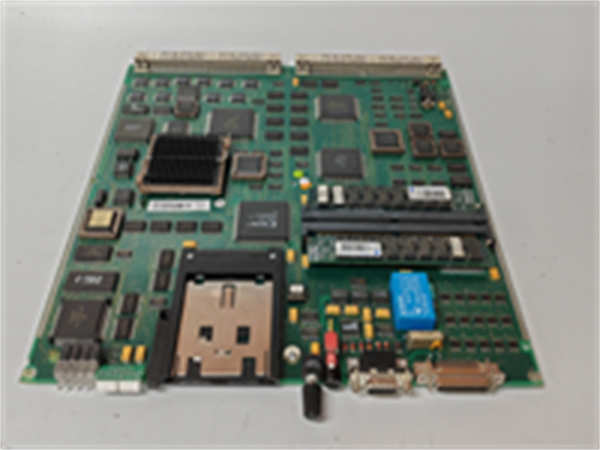
- Product Model: PM511V16 3BSE011181R1
- Manufacturer: ABB
- System Platform: ABB AC 800M (part of System 800xA architecture)
- Processor: Embedded PowerPC-based CPU
- Program Memory: 4 MB flash (non-volatile)
- Data Memory: 8 MB RAM (battery-backed)
- Backplane Interface: Connects directly to I/O modules via standard AC 800M backplane
- Communication Ports: Integrated RS-232 (service port) and dual Ethernet (for MODBUS TCP and internal redundancy)
- Redundancy Support: None – single-unit architecture (non-redundant CPU)
- Power Consumption: Approx. 5 W from +5 VDC backplane supply
- Diagnostic Indicators: LEDs for RUN, STOP, I/O status, and battery warning
- Battery Backup: CR2032 coin cell for RAM retention during power loss (user-replaceable)
System Role and Downtime Impact
The PM511V16 is the central intelligence unit in non-redundant AC 800M control systems, commonly deployed in water pumping stations, small power substations, HVAC plants, and auxiliary process skids. It executes control logic, scans I/O modules, manages communication with engineering workstations, and interfaces with higher-level systems via MODBUS TCP. Because it operates without redundancy, any hardware failure—whether due to memory corruption, power instability, or component aging—causes an immediate and total halt in automated operation. In unattended or remote facilities, this can go undetected until a process deviation occurs, potentially leading to equipment damage, safety incidents, or environmental releases. Recovery is entirely dependent on the availability of a verified spare unit and a valid application backup.
Reliability Analysis and Common Failure Modes
Although designed for industrial use, the PM511V16 is susceptible to several time-dependent failure mechanisms. The most prevalent issue is loss of application program due to exhausted or leaking backup batteries, which causes the CPU to boot into a blank state after a power cycle. Electrolytic capacitors on the internal DC/DC converter degrade over time, particularly in high-temperature enclosures, leading to voltage ripple, spontaneous reboots, or failure to initialize. The Ethernet PHY components can suffer from electrostatic discharge (ESD) damage if network grounding is inadequate, resulting in intermittent or lost connectivity. Additionally, repeated thermal cycling may cause solder joint fatigue on the BGA-mounted processor, manifesting as erratic behavior under load.
Preventive maintenance should include:
- Annual replacement of the backup battery, regardless of measured voltage
- Visual inspection for capacitor bulging or electrolyte residue
- Verification of application integrity by comparing online checksums with offline backups
- Monitoring of CPU temperature and communication error logs in Control Builder M
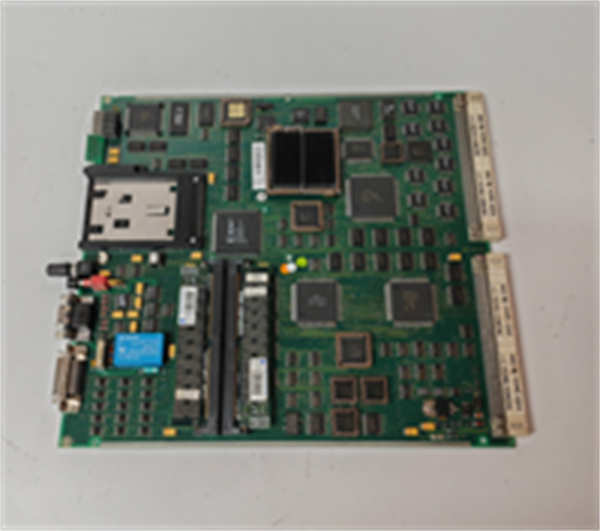
ABB PM511V16 3BSE011181R1
Lifecycle Status and Migration Strategy
ABB has formally obsoleted the PM511V16 as part of its transition toward higher-performance and cybersecurity-compliant controllers. No new units are manufactured, and ABB no longer provides repair services, firmware updates, or technical documentation for troubleshooting. Continued reliance on this CPU presents significant operational risk due to shrinking spares pools, unpredictable pricing, and potential compatibility issues with modern engineering tools.
Short-term mitigation includes maintaining at least two fully tested PM511V16 modules—one active, one cold spare—and ensuring regular, verified backups of application code and hardware configuration. However, this approach only defers systemic obsolescence.
ABB’s recommended migration path is to upgrade to a current-generation AC 800M CPU such as the PM864 (3BSE022360R1) or PM866 (3BSE022361R1). This transition requires:
- Replacing the PM511V16 with a compatible PM86x CPU in the same rack (mechanically and electrically compatible)
- Updating the hardware configuration in Control Builder M (software version ≥6.0/1)
- Recompiling and downloading the existing application (with minor adaptations for deprecated libraries)
- Validating communication settings and I/O mapping
This “drop-in” style upgrade preserves field wiring and I/O modules while restoring access to security patches, extended diagnostics, and long-term vendor support. For sites unable to perform immediate migration, engaging a certified ABB integrator to archive the application in a virtualized test environment can provide a recovery fallback. Until then, the PM511V16 remains a critical single point of failure requiring disciplined spare management and proactive battery maintenance.