 Tel:
Tel:  Email:
  WhatsApp:
 Description
Key Technical Specifications (For Spare Parts Verification)
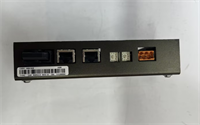
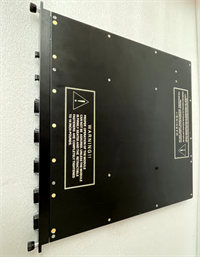
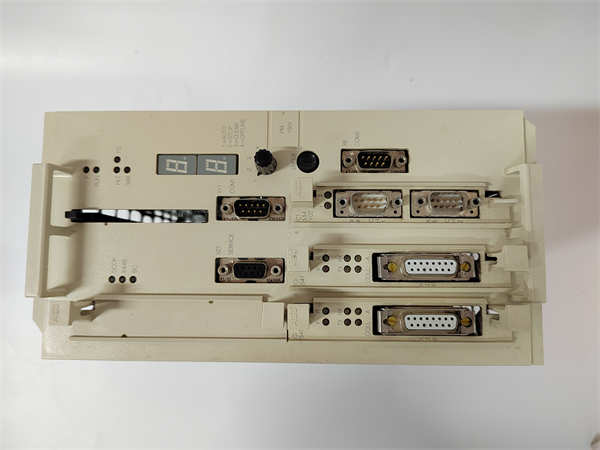
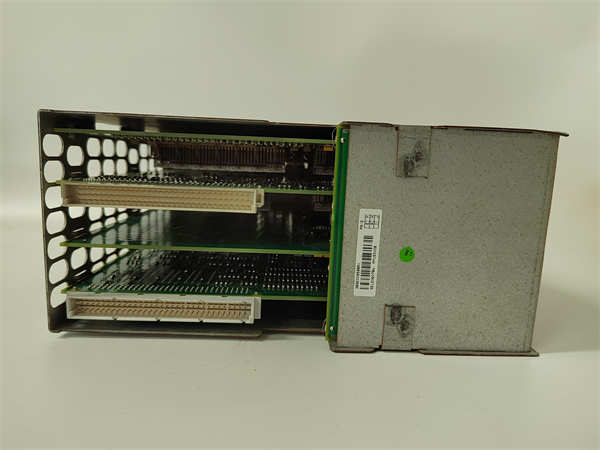
- Product Model: PM150V08 3BSE009598R1
- Manufacturer: ABB
- System Family: AC 800M (part of ABB’s System 800xA architecture)
- Processor Type: 32-bit RISC, integrated real-time kernel
- Program Memory: 256 KB (non-expandable)
- Data Memory: 128 KB
- Communication Interfaces: Dual built-in RS-232/RS-485 ports; supports MODBUS RTU and PROFIBUS DP via optional modules
- Backplane Compatibility: Designed for CI854 or CI853 communication modules in standard AC 800M rail system
- Power Consumption: Approx. 2.5 W via backplane
- Operating Temperature: 0°C to +60°C
- Firmware Dependency: Requires specific Control Builder M version; not compatible with newer firmware releases
System Role and Downtime Impact
The PM150V08 functions as the primary logic engine in compact AC 800M installations, typically deployed in auxiliary systems such as water treatment skids, HVAC control, or small batch processes. Although not used in safety-critical roles, its failure disables all automated control within its domain, often forcing manual operation or full shutdown of the associated subsystem. In integrated plants where this module controls feedwater pumps, lubrication systems, or material handling, unplanned downtime can cascade into broader production delays. Recovery requires either immediate replacement or temporary bypass procedures—both challenging given the scarcity of verified spares.
Reliability Analysis and Common Failure Modes
This module, introduced in the early 2000s, exhibits typical aging issues of its generation. The most prevalent failure mechanism is memory corruption due to battery depletion; the PM150V08 relies on a non-replaceable internal lithium cell for program retention during power loss. Once the battery fails (typically after 7–10 years), the application program is lost upon reboot. Additional weak points include the RS-232 driver ICs, which are susceptible to ESD damage from field wiring, and solder joint fatigue on the backplane connector caused by thermal cycling. Environmental factors such as dust accumulation and high ambient humidity accelerate corrosion on exposed terminals.
Recommended preventive actions include: annual verification of program integrity via online backup, inspection of terminal blocks for oxidation, ensuring clean and stable 24 V DC supply rails, and maintaining a validated offline backup of the application project in Control Builder M format.
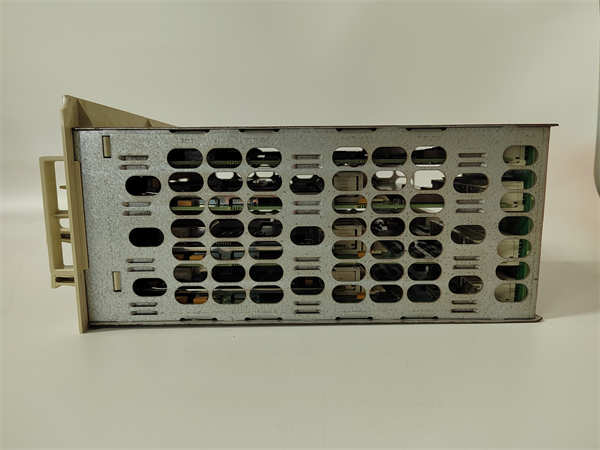
ABB PM150V08 3BSE009598R1
Lifecycle Status and Migration Strategy
ABB has formally ended production and support for the PM150V08, categorizing it as obsolete with no repair services offered. Continued use presents escalating risks: spare availability is restricted to brokered markets, authenticity cannot be guaranteed, and technical documentation is increasingly difficult to access.
Short-term mitigation includes securing tested units from decommissioned sites or using third-party reconditioning services that replace internal batteries and clean connectors. However, the recommended long-term solution is migration to a current AC 800M CPU such as the PM856 or PM864, which offer backward-compatible I/O modules, larger memory, Ethernet-based engineering access, and ongoing firmware support. Migration involves hardware replacement, recompilation of the control logic in a modern Control Builder M environment, and functional validation—but eliminates dependency on obsolete components and aligns the system with current cybersecurity and maintainability standards.