 Tel:
Tel:  Email:
  WhatsApp:
 Description
Key Technical Specifications (For Spare Parts Verification)
- Product Model: PFTL201C
- Manufacturer: ABB
- System Family: Advant Controller / Early 800xA (with AC 800M or legacy AC 450)
- Measurement Type: Strain gauge (full-bridge) load cell input
- Rated Capacity: 50 kN (as indicated in suffix; corresponds to 5,000 kgf approx.)
- Excitation Voltage: +10 VDC ±0.1%, short-circuit protected
- Input Sensitivity Range: 0.5 mV/V to 10 mV/V (adjustable via configuration)
- Output Signal: Scaled 4–20 mA or digital value via fieldbus (depending on system integration)
- Accuracy: ±0.05% of full scale (after calibration)
- Communication: Integrated into Advant I/O bus or 800xA via CI854/AC 800M; not standalone
- Mounting: DIN rail or rack-mounted in ABB I/O cabinet (e.g., TK80x series)
- Calibration: Requires ABB-specific tools (e.g., PG2010 or Control Builder) for span/zero adjustment
System Role and Downtime Impact
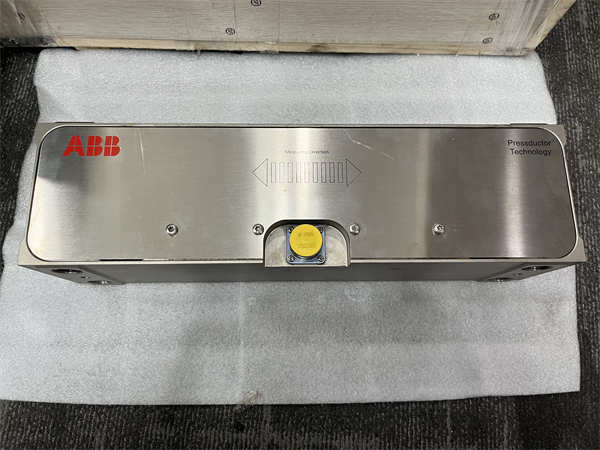
The PFTL201C is a specialized I/O module used in applications where precise force or weight measurement is essential—such as cement batching, pharmaceutical blending, or material handling cranes. It converts the microvolt-level output from a load cell into a stable, calibrated engineering value used for closed-loop control or safety interlocks. If this module fails or drifts out of calibration, the control system receives incorrect weight data. In a batching system, this may result in product quality deviations; in a crane application, it could disable overload protection, creating a serious safety risk. Because the PFTL201C is tightly integrated with ABB’s proprietary I/O architecture, replacement with generic load cell transmitters typically requires extensive re-engineering of logic and wiring.
Reliability Analysis and Common Failure Modes
Although designed for industrial environments, the PFTL201C is vulnerable to several age- and environment-related failure modes:
- Excitation circuit degradation: The precision +10 VDC source can drift due to aging voltage references or thermal stress, leading to gain errors across all load ranges.
- Analog front-end contamination: Moisture or conductive dust ingress causes leakage on high-impedance signal paths, resulting in offset drift or noise.
- Configuration loss: Modules paired with older AC 450 controllers may lose calibration parameters if battery-backed memory fails.
- Connector corrosion: Spring-clamp or screw terminals oxidize over time, increasing contact resistance and introducing measurement instability.
Recommended maintenance practices:
- Perform annual calibration verification using certified test weights or precision shunt resistors
- Inspect terminal blocks for signs of oxidation or loose connections
- Monitor for unexplained zero drift or nonlinearity during routine diagnostics
- Store spares in dry, temperature-controlled environments with anti-static packaging
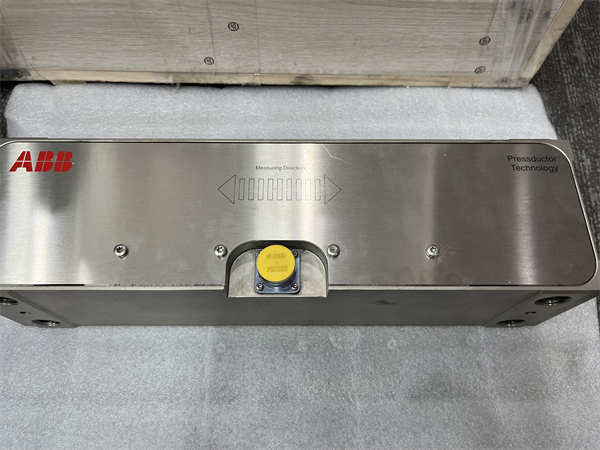
ABB PFTL201C 3BSE007913R50 50KN
Lifecycle Status and Migration Strategy
ABB has discontinued the PFTL201C and no longer offers new units or factory repair services. While the module was once common in Advant-based plants, its integration dependency on legacy controllers limits long-term viability. Continuing to rely on this hardware introduces risk: spares are untraceable, calibration tools are outdated, and engineering support is scarce.
For sites requiring continued operation, interim options include:
- Sourcing functionally tested units with documented calibration and configuration backup
- Performing board-level repair of excitation or signal conditioning circuits by specialized third parties
- Implementing external load cell transmitters with 4–20 mA output, routed to standard analog input cards (e.g., AI810), though this sacrifices native diagnostic integration
The strategic migration path within the ABB ecosystem is to replace the entire weighing subsystem with 800xA-compatible solutions such as the PFTL301 or third-party HART-enabled load cell transmitters integrated via AI845 or AI880A analog input modules. This approach leverages modern diagnostics, easier calibration, and better cybersecurity posture—but requires reconfiguration of control logic, I/O mapping, and operator graphics. A full assessment of weighing criticality, regulatory requirements (e.g., MID, OIML), and lifecycle cost should guide the timing of this transition.