 Tel:
Tel:  Email:
  WhatsApp:
 Description
Key Technical Specifications (For Spare Parts Verification)
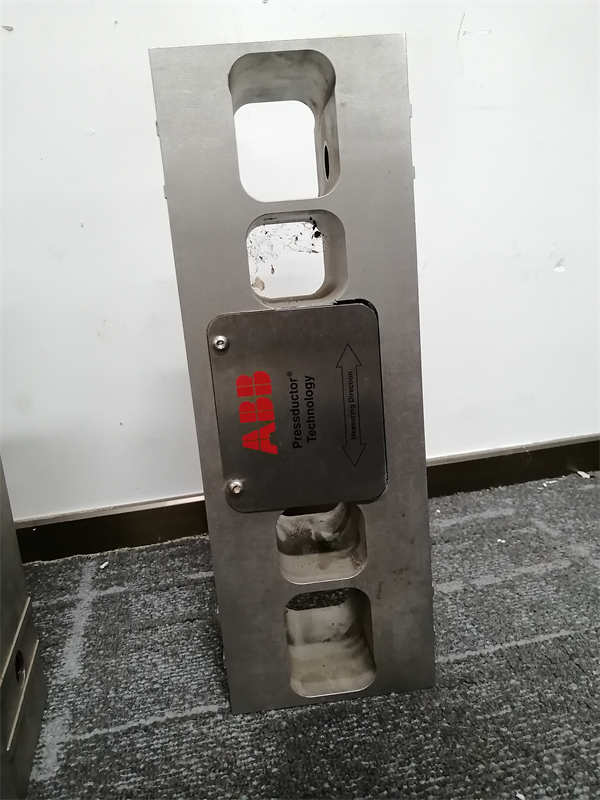
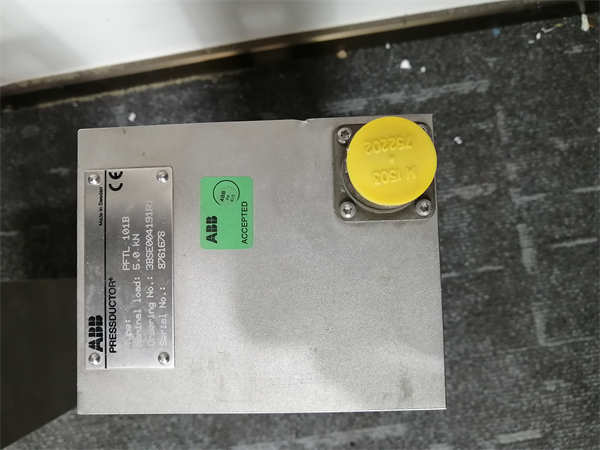
- Product Series: ABB PFTL101 (Tension Load Cell)
- Model Variant: PFTL101B
- Capacity: 5.0 kN (standard variant; other ranges include 1kN, 10kN, 25kN, etc.)
- Output Signal: 2 mV/V (nominal full-scale output)
- Excitation Voltage: 5–12 VDC (typically 10 VDC in ABB systems)
- Accuracy: ±0.5% of full scale (typical for industrial grade)
- Construction: Stainless steel, hermetically sealed (IP67 or IP68 rated)
- Mounting: In-line tension design with threaded ends (e.g., M16 or custom per order)
- Operating Temperature: –10°C to +70°C
- Cable: 4-wire shielded cable (often ~5–10 m, field-trimmable)
- Compatibility: Designed for use with ABB PFTL201 or PFCL301 indicators, AC 800M controllers, or 800xA System via analog input modules (e.g., AI810)
- Safety Certification: Suitable for use in overload protection systems; may be part of a SIL 2/PL d safety function when integrated with appropriate logic solvers and validation
System Role and Safety Impact
The PFTL101B is commonly deployed as the primary sensing element in crane overload protection, hoist monitoring, and tension control systems. It measures actual load in real time and feeds this data to:
- Overload limit switches that disable hoist-up motion
- Operator displays showing live load weight
- Safety PLCs (e.g., ABB AC 500-Safety) for interlocking
- Asset management systems for usage logging
A failed or drifting load cell can result in:
- False low readings: Allowing lifts beyond safe working load (SWL)—risk of structural collapse
- Signal loss: Triggering nuisance trips or disabling operations unnecessarily
- Calibration drift: Gradual degradation leading to undetected unsafe conditions
Because it directly influences lifting safety, the PFTL101B is often subject to regulatory inspection under OSHA, LOLER (UK), or ASME B30 standards.
Reliability Analysis and Common Failure Modes
Despite robust stainless-steel construction, aging PFTL101B units are susceptible to:
- Strain gauge fatigue: Repeated cyclic loading causes micro-cracks in foil gauges, leading to zero drift or nonlinearity
- Moisture ingress: Even with IP67 rating, long-term exposure to humidity or washdown environments can corrode internal wiring or bridge circuits
- Cable damage: Abrasion, crushing, or rodent bites compromise signal integrity (open circuit, noise, short)
- Connector corrosion: Field-wired terminations degrade, increasing resistance and causing signal offset
- Mechanical overstress: Accidental shock loads (e.g., load drop, snatch loading) permanently deform the sensing element
Design limitations include analog-only output (no digital diagnostics) and dependence on external signal conditioning. For preventive maintenance, technicians should:
- Perform annual calibration checks using certified test weights or hydraulic pull testers
- Inspect cables and connectors for physical damage during routine rounds
- Verify zero balance with no load applied
- Monitor trend data in 800xA or historian for gradual drift
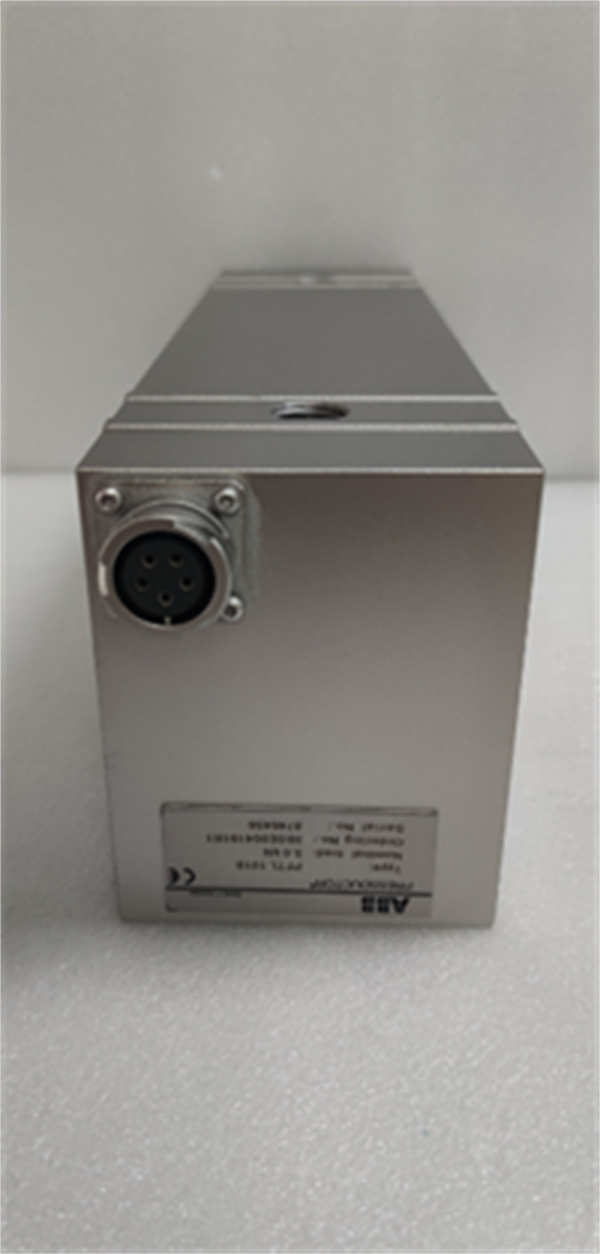
ABB PFTL101B 5.0KN 3BSE004191R1
Lifecycle Status and Migration Strategy
ABB has discontinued the PFTL101 series as part of its shift toward digital load cells (e.g., with IO-Link or HART) and integration with Ability™ Asset Performance Management. The 3BSE004191R1 is no longer produced, and official repair/calibration services are limited.
Continued reliance introduces significant risks:
- No access to factory-new, traceable-certified replacements
- Increasing likelihood of counterfeit or remanufactured units without performance validation
- Incompatibility with future-proof digital architectures
Interim Mitigation Measures
- Source spares only from ABB-authorized distributors or certified calibration labs that provide:
- Full calibration certificate (per ISO 376 or ASTM E74)
- Proof-load test report
- Insulation resistance and bridge integrity verification
- Maintain at least one calibrated spare per critical crane or hoist system
- Implement redundant load monitoring where safety risk is high
Long-Term Migration Path
ABB recommends transitioning to modern alternatives such as:
- ABB PFCL301 series (if still available) – compatible form factor with enhanced diagnostics
- Third-party digital load cells with 4–20 mA or IO-Link output (e.g., from HBM, Vishay, or Spectris)
- Integration with ABB Ability™ Condition Monitoring for predictive analytics
- Use of safety-rated weighing terminals (e.g., ABB CP600 with safety firmware) for SIL applications
Given its role in personnel and asset safety, the obsolescence of the PFTL101B 5.0kN represents a high-severity operational risk. Proactive management through formal sparing, rigorous calibration, or inclusion in a modernization roadmap is essential to maintain compliance, prevent accidents, and ensure lifting system integrity.