 Tel:
Tel:  Email:
  WhatsApp:
 Description
Technical Specifications (For Spare Parts Verification)
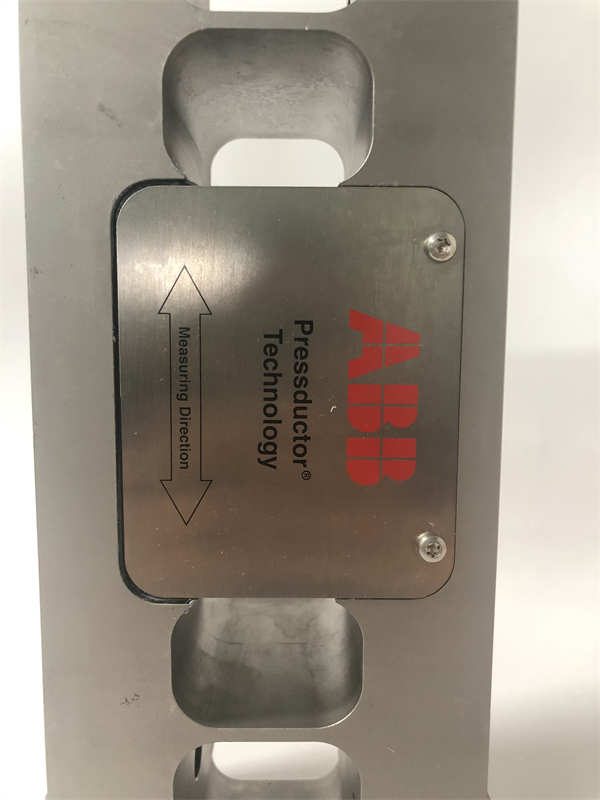
- Model: PFTL101B
- Rated Capacity: 2.0 kN (≈204 kgf / 450 lbf)
- Output Signal: Typically 2 mV/V (passive strain gauge bridge)
- Excitation Voltage: 5–10 VDC (standard for strain gauge sensors)
- Accuracy: ±0.5% of full scale (typical for this class)
- Construction: Stainless steel (AISI 316 or equivalent), hermetically sealed
- Protection Rating: IP67 or IP68 (suitable for washdown, outdoor, or marine environments)
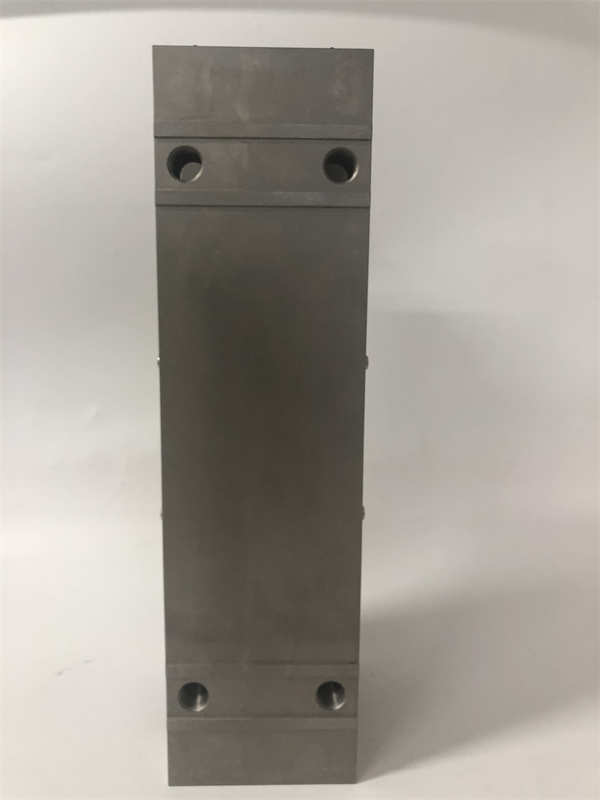
- Mounting: In-line “load pin” or clevis-style with threaded ends (M12 or similar, depending on variant)
- Cable: Integrated PUR or PVC jacketed cable (typically 4–6 m), with color-coded leads (e.g., red = exc+, black = exc−, green = sig+, white = sig−)
- Temperature Range: −20°C to +70°C (standard); compensated for thermal effects
- Optional Features: Some variants include ATEX certification for hazardous areas or SIL suitability for safety functions
System Role and Downtime Impact
The PFTL101B is commonly used in applications where precise force measurement is critical for safety or process control—such as crane hoists, winch systems, material handling robots, and test rigs. It feeds analog signals to PLCs, safety relays, or dedicated weighing terminals (e.g., ABB DS/FS series). In an overload protection system, the load cell triggers a shutdown if force exceeds a preset threshold (e.g., 90% of rated capacity). If the PFTL101B fails—due to signal drift, open circuit, or mechanical damage—the system may either fail dangerously (no trip during overload) or fail safely (spurious shutdown), both of which carry significant operational or safety consequences. In regulated industries (e.g., offshore lifting), an uncalibrated or uncertified load cell can invalidate compliance with LOLER, OSHA, or ISO 4306 standards.
Reliability Analysis and Common Failure Modes
Despite its rugged design, the PFTL101B is susceptible to long-term degradation, especially in dynamic or harsh environments:
- Strain gauge fatigue – repeated loading cycles near capacity cause micro-cracks in the foil pattern, leading to zero drift or nonlinearity.
- Cable damage – abrasion, rodent bites, or sharp bends near the gland compromise signal integrity or cause intermittent faults.
- Moisture ingress – seal failure over time allows condensation into the strain gauge cavity, causing corrosion or electrical leakage.
- Mechanical overstress – shock loads beyond 150% of rated capacity can permanently deform the sensing element.
A key limitation is that the sensor provides no self-diagnostics; faults are only detected through external validation (e.g., calibration checks or system behavior anomalies). For preventive maintenance, operators should:
- Perform annual calibration against traceable standards
- Inspect cable sheath and connector for cuts, kinks, or moisture
- Verify zero balance under no-load conditions during routine checks
- Avoid side loads or bending moments during installation
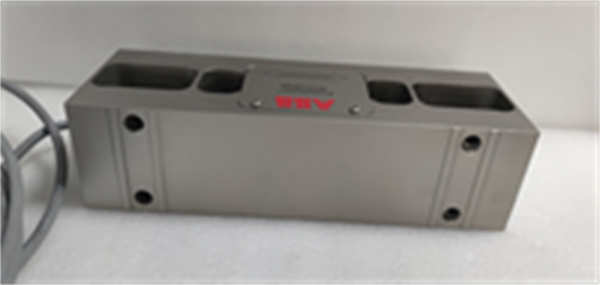
PFTL101B 2.0KN ABB
Lifecycle Status and Migration Strategy
ABB has discontinued the PFTL101B series, and technical documentation/support is now limited. New units are unavailable through official channels. Continuing to use this sensor introduces risk: replacement units from surplus markets may be counterfeit, previously damaged, or out of calibration.
Short-term mitigation includes:
- Securing NIST-traceable calibrated spares from certified legacy sensor suppliers
- Implementing redundant load monitoring (e.g., dual sensors with voting logic) where safety-critical
- Documenting original calibration data and mounting orientation for accurate replacement
For long-term sustainability, ABB and third-party vendors offer modern equivalents with improved performance and support, such as:
- ABB FTL series (e.g., FTL101 or FTL300) – digital or analog load cells with better environmental ratings
- HBM, Vishay, or Spectris load pins – compatible form/fit replacements with current certifications
- Smart load cells with IO-Link or HART – enabling diagnostics and remote monitoring
When replacing, ensure:
- Identical mechanical dimensions and thread type
- Matching output sensitivity (mV/V) or use of signal conditioner
- Re-validation of safety functions if used in SIL-rated circuits
Given the safety implications of load cell failure—especially in lifting or containment applications—proactive obsolescence management is not optional. Facilities should audit all PFTL101B installations, prioritize high-risk uses, and execute a phased replacement plan to maintain operational integrity and regulatory compliance.