 Tel:
Tel:  Email:
  WhatsApp:
 Description
Key Technical Specifications (For Spare Part Verification)
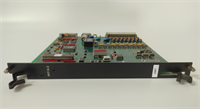
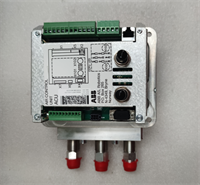
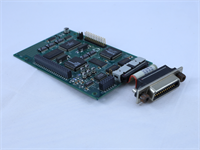
- Product Model: PFTL101A 2.0KN
- Manufacturer: ABB Automation Products (formerly part of ABB’s Measurement & Analytics division)
- System Compatibility: ABB CraneHoist, AC 800M-based crane control systems, and legacy PLC interfaces
- Rated Capacity: 2.0 kN (approx. 204 kgf)
- Output Signal: 2 mV/V (nominal), analog strain gauge bridge
- Excitation Voltage: 5–10 VDC (typically 10 VDC in ABB crane applications)
- Accuracy Class: ±0.5% of full scale (per original datasheet)
- Environmental Protection: IP65 (dust and water jet resistant)
- Mechanical Interface: Clevis pin design with integrated mounting holes
- Cable Specification: 4-conductor shielded cable, approx. 5–10 m length (varies by installation)
System Role and Downtime Impact
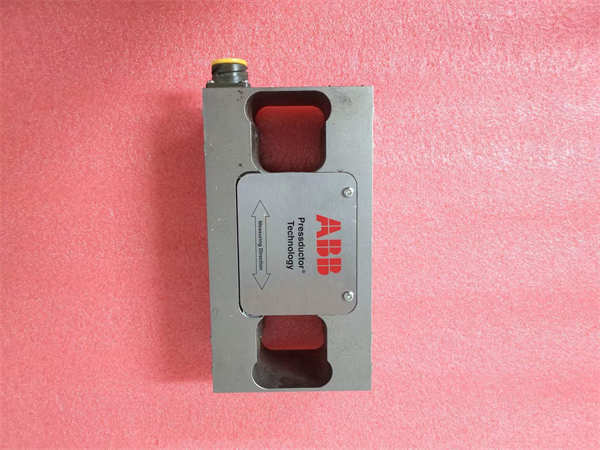
The ABB PFTL101A 2.0KN is a critical mechanical-to-electrical transducer installed directly in the load path of light-duty cranes, jib arms, or hoist ropes. It serves as the primary input device for the crane’s load monitoring system. In ABB-integrated solutions, its analog signal is typically conditioned by an interface module (e.g., in an AC 800M I/O station) and used to enforce safe operating envelopes. If this load cell fails—either by open circuit, drift, or mechanical fracture—the crane control system may either trigger a safety stop (causing unplanned downtime) or, worse, operate without accurate load feedback, creating a serious risk of overloading and structural failure. In continuous-operation facilities such as ports, steel mills, or assembly lines, loss of this component can halt material flow until replaced.
Reliability Analysis and Common Failure Modes
Although robustly built, the PFTL101A is susceptible to several age- and environment-related failure mechanisms common to strain-gauge-based sensors in heavy industrial settings. The most frequent failure mode is moisture ingress through degraded cable glands or connector seals, leading to corrosion of internal wiring or bridge imbalance. This manifests as signal drift, intermittent readings, or complete open/short circuits. A secondary issue is fatigue cracking at stress concentration points near the clevis holes, especially if the unit has been subjected to repeated shock loads or side forces beyond its design limits. Additionally, the analog signal cable is vulnerable to abrasion, rodent damage, or accidental severing during maintenance.
Design-wise, the unit lacks digital self-diagnostics or redundancy, making fault detection reliant on external logic. There is no internal temperature compensation in early revisions, which can cause seasonal calibration shifts in outdoor installations.
Preventive maintenance should focus on:
- Visual inspection of the cable sheath and gland integrity every 6 months
- Periodic zero-load and known-weight verification tests using calibrated reference masses
- Checking for physical deformation, cracks, or unusual noise during operation
- Ensuring proper strain relief at both the sensor and termination points to prevent wire fatigue
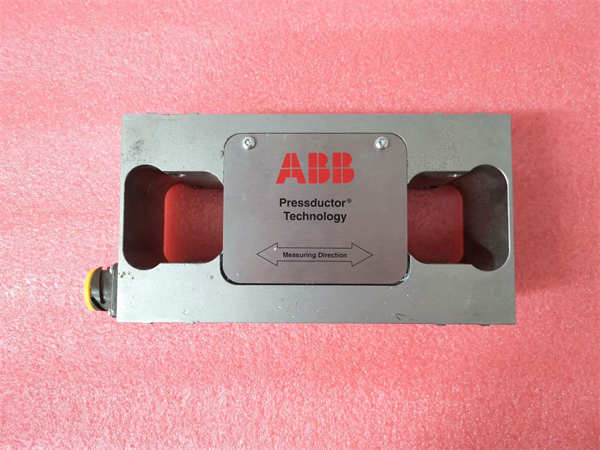
ABB PFTL101A 2.0KN 3BSE004172R1
Lifecycle Status and Migration Strategy
ABB officially discontinued the PFTL101 series several years ago, with no direct “drop-in” replacement offered. Continued use carries significant risks: dwindling genuine spare inventory, increasing lead times, and absence of factory calibration support. While some third-party vendors offer mechanical clones, they often differ in sensitivity, hysteresis, or mounting tolerances, requiring re-engineering of the mechanical interface and recalibration of the entire safety chain.
As a temporary measure, facilities may consider:
- Securing multiple verified spares now to cover 3–5 years of operational need
- Performing board-level repair or cable retermination by certified metrology labs (if the strain element itself is intact)
- Implementing redundant monitoring via external load indicators as a backup layer
For long-term sustainability, ABB recommends migrating to the PFTL301 or PFTL302 series, which feature digital output (IO-Link or HART), higher accuracy (±0.25%), and improved environmental sealing (IP67/IP68). However, this upgrade requires:
- Mechanical redesign of the load pin mounting assembly
- Replacement of the analog input module with a compatible digital or high-resolution analog interface
- Recertification of the crane’s safety functions per ISO 4306 and local regulatory standards
Engineering review is essential before any migration to ensure compliance with lifting equipment safety legislation.