 Tel:
Tel:  Email:
  WhatsApp:
 Description
Technical Specifications (For Spare Parts Verification)
- Product Model: PFSA140
- Manufacturer: ABB
- Order Code: 3BSE003816R1
- System Family: AC 800F Distributed Control System (part of former Freelance architecture)
- Communication Protocol: Profibus DP (Master Class 1 and 2)
- Data Rate: Configurable up to 12 Mbps
- Supported Slave Count: Up to 126 devices per segment (depending on GSD files and cycle time)
- Redundancy Support: Yes – supports redundant PFSA140 modules in dual-redundant AC 800F configurations
- Physical Interface: 9-pin D-SUB (RS-485), isolated
- Backplane Compatibility: Requires AC 800F-specific carrier board (e.g., TB511 or TB521)
- Diagnostic Indicators: LED status for power, run, error, and bus activity
- Operating Temperature: 0°C to +60°C
System Role and Downtime Impact
The PFSA140 serves as the critical Profibus DP master interface in legacy AC 800F systems, commonly found in chemical plants, water treatment facilities, and older power generation units. It enables the AC 800F CPU to communicate with distributed field devices such as ABB ACS800 drives, remote I/O stations (e.g., TB5xx series), and smart valve positioners. A malfunction—whether due to firmware lockup, physical port damage, or internal component failure—results in complete loss of communication with all downstream slaves on that segment. This typically forces affected control loops into safe state or manual mode, potentially triggering process alarms, unit derates, or full plant shutdowns if redundant paths are not fully operational or properly configured.
Reliability Analysis and Common Failure Modes
Although robustly engineered for its era, the PFSA140 is now susceptible to age-related degradation. The most common failure modes include RS-485 transceiver IC burnout due to ground potential differences or lightning-induced surges on field cabling, and internal EEPROM corruption leading to boot failure or incorrect GSD loading. Electrolytic capacitors on the power regulation circuit often dry out after 15+ years of service, causing intermittent resets or voltage instability. A notable design weakness is the lack of modern surge suppression on the D-SUB port, making it vulnerable in electrically noisy industrial environments. For maintenance teams, recommended practices include inspecting field cable shielding and grounding integrity, verifying termination resistors at segment ends, monitoring module temperature during operation, and maintaining powered spares in a controlled environment to prevent capacitor aging during storage.
-

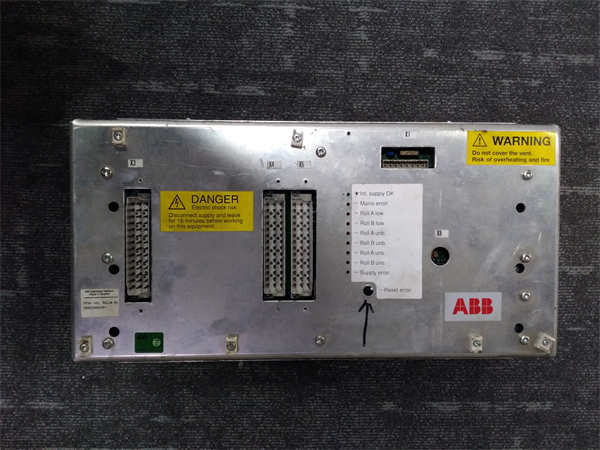
ABB PFSA140 3BSE003816R1
Lifecycle Status and Migration Strategy
ABB has officially discontinued the PFSA140 (3BSE003816R1) as part of the broader retirement of the AC 800F platform. No direct replacement exists within current ABB offerings, and OEM technical support is minimal. Continued reliance on this module poses escalating risk due to dwindling spare availability and absence of firmware updates. As a short-term mitigation, facilities may engage specialized repair services for board-level restoration or establish strategic spares pools from verified sources. For sustainable operation, ABB’s recommended migration path is to transition to the AC 800M platform with Profibus modules such as CI854A (3BSE020870R1), which provide enhanced diagnostics, better noise immunity, and integration into the 800xA system architecture. This upgrade requires re-engineering the control logic in Control Builder M, rewiring field connections, and re-commissioning all Profibus devices—typically executed during planned turnarounds or as part of a full DCS modernization initiative. Proactive planning is essential to avoid unplanned outages driven by component obsolescence.