 Tel:
Tel:  Email:
  WhatsApp:
 Description
Key Technical Specifications (For Spare Parts Verification)
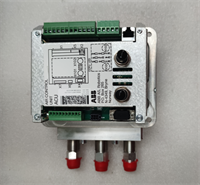
- Product Model: PFEA111-65
- ABB Order Code: 3BSE028140R0065
- Manufacturer: ABB
- System Family: AC 800M with S800 I/O
- Output Channels: 8 isolated channels
- Output Signal Range: 4–20 mA (default), configurable to 0–20 mA or 0–24 mA
- Load Capability: Up to 750 Ω per channel at 24 VDC
- Accuracy: ±0.1% of full scale at 25°C
- Isolation: Channel-to-channel and channel-to-backplane isolation (500 VAC RMS)
- Diagnostic Features: Open-circuit detection, overrange/underrange alarm, module OK status
- Mounting: Standard slot in S800 I/O baseplate (e.g., TB840A, TB850A)
- Operating Temperature: 0°C to +60°C
System Role and Downtime Impact
The ABB PFEA111-65 is commonly deployed in continuous process industries—such as power plants, refineries, and chemical facilities—to provide precise analog command signals to final control elements. Each of its eight channels typically drives a pneumatic control valve positioner, a variable frequency drive (VFD), or a damper actuator. The module enables closed-loop regulation of critical process variables like pressure, flow, level, or temperature.
If the PFEA111-65 fails—due to internal fault, power anomaly, or backplane communication loss—all eight output channels default to a safe state (typically 0 mA or last value hold, depending on configuration). This causes immediate loss of control on up to eight independent loops. In boiler feedwater or combustion control applications, this can trigger cascading alarms, automatic trip logic, or manual intervention to prevent equipment damage. Recovery requires physical replacement and revalidation of loop calibration, often during unplanned outages with significant production impact.
Reliability Analysis and Common Failure Modes
Despite solid industrial design, the PFEA111-65 exhibits predictable aging-related issues:
- Output driver IC degradation: The precision current-output amplifiers (e.g., XTR11x-series ICs) are sensitive to thermal stress and voltage transients. Over time, this leads to drift, nonlinearity, or complete channel failure.
- Isolation barrier breakdown: Moisture ingress or sustained overvoltage can compromise the opto-isolators or transformer-based isolation, causing ground loops or cross-channel interference.
- Backplane connector corrosion: In humid or corrosive environments, oxidation of the DIN-rail edge connector results in intermittent communication or “Module Fault” status, even if the electronics are functional.
A notable vulnerability is the lack of per-channel short-circuit protection in early revisions—meaning a single field wiring fault (e.g., shorted terminal) could disable the entire module. Preventive maintenance should include:
- Periodic loop calibration checks to detect output drift
- Inspection of field wiring for insulation damage or moisture
- Monitoring of diagnostic bits in the AC 800M CPU for open-circuit or range faults
- Ensuring proper grounding of the I/O cabinet to minimize EMI
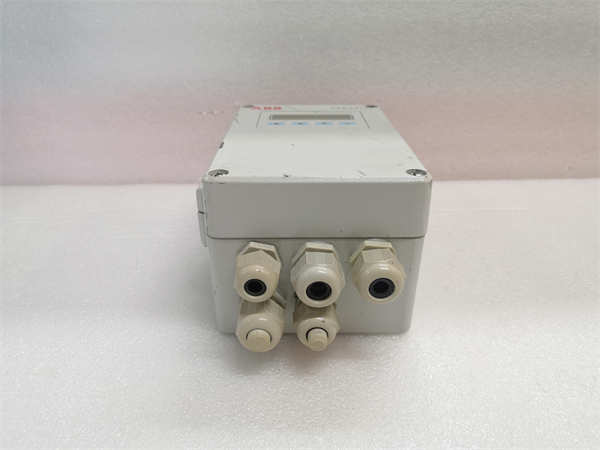
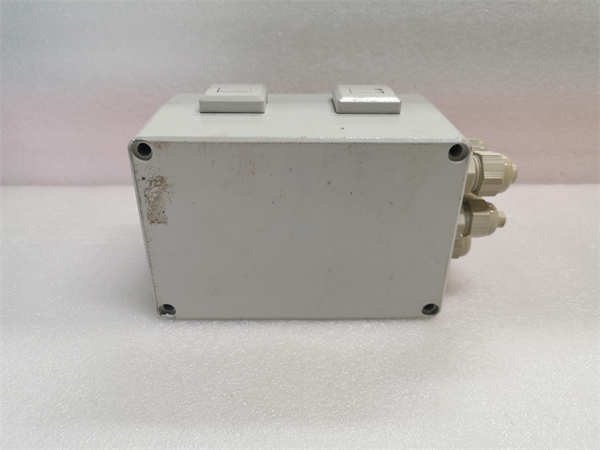
ABB PFEA111-65 3BSE028140R0065
Lifecycle Status and Migration Strategy
ABB has discontinued the PFEA111-65 and replaced it with the PFEA112 (3BSE069250R1) and PFEA113 (3BSE069251R1) series, which offer improved accuracy, enhanced diagnostics (including HART pass-through), and better thermal resilience. The original PFEA111-65 is no longer listed in ABB’s current product portfolio.
Continued use carries operational risk: spare units from brokers may be untested, mismatched in hardware revision (e.g., Rev A vs. Rev C), or contaminated with prior field failures. Some recovered modules show capacitor leakage or PCB delamination due to long-term thermal cycling.
Interim mitigation strategies include:
- Securing pre-tested spares with documented loop validation
- Avoiding operation near maximum ambient temperature
- Implementing redundant output strategies for critical loops (e.g., dual valves)
For long-term reliability, ABB recommends upgrading to the PFEA112/PFEA113 modules. These are mechanically and electrically compatible with existing S800 baseplates and require no chassis modification. However, users must:
- Verify compatibility with existing CPU firmware (Control Builder M version ≥ 5.1 SP2 recommended)
- Update I/O configuration in the project database
- Revalidate loop response times if high-speed control is required
Given its role in maintaining stable process operation, proactive replacement of aging PFEA111-65 units—even before failure—is a prudent strategy to avoid disruptive control loss in legacy but still-operational AC 800M systems.