 Tel:
Tel:  Email:
  WhatsApp:
 Description
Key Technical Specifications (For Spare Parts Verification)
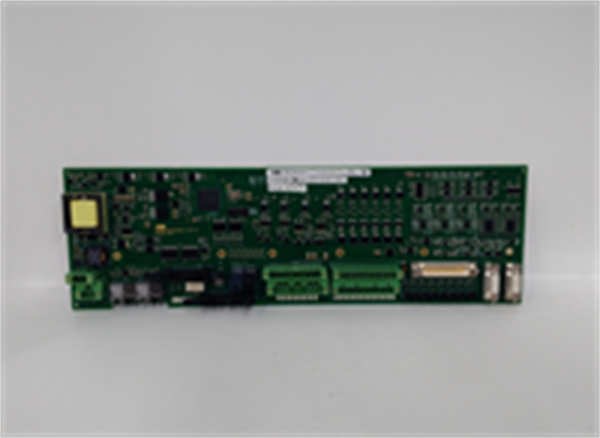
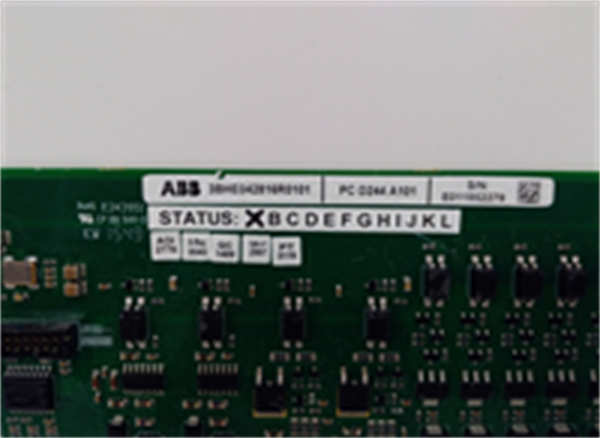
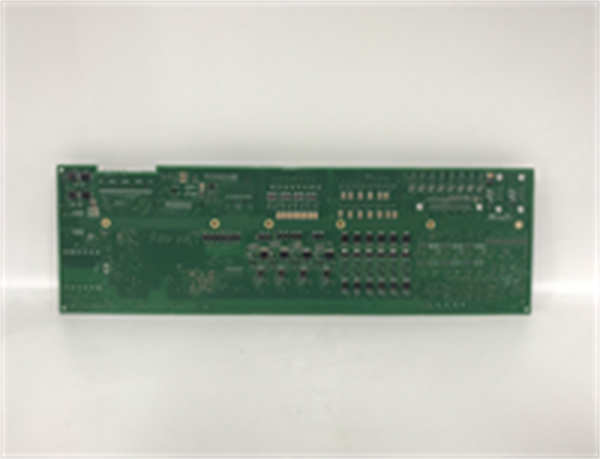
- Product Model: PCD244A101
- Manufacturer: ABB
- System Platform: SATT 190 DCS
- Module Type: Digital Input (DI)
- Input Channels: 32 isolated binary inputs
- Input Voltage Range: Typically 24–60 VDC (field-configurable via jumpers or backplane settings)
- Isolation: Channel-to-channel and channel-to-system ground per IEC 61010
- Backplane Interface: Proprietary SATT 190 carrier bus (mechanical and electrical compatibility required)
- Diagnostic Features: Basic LED indication per channel group; no individual channel health reporting
- Mounting: Plug-in module into SATT 190 I/O chassis (e.g., PCD20x/21x series racks)
- Compliance: Designed to meet EN 50081/50082 (EMC), IEC 60533 (marine), and utility-specific standards
System Role and Downtime Impact
The ABB PCD244A101 is typically deployed in fossil fuel power plants, combined-cycle facilities, and industrial boiler systems installed between the 1980s and early 2000s. It resides in remote I/O cabinets near high-voltage switchgear or mechanical equipment, converting dry contact or powered contact signals into logic states for the central SATT 190 controllers. These signals feed into safety interlocks (e.g., “turbine trip if lube oil pressure low”), sequence logic, and operator displays. If the module fails, the control system may interpret all 32 channels as “open” or “closed,” leading to false alarms, inhibited startups, or—more dangerously—failure to detect a real fault condition. In a nuclear auxiliary system, this could trigger unnecessary scrams; in a coal plant, it might prevent boiler purge validation, halting operations for hours.
Reliability Analysis and Common Failure Modes
Despite rugged industrial construction, decades of service in high-EMI, high-temperature environments have led to predictable aging effects.
Common failure modes include:
- Input optocoupler degradation, causing signal dropout or slow response—especially on channels with low-voltage or high-impedance sources.
- Backplane connector oxidation or pin fatigue, resulting in intermittent communication with the SATT 190 controller, often logged as “I/O fault” or “module missing.”
- Power supply decoupling capacitor drying on the internal DC/DC converter, leading to logic resets or erratic channel behavior under load.
- PCB trace corrosion near terminal blocks due to humidity ingress in non-climate-controlled cabinets.
- LED indicator burnout, reducing local troubleshooting capability but not affecting core function.
Design weaknesses include lack of per-channel diagnostics, no hot-swap support, and reliance on legacy through-hole components that are no longer manufactured. The module also lacks transient suppression beyond basic clamping diodes, making it vulnerable to switching surges from nearby contactors.
Preventive maintenance recommendations:
- Perform annual loop checks on a representative sample of channels using simulated contact closure.
- Inspect and clean backplane mating surfaces during scheduled outages.
- Verify input voltage levels at terminals to ensure they meet minimum pickup thresholds.
- Monitor system event logs for recurring I/O faults on the associated rack.
- Store spare modules in static-shielded, dry containers with desiccant.
PCD244A101 ABB
Lifecycle Status and Migration Strategy
ABB officially discontinued the SATT 190 platform over two decades ago. No new PCD244A101 modules have been produced since the early 2000s, and factory repair services were terminated years ago. Technical documentation is scarce, and original engineering tools (e.g., SATT Toolset) are incompatible with modern operating systems.
Continued operation carries significant risk: a single module failure can cascade into plant derating or forced outage, with replacement lead times exceeding 3–6 months due to limited global inventory.
Interim mitigation strategies include:
- Securing multiple tested spares from decommissioned sites with matching revision codes.
- Implementing external signal duplication to redundant monitoring systems where safety permits.
- Partnering with third-party obsolescence firms capable of board-level repair or form-fit-function replication.
Long-term, migration to a modern DCS or PLC platform (e.g., ABB Ability™ System 800xA, Siemens PCS 7, or Rockwell PlantPAx) is the only sustainable solution. This involves:
- Replacing entire I/O cabinets with new remote I/O (e.g., ABB AC 800M with TK801/802 modules).
- Rewiring field devices to new termination blocks.
- Re-engineering control logic in a contemporary programming environment (e.g., Control Builder M).
- Retraining operations and maintenance staff.
While capital-intensive, such a modernization eliminates obsolescence risk, improves cybersecurity posture, and enables predictive maintenance through integrated asset analytics. For plants with extended operational licenses, phased migration during major outages offers a balanced approach to sustaining reliability while controlling cost.