 Tel:
Tel:  Email:
  WhatsApp:
 Description
Key Technical Specifications (For Spare Part Verification)
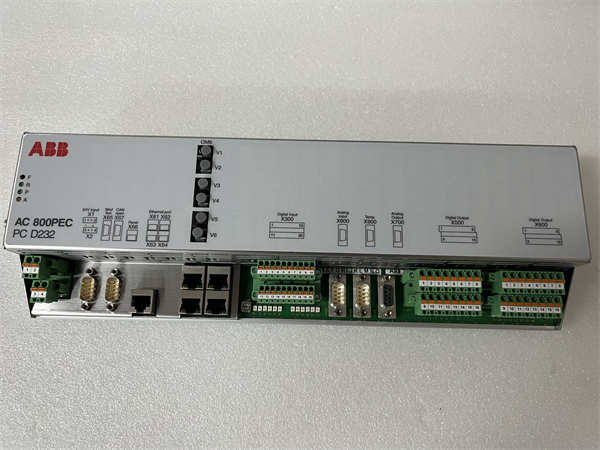
- Product Model: PCD232A101 3BHE022293R0101
- Manufacturer: ABB
- System Family: SATT 190 / SATT 200 distributed control system (predecessor to 800xA)
- Input Type: 16 channels, 24 V DC sink-type (NPN logic)
- Input Voltage Range: 15–30 V DC
- Input Current: Approx. 7 mA per channel at 24 V DC
- Isolation: Optical isolation between field and backplane
- Backplane Compatibility: Requires PCD base rack (e.g., PCD900 series chassis) with compatible power and CPU modules
- Diagnostic Capability: Basic LED indication per channel; no advanced diagnostics or event logging
- Mounting: DIN-rail or rack-mounted within SATT cabinet
- Terminal Type: Screw-clamp terminals on removable connector block (typically 3BHE022294Rxxxx series)
System Role and Downtime Impact
The ABB PCD232A101 serves as a fundamental digital input interface in SATT 190/200 control systems, commonly deployed in fossil fuel power plants, pulp & paper mills, and older chemical facilities. It acquires discrete signals from field devices such as limit switches, pressure switches, and motor starter auxiliary contacts. These signals feed into safety interlocks, sequence logic, and operator displays. While a single failed channel may be bypassed temporarily, a complete module failure—especially in non-redundant configurations—can disable multiple critical inputs. For example, loss of boiler flame scanner feedback or turbine trip confirmation signals may force an emergency shutdown. In continuous-operation environments, unplanned outages due to I/O module failure can result in production losses exceeding $200,000 per incident, not including potential safety or environmental consequences.
Reliability Analysis and Common Failure Modes
The PCD232A101 was designed for industrial durability but is now vulnerable due to age-related component degradation. The most prevalent failure mode is input channel drift or dead channel, typically caused by aging optocouplers or cracked solder joints from thermal cycling. A second common issue is connector corrosion at the terminal block interface, especially in high-humidity or corrosive atmospheres, leading to intermittent signal loss. Additionally, the module’s lack of surge suppression on field inputs makes it susceptible to voltage transients from switching inductive loads (e.g., solenoid valves), which can permanently damage input circuits.
Design limitations include the absence of channel-level diagnostics and reliance on passive components with finite lifespans. As a preventive measure, maintenance teams should: (1) perform annual continuity and insulation resistance tests on field wiring; (2) inspect and clean terminal blocks during scheduled outages; (3) verify input voltage levels under load to detect weak field supplies; and (4) keep at least one tested spare module with matching firmware and hardware revision.
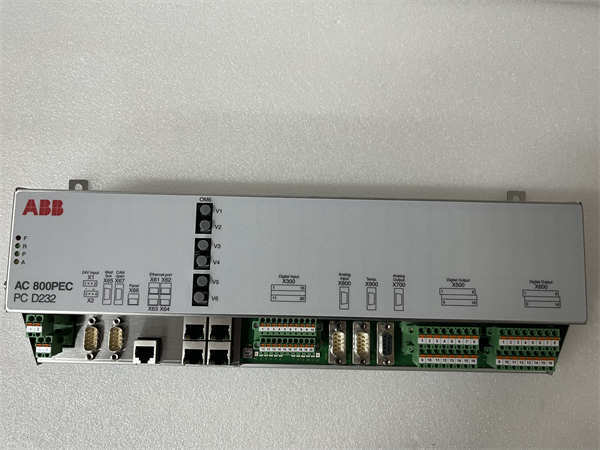
ABB PCD232A101 3BHE022293R0101
Lifecycle Status and Migration Strategy
ABB has formally discontinued the PCD232A101 as part of its legacy SATT product phase-out. No new units are produced, and official technical support is restricted to documentation access. Spare parts are now exclusively sourced from the secondary market, where authenticity, prior usage, and storage conditions are often unknown—introducing risk of premature failure.
Short-term mitigation includes sourcing vetted used units with full functional verification or performing board-level repairs (e.g., replacing optocouplers or reflowing solder joints). However, the long-term solution is system modernization. ABB’s strategic migration path is to the AC 800M platform (e.g., using DI810 or DI811 digital input modules within 800xA). This transition requires: (1) replacement of SATT racks with AC 800M hardware; (2) re-engineering of I/O wiring via marshalling panels; and (3) conversion or redevelopment of control logic in Control Builder M. While this represents a significant investment, it eliminates obsolescence risk, improves diagnostic visibility, and aligns the plant with current cybersecurity and operational standards. For facilities with extended SATT life plans, a “island migration” approach—upgrading one unit at a time—is a practical interim strategy.