 Tel:
Tel:  Email:
  WhatsApp:
 Description
Key Technical Specifications (For Spare Parts Verification)
- Product Model: PCD231B101
- ABB Part Number: 3BHE025541R0101
- Manufacturer: ABB
- System Platform: SATT 190 DCS
- Module Type: Analog Input (AI)
- Input Channels: 8 differential analog inputs
- Supported Signal Types: Thermocouples (J, K, T, etc.), RTDs (Pt100), 4–20 mA, 0–20 mA, 0–10 V (field-configurable per channel via internal jumpers or software)
- Resolution: Typically 14–16 bits depending on signal type
- Accuracy: ±0.1% of span (with periodic calibration)
- Isolation: Channel-to-channel and channel-to-ground per IEC 61010
- Backplane Interface: Proprietary SATT 190 carrier bus (mechanical and electrical compatibility required)
- Diagnostic Indication: Group LEDs for power and fault status; no per-channel diagnostics
- Mounting: Plug-in module into SATT 190 I/O chassis (e.g., PCD20x/21x series)
System Role and Downtime Impact
The ABB PCD231B101 is a foundational component in fossil fuel power stations, combined-cycle plants, and district heating systems commissioned from the late 1980s through the early 2000s. Installed in remote I/O cabinets near boilers, turbines, or heat exchangers, it digitizes analog sensor signals for use in combustion control, feedwater regulation, and safety interlocks. For example, a failed module reading steam temperature could cause the control system to misjudge superheat conditions, leading to turbine trip or tube rupture risk. In many legacy plants, these modules are not redundant—loss of one unit can disable an entire control loop, forcing operators into manual mode or triggering automatic plant derating. Recovery requires physical replacement and recalibration, which may take days if spares are not on hand.
Reliability Analysis and Common Failure Modes
Despite robust industrial design, prolonged exposure to thermal cycling, vibration, and electrical noise has led to well-documented aging mechanisms.
Common failure modes include:
- Cold junction compensation (CJC) sensor drift in thermocouple channels, causing systematic temperature offset errors.
- Input amplifier degradation, resulting in nonlinearity or reduced common-mode rejection—especially on high-impedance RTD circuits.
- Backplane connector corrosion or fretting, leading to intermittent data loss or complete module dropout from the controller.
- Internal reference voltage drift due to aging precision resistors or capacitors, affecting all channels uniformly.
- Power supply ripple sensitivity, where degraded local filtering causes noise injection into low-level analog signals.
Design limitations include lack of per-channel health monitoring, no hot-swap capability, and dependence on factory calibration that cannot be easily updated in the field. The module also uses obsolete surface-mount components that are no longer available for board-level repair.
Preventive maintenance recommendations:
- Perform annual calibration against traceable standards for all active channels.
- Inspect terminal blocks for signs of oxidation or loose wiring—particularly on thermocouple connections.
- Verify cold junction sensor readings during ambient temperature changes.
- Monitor SATT 190 system logs for “I/O fault” or “signal out of range” alarms tied to this module.
- Store spare units in climate-controlled, anti-static packaging with humidity indicators.
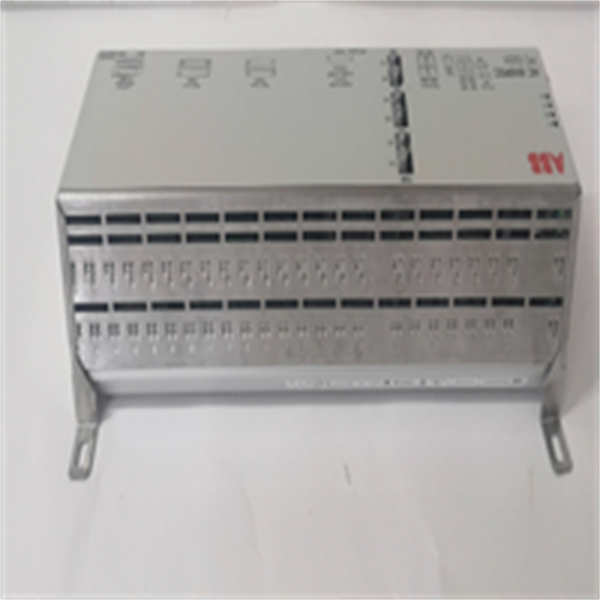
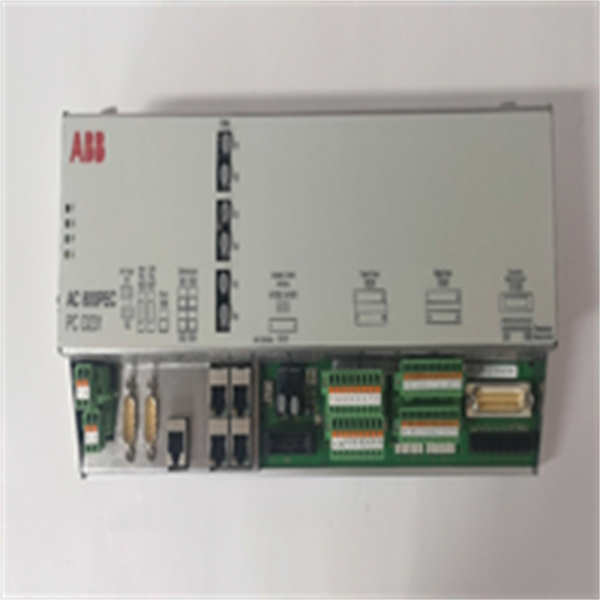
PCD231B101 3BHE025541R0101 ABB
Lifecycle Status and Migration Strategy
ABB ceased all SATT 190 production and support more than 20 years ago. The PCD231B101 (3BHE025541R0101) has not been manufactured since the early 2000s, and official repair services were discontinued long ago. Engineering tools for configuration are incompatible with modern operating systems, and original documentation is increasingly difficult to source.
Continued reliance introduces substantial operational risk: a single module failure can compromise process safety, regulatory compliance, or environmental emissions control.
Interim mitigation strategies include:
- Securing multiple verified, calibrated spares from retired facilities with identical part numbers.
- Implementing external signal duplication using standalone data loggers for critical parameters.
- Engaging third-party specialists who maintain legacy SATT test benches for functional validation.
For long-term sustainability, migration to a modern control platform is essential. ABB’s strategic successor is the Ability™ System 800xA with AC 800M controllers and AI810/AI845 analog input modules, which offer:
- Higher channel density and accuracy
- Built-in diagnostics and HART support
- Native integration with asset performance management
Migration requires:
- Replacement of I/O cabinets and field wiring terminations
- Reconfiguration of control logic in Control Builder M
- Recalibration of all field instruments to new I/O ranges
- Operator retraining and updated procedures
Given the age of affected plants, a phased approach—starting with the most critical or failure-prone loops—is often the most pragmatic path to eliminate obsolescence risk while maintaining operational continuity.