 Tel:
Tel:  Email:
  WhatsApp:
 Description
Key Technical Specifications (For Spare Part Verification)
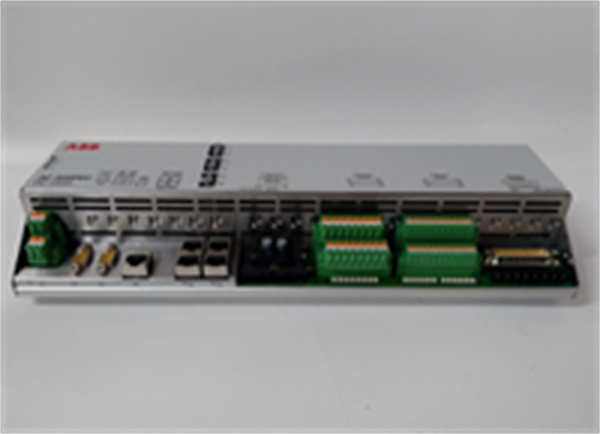
- Product Model: PCD231B101
- Manufacturer: ABB
- System Platform: SATT 3000 DCS
- Input Channels: 16 differential analog inputs
- Input Range: 4–20 mA (standard), with optional 0–20 mA or voltage ranges via jumper settings
- Input Impedance: Typically 250 Ω per channel
- Isolation: Channel-to-channel and channel-to-backplane isolation (≥500 V AC)
- Accuracy: ±0.1% of full scale at 25°C
- Update Rate: ~100 ms per module (system-dependent)
- Backplane Interface: Proprietary SATT parallel bus (via DIN 41612 connector)
- Diagnostic Features: Basic fault indication via front-panel LED; no per-channel diagnostics
- Mounting: Standard SATT 3000 I/O rack (typically in remote or local cabinets)
- Operating Temperature: 0°C to +55°C
System Role and Downtime Impact
The PCD231B101 is deployed in legacy power generation, district heating, and industrial process facilities where the SATT 3000 DCS remains in service. It digitizes analog signals from transmitters—such as boiler drum level, turbine bearing temperature, or feedwater flow—and delivers them to the central PCD530 CPU for control logic execution. A single module often supports multiple safety-critical loops. If it fails, all 16 channels become invalid, potentially triggering high/low alarms, forcing loops into manual mode, or disabling protective functions (e.g., low-flow trip). In non-redundant configurations, this can lead to unit derating or forced outage. Recovery requires physical replacement and revalidation of signal scaling in the SATT database—a process complicated by the scarcity of engineering tools and trained personnel.
Reliability Analysis and Common Failure Modes
Despite its industrial-grade design, the PCD231B101 is susceptible to age-related degradation:
- Input front-end components: Precision resistors and isolation amplifiers drift over time due to thermal stress, introducing measurement errors that go undetected without regular calibration.
- Electrolytic capacitors: On the internal power regulation circuit, these dry out after 15+ years, causing voltage instability and intermittent module resets.
- Backplane connector corrosion: Oxidation on gold-plated pins leads to poor contact, resulting in communication dropouts or complete module misidentification by the CPU.
- Solder joint fatigue: Thermal cycling induces micro-cracks in surface-mount components, particularly around high-power regulators, causing latent failures.
A key limitation is the absence of advanced diagnostics—no per-channel health status or predictive failure indicators. Preventive maintenance should include annual loop calibration, visual inspection for bulging capacitors or discoloration, and verification of backplane seating force. Any spare module must undergo full functional testing with calibrated current sources before being placed into service, as many surplus units exhibit channel drift or complete channel loss.
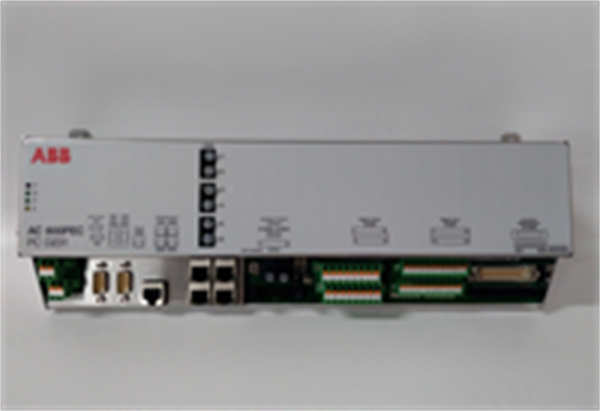
PCD231B101 ABB
Lifecycle Status and Migration Strategy
ABB discontinued the entire SATT 3000 platform decades ago, with no repair services, firmware updates, or technical documentation support available. The PCD231B101 is obsolete, and remaining inventory consists of untested, aging stock. Continued operation exposes facilities to escalating risks: spares are expensive, unreliable, and increasingly counterfeit.
Short-term mitigation includes maintaining a pool of pre-tested spares and implementing external surge protection on all field wiring. For long-term sustainability, ABB’s recommended migration path is to the System 800xA platform, which uses modern I/O modules (e.g., AI810 for 4–20 mA inputs) with built-in diagnostics and Ethernet connectivity. This transition requires significant engineering effort: re-engineering I/O assignments, reprogramming control logic in Control Builder M, and revalidating all safety interlocks.
Alternatively, some operators employ third-party I/O gateways that convert 4–20 mA signals to Modbus TCP or OPC UA, feeding data into a modern SCADA system while bypassing the SATT CPU. However, this approach sacrifices closed-loop control unless paired with a new PLC. Early planning, including archiving of existing SATT configuration files and signal lists, is essential to minimize downtime during eventual migration. Coordination with experienced system integrators familiar with both SATT and 800xA is strongly advised.