
 Tel:
Tel:  Email:
  WhatsApp:
 Description
Technical Specifications (For Spare Parts Verification)
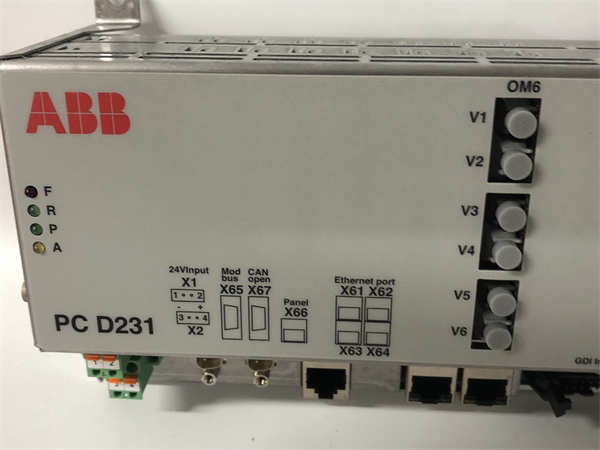
- Model: PCD231B
- Manufacturer: ABB
- System Platform: SATT 190 (Synchronous AC Transmission Technology, later part of Advant OCS lineage)
- I/O Type: Mixed digital inputs and outputs (typically 16–32 channels total, configuration varies)
- Input Voltage: 24 VDC nominal (wet/dry contact compatible, depending on revision)
- Output Type: Relay or transistor-based (relay more common in PCD231B variants)
- Backplane Interface: Proprietary SATT bus connector for communication with master controller (e.g., PCD530)
- Mounting: Rack-mounted within SATT 190 I/O chassis
- Diagnostic Features: Basic LED indicators per channel (on/off status); no advanced diagnostics
- Power Requirement: Supplied via backplane (+5 V, ±12 V rails typical)
- Isolation: Channel-to-channel and field-to-system isolation per industrial standards of the era
System Role and Downtime Impact
The PCD231B is a foundational I/O module in ABB’s SATT 190 systems, widely installed in power plants, refineries, and heavy industrial facilities from the 1980s through early 2000s. It interfaces directly with field devices such as limit switches, solenoid valves, and motor starters, converting real-world discrete states into digital data for the central processor (e.g., PCD530A). In safety-critical or regulatory-controlled processes—such as boiler flame detection or turbine trip logic—a failed PCD231B can result in undetected unsafe conditions, forced derating, or emergency shutdowns. Because SATT 190 systems lack modern redundancy at the I/O level in many installations, a single faulty module can disable an entire functional group. Recovery requires physical replacement and re-validation of all connected logic, often during unplanned outages.
Reliability Analysis and Common Failure Modes
Despite its rugged industrial design, the PCD231B is now well beyond its intended service life, leading to predictable aging issues:
- Relay contact wear or welding – mechanical relays degrade after millions of cycles, causing outputs to stick open or closed.
- Optocoupler failure – input isolation components lose CTR (current transfer ratio) over time, leading to missed signal transitions.
- PCB trace corrosion – especially in high-humidity or sulfur-rich environments, resulting in intermittent connections.
- Connector pin fatigue – repeated thermal cycling causes backplane pins to lose spring tension, creating communication dropouts.
A significant weakness is the absence of self-diagnostics; faults are only detected when the process behaves abnormally. For preventive maintenance, operators should:
- Perform periodic loop checks by forcing I/O states and verifying field response
- Inspect for burnt smell, discoloration, or relay chatter during cabinet rounds
- Keep spare modules powered in a test rack to “exercise” relays and detect latent failures
- Document channel usage to prioritize inspection of safety-critical signals
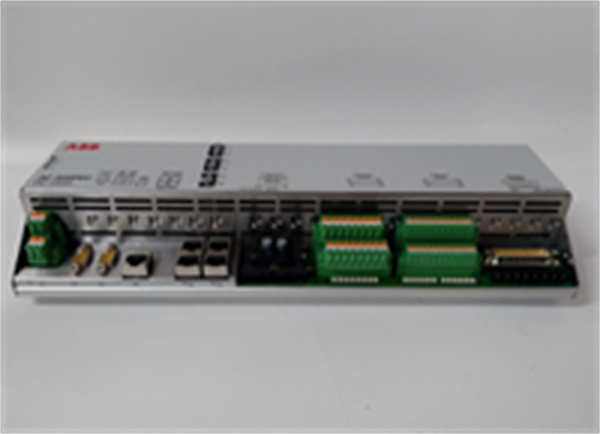
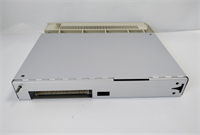
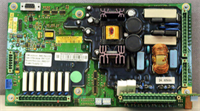
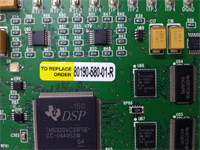
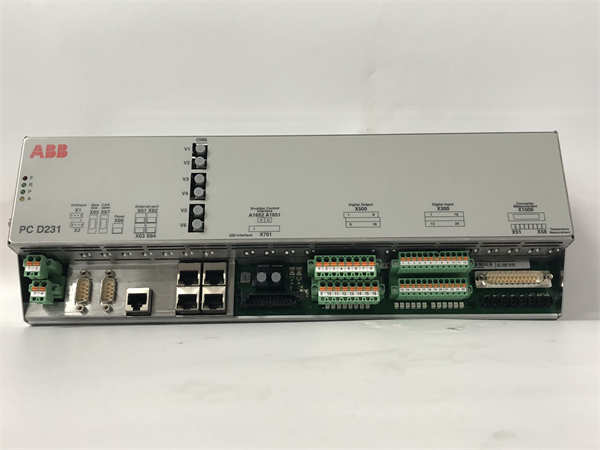
ABB PCD231B
Lifecycle Status and Migration Strategy
ABB ceased production and support for the SATT 190 platform—including the PCD231B—over 20 years ago. No new units exist, and even used inventory is dwindling. Continuing to operate these systems carries severe risk: component-level repair is often impossible due to obsolete semiconductors, and counterfeit or mislabeled modules occasionally appear on the surplus market.
Immediate mitigation includes:
- Securing multiple tested spares from trusted legacy automation specialists
- Implementing manual override procedures for critical functions tied to this I/O
- Isolating non-essential channels to reduce module stress
Long-term, full migration to a modern DCS or PLC platform is the only sustainable path. ABB’s recommended upgrade route is to 800xA with AC 800M controllers and S800/S900 I/O, which offers superior reliability, cybersecurity, and diagnostics. The migration typically involves:
- Replacing SATT 190 racks with new I/O cabinets
- Rewiring field devices to modern terminal blocks
- Translating or rewriting control logic in Control Builder M
While costly, such a project eliminates obsolescence risk and often improves operational efficiency. Given the age of PCD231B-based systems, delaying migration increases the likelihood of a catastrophic, unplanned outage with extended recovery time. Proactive planning is not optional—it is essential for operational continuity.