 Tel:
Tel:  Email:
  WhatsApp:
 Description
Key Technical Specifications (For Spare Part Verification)
- Product Model: IOR810
- Manufacturer: ABB
- System Family: AC 800M controller within System 800xA architecture
- ABB Order Code: P-HB-IOR-80010000
- Output Channels: 8 normally open (NO) electromechanical relays
- Contact Rating: 2 A at 250 VAC / 30 VDC (resistive load)
- Switching Voltage: Max 250 VAC / 125 VDC
- Isolation: Reinforced insulation between logic and field sides (per IEC 61010)
- LED Indicators: One per channel (ON = relay energized)
- Backplane Interface: Connects to S800 I/O bus via TB820/TB840 baseplate
- Power Consumption: ~3.5 W from internal +5 VDC supply
- Mechanical Life: Rated for >100,000 operations (under nominal load)
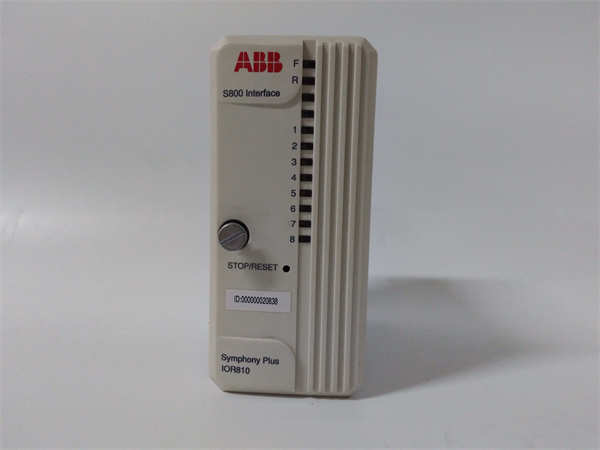
IOR810 P-HB-IOR-80010000
System Role and Downtime Impact
The IOR810 serves as a key final control interface in ABB System 800xA installations, commonly deployed in power generation, water treatment, and industrial automation. It translates digital commands from the AC 800M CPU into physical switching actions—activating equipment such as auxiliary pumps, ventilation fans, isolation dampers, or emergency alarms. Unlike solid-state outputs, its electromechanical relays provide true galvanic isolation and can switch both AC and DC loads, making it suitable for mixed-voltage applications.
If the IOR810 fails—due to contact welding, coil burnout, or backplane communication loss—the associated field devices become unresponsive. In safety-critical sequences (e.g., fire suppression activation or turbine trip oil dump), this can result in failure to actuate, directly undermining the integrity of protective functions. While System 800xA supports redundancy at the controller level, output modules like the IOR810 are typically non-redundant at the point of use, creating a single point of failure for each connected device.
Reliability Analysis and Common Failure Modes
Although designed for industrial duty, the IOR810 is susceptible to wear and environmental stress over time:
- Contact erosion and welding: Frequent switching of inductive loads (e.g., motor coils) causes arcing, leading to contact pitting or permanent welding—especially if snubber circuits are absent.
- Relay coil degradation: Continuous energization over years can cause insulation breakdown in the coil windings, resulting in open circuits or intermittent operation.
- Backplane connector fatigue: Vibration and thermal cycling loosen the DIN rail connection or baseplate pins, causing communication dropouts with the AC 800M.
- LED indicator failure: While not affecting function, failed status LEDs hinder troubleshooting during outages.
- Contamination ingress: Dust, moisture, or conductive debris in harsh environments can cause short circuits across terminal blocks or relay contacts.
Recommended preventive actions include:
- Performing annual functional tests by commanding each output and verifying field response
- Inspecting terminal tightness and signs of overheating (discoloration, burnt smell)
- Using external flyback diodes or RC snubbers on inductive loads to suppress voltage spikes
- Keeping spare modules in dry, temperature-controlled storage to preserve mechanical life
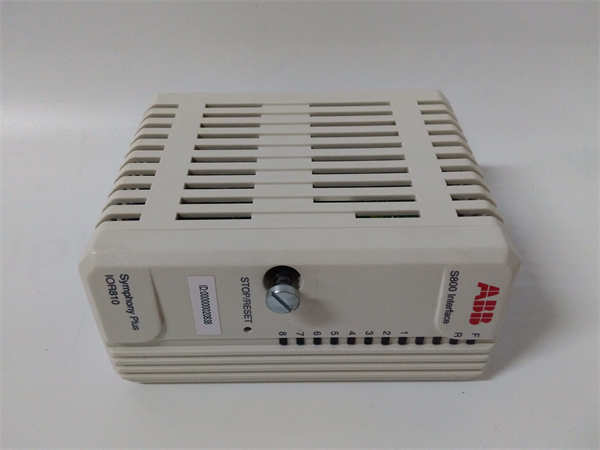
IOR810 P-HB-IOR-80010000
Lifecycle Status and Migration Strategy
ABB has officially discontinued the IOR810 and removed it from the S800 I/O portfolio. The current recommended replacement is the IOH810—a solid-state, high-density digital output module with similar channel count but no moving parts. However, the IOH810 cannot switch AC loads or provide the same level of galvanic isolation, making direct substitution unsuitable in many legacy applications.
Alternative strategies include:
- Using the IOD840 (dry contact output via external relay) for true relay functionality
- Installing discrete panel-mounted relays driven by modern solid-state outputs (e.g., IOD810)
Short-term risk mitigation involves:
- Securing tested spares with verified channel continuity and coil resistance
- Documenting exact wiring and load types for each channel to aid future retrofitting
- Avoiding unnecessary output toggling to extend mechanical life
Long-term, facilities should evaluate a full I/O modernization as part of System 800xA lifecycle management. This includes updating to S800 I/O Gen 2 modules, which offer improved diagnostics, lower power consumption, and better integration with asset performance management tools.
Continued operation of the IOR810 without a formal obsolescence plan increases exposure to unplanned downtime, especially as mechanical wear accumulates beyond design limits. Proactive migration—not just spare stocking—is essential to maintain operational reliability and safety compliance.