 Tel:
Tel:  Email:
  WhatsApp:
 Description
Key Technical Specifications (For Spare Part Verification)
- Product Model: MB510
- Manufacturer: ABB
- System Platform: ABB AC 800M (part of 800xA control architecture)
- Bus Type: MasterBus 300 (proprietary ABB fieldbus, RS-485 based)
- Function: Signal regeneration and network segment extension
- Max Cable Length per Segment: Up to 500 meters (with proper termination)
- Power Supply: +24 VDC via DIN rail connector or external supply (depending on mounting)
- Data Rate: 1.5 Mbps (fixed for MasterBus 300)
- Connection: Two 9-pin D-sub connectors (IN and OUT) with shielded twisted-pair cabling
- Mounting: DIN rail (TS-35/7.5 or TS-35/15)
- Operating Temperature: 0°C to +55°C
System Role and Impact of Failure
The ABB MB510 serves as a critical repeater in AC 800M-based control systems that utilize distributed I/O stations (e.g., S800 I/O). It extends the physical reach of the MasterBus 300 fieldbus beyond the standard 100-meter limit between the controller and remote I/O clusters. Without this module, large-scale installations—such as those in power plants, mining conveyors, or pulp & paper mills—could not reliably connect distant field devices. If the MB510 fails, all I/O modules downstream of it become unreachable by the CPU. This typically results in a complete loss of control over an entire process section, triggering safety interlocks or unplanned plant shutdowns. Given its passive but essential role, it is often overlooked until failure occurs.
Reliability Analysis and Common Failure Modes
Although the MB510 contains no moving parts and runs minimal firmware, it remains susceptible to several age-related failure mechanisms. The most common issue is degradation of the isolated DC/DC converter that powers the bus transceivers—this can lead to intermittent communication or complete signal dropout. Electrolytic capacitors on the internal power circuit may dry out over time, especially in high-temperature cabinets, causing voltage instability. Additionally, the RS-485 transceiver ICs are vulnerable to ESD or ground potential differences in poorly grounded installations, which can result in burnt communication ports. The module also lacks diagnostic LEDs on many revisions, making fault isolation difficult without specialized tools. As a maintenance best practice, technicians should periodically inspect the DIN rail power contacts for corrosion, verify proper cable shielding and grounding at both ends, and measure bus voltage levels during routine checks. Keeping a known-good spare unit on-site is strongly advised due to long replacement lead times.
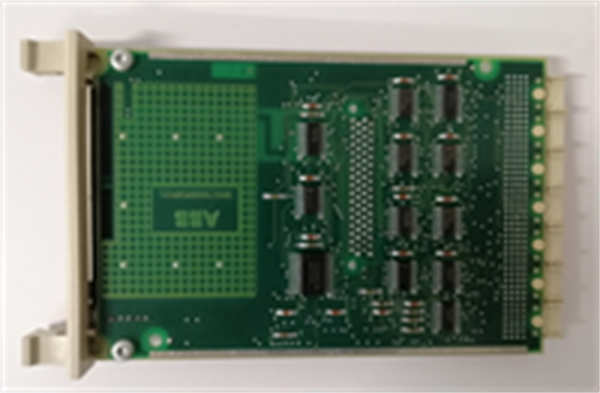
ABB MB510 3BSE002540R1
Lifecycle Status and Migration Strategy
ABB officially marked the MB510 (3BSE002540R1) as obsolete as part of the broader phase-out of the MasterBus 300 ecosystem in favor of Ethernet-based solutions. Continued use carries significant risk: genuine new units are no longer manufactured, and remaining inventory is dwindling across distribution channels. Prices have risen sharply, and counterfeit or refurbished units without proper testing are increasingly common. In the short term, facilities can mitigate risk by sourcing verified tested spares from reputable suppliers and implementing redundant bus topologies where feasible. For long-term sustainability, ABB recommends migrating to the AC 800M with S800 I/O over optical Profibus DP or, preferably, Ethernet-based connectivity using CI854/CI864 communication modules with PROFINET or Modbus TCP. This transition requires re-engineering the I/O network architecture and updating controller firmware, but eliminates dependency on legacy fieldbus hardware. Engineering services are available to perform impact assessments and develop staged migration roadmaps that minimize downtime while extending system life.