 Tel:
Tel:  Email:
  WhatsApp:
 Description
Key Technical Specifications (For Spare Part Verification)
- Model: LDMTR-01
- Manufacturer: ABB
- System Platform: Standalone numerical protection relay (part of ABB’s early SPA-based product line)
- Protection Functions: 3-zone distance protection, line differential (pilot wire), overcurrent, breaker failure
- Input Channels: 3 voltage (VT) and 3 current (CT) analog inputs per phase
- Communication Interface: RS-485 with SPA protocol (serial only; no Ethernet)
- Trip Output Contacts: 2 high-speed binary outputs (typically 5 A, 250 V AC/DC)
- Auxiliary Supply: 24–250 V DC or 110–230 V AC (field-configurable via internal jumpers)
- Front Panel: LCD display with keypad for local configuration and event viewing
- Standards Compliance: IEC 60255, ANSI C37.90
- Order Code Reference: Often shipped as part of a panel assembly; standalone unit typically labeled “LDMTR-01” with serial tag
System Role and Impact of Failure
The LDMTR-01 was deployed primarily in utility substations during the 1990s and early 2000s as a main or backup protection device for 69 kV to 230 kV transmission lines. It provides fast, selective fault clearance through impedance-based distance zones and optional pilot-wire differential schemes. Because it operates at the core of grid reliability, a malfunction—whether due to hardware failure, setting corruption, or communication loss—can lead to either unwanted tripping (causing unnecessary outages) or, more critically, failure to operate during an actual fault. The latter scenario risks equipment damage, cascading blackouts, and safety hazards. In many legacy installations, the LDMTR-01 remains in service due to the high cost and complexity of full relay replacement, making spare availability essential for operational continuity.
Reliability Analysis and Common Failure Modes
While built to utility-grade standards, the LDMTR-01 exhibits age-related vulnerabilities common to early-generation numerical relays. The most prevalent failure modes include:
- Power supply degradation: Internal switching power supplies using aging electrolytic capacitors can drift or fail, causing intermittent resets or complete shutdown.
- Memory corruption: The absence of modern non-volatile memory protection makes settings susceptible to loss during power interruptions, especially if the internal backup battery (if equipped) is depleted.
- Communication port failure: The RS-485 transceiver circuit is sensitive to ground loops and lightning-induced surges, often resulting in permanent SPA link loss.
- Display/keypad wear: Mechanical fatigue in the front-panel interface can render local access unusable, complicating troubleshooting during outages.
A key design limitation is the lack of self-diagnostics for analog input chains; CT/VT signal integrity must be verified externally. Additionally, the relay offers no cybersecurity features, posing compliance challenges in modern grid environments.
Preventive maintenance should include annual calibration checks, verification of auxiliary supply stability under load, inspection of terminal block torque, and functional testing of trip outputs using secondary injection. Facilities should maintain a secure backup of relay settings and store spares in climate-controlled conditions to prolong component life.
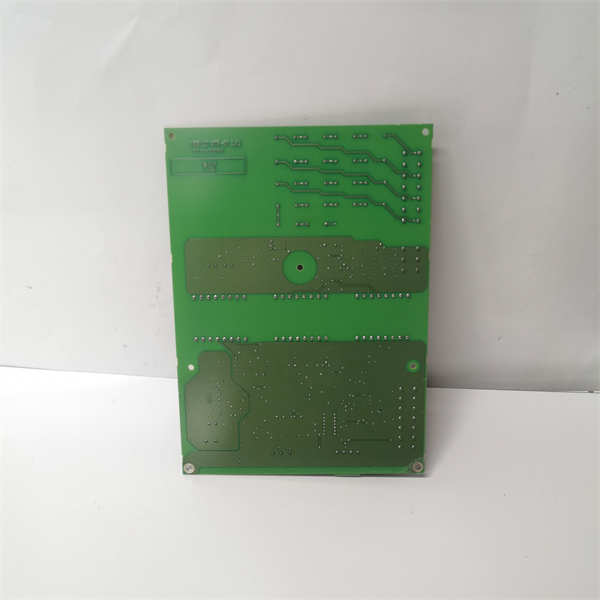
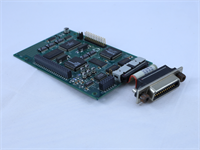
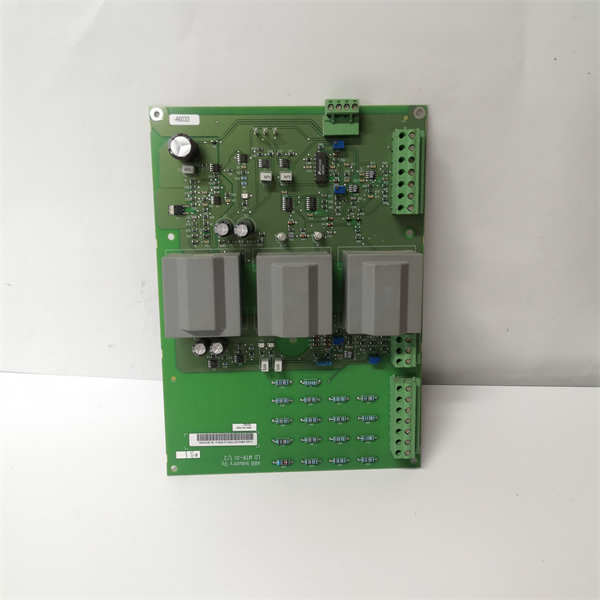
ABB LDMTR-01
Lifecycle Status and Migration Strategy
ABB has formally discontinued the LDMTR-01, with official support phased out in favor of its modern REL6xx platform (e.g., REL670). No firmware updates, repair services, or factory calibration are available from ABB for this model. Continued operation relies entirely on existing installed units and third-party spares—a growing risk as component-level failures become irreparable.
Short-term mitigation includes:
- Securing tested, functional spares with verified settings compatibility
- Implementing external surge protection on communication and power lines
- Conducting regular end-to-end protection scheme tests to validate performance
For long-term sustainability, migration to a modern IEC 61850-compliant relay such as the REL670 is strongly advised. This upgrade delivers enhanced protection algorithms, Ethernet-based communication (including GOOSE), comprehensive event recording, and cybersecurity hardening. While migration requires re-engineering of wiring, CT/VT interfacing, and protection coordination studies, it eliminates obsolescence risk and aligns with NERC CIP and other regulatory frameworks. ABB provides migration tools that assist in converting logic and settings, though manual validation remains essential. Planning should begin well before a critical failure occurs to avoid emergency procurement and extended outage windows.